

Bedding manufacturer Somnigroup (NYSE:SGI) fell short of the market’s revenue expectations in Q2 CY2026, with sales falling 3% year on year to $1.82 billion. Its non-GAAP profit of $0.58 per share was in line with analysts’ consensus estimates.
Is now the time to buy Somnigroup? Find out by accessing our full research report, it’s free.
Somnigroup (SGI) Q2 CY2026 Highlights:
- Revenue: $1.82 billion vs analyst estimates of $1.88 billion (3% year-on-year decline, 3.1% miss)
- Adjusted EPS: $0.58 vs analyst estimates of $0.58 (in line)
- Adjusted EBITDA: $296.5 million vs analyst estimates of $300.2 million (16.3% margin, 1.2% miss)
- Management lowered its full-year Adjusted EPS guidance to $3 at the midpoint, a 6.3% decrease
- Operating Margin: 11.1%, up from 9.6% in the same quarter last year
- Free Cash Flow Margin: 10%, up from 7.9% in the same quarter last year
- Market Capitalization: $14.64 billion
Company Chairman and CEO Scott Thompson commented, "Our second-quarter performance demonstrates our global team's ability to execute in a dynamic environment. We delivered solid results while continuing to fully invest in our iconic brands, advancing our international growth strategy, preparing for the North American launch of our new Stearns & Foster collection and strengthening our multiple distribution platforms. The progress we are making across the business reinforces our confidence in our long-term strategy and our ability to create sustainable value."
Company Overview
Established through the merger of Tempur-Pedic and Sealy in 2012, Somnigroup (NYSE:SGI) is a bedding manufacturer known for its innovative memory foam mattresses and sleep products
Revenue Growth
Examining a company’s long-term performance can provide clues about its quality. Any business can experience short-term success, but top-performing ones enjoy sustained growth for years. Over the last five years, Somnigroup grew its sales at a 11.6% compounded annual growth rate. Though this growth is acceptable on an absolute basis, we need to see more than just topline growth for the consumer discretionary sector, which can display significant earnings volatility. This means our bar for the sector is particularly high, reflecting the non-essential and hit-driven nature of the products and services offered. Additionally, five-year CAGR starts around Covid, when revenue was depressed then rebounded.
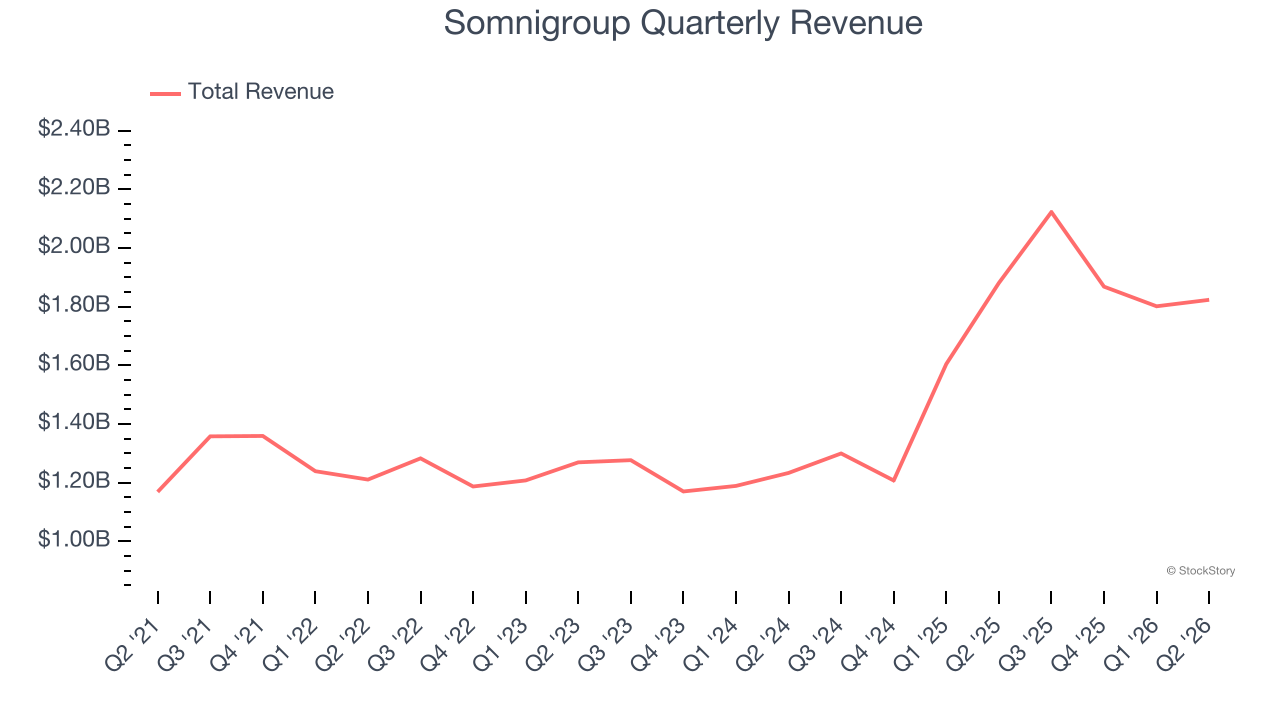
Long-term growth is the most important, but within consumer discretionary, product cycles are short and revenue can be hit-driven due to rapidly changing trends and consumer preferences. Somnigroup’s annualized revenue growth of 25% over the last two years is above its five-year trend, which is encouraging. 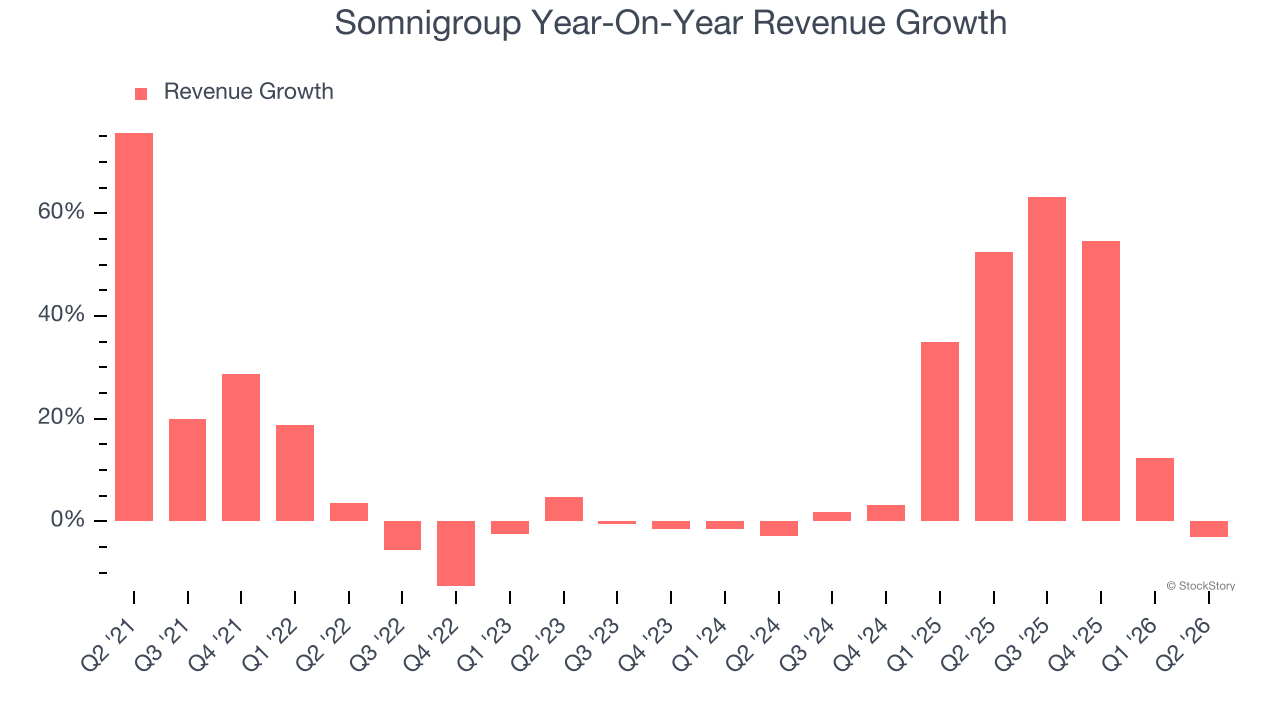
We can better understand the company’s revenue dynamics by analyzing its most important segments, Wholesale and Direct, which are 65.9% and 34.1% of revenue. Over the last two years, Somnigroup’s Wholesale revenue (sales to retailers) averaged 3.6% year-on-year declines. On the other hand, its Direct revenue (sales made directly to consumers) averaged 143% growth. 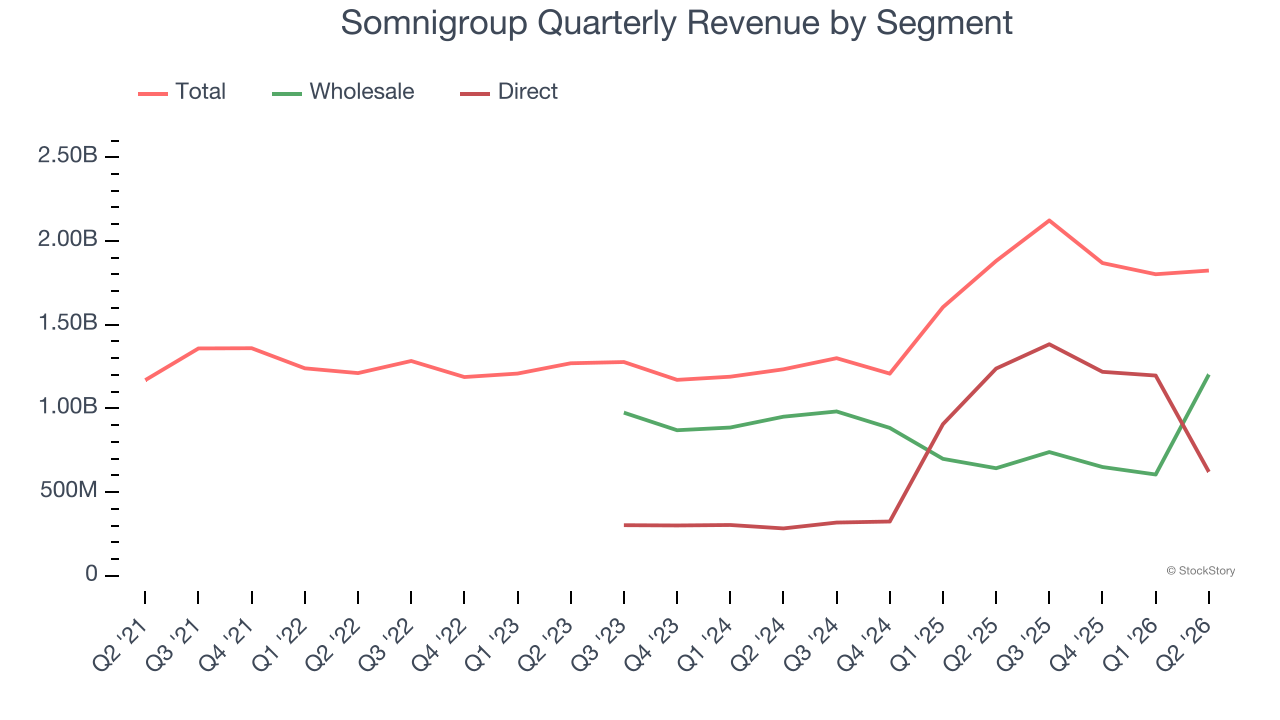
This quarter, Somnigroup missed Wall Street’s estimates and reported a rather uninspiring 3% year-on-year revenue decline, generating $1.82 billion of revenue.
Looking ahead, sell-side analysts expect revenue to grow 4.6% over the next 12 months, a deceleration versus the last two years. This projection is underwhelming and indicates its products and services will see some demand headwinds.
ONE MORE THING: 3 Hidden Platforms Growing 3X Faster than Amazon, Google, and PayPal. Amazon, Google, and Meta all followed the same playbook: Dominate an ignored market. Build an unbeatable moat. Scale until you’re unstoppable.
These three platforms are running that exact playbook right now. The early investors in Amazon made fortunes. The early investors in these could do the same. Get All 3 Stocks Here for FREE.
Operating Margin
Operating margin is a key measure of profitability. Think of it as net income - the bottom line - excluding the impact of taxes and interest on debt, which are less connected to business fundamentals.
Somnigroup’s operating margin has been trending up over the last 12 months and averaged 10.8% over the last two years. The company’s higher efficiency is a breath of fresh air, but its suboptimal cost structure means it still sports inadequate profitability for a consumer discretionary business.
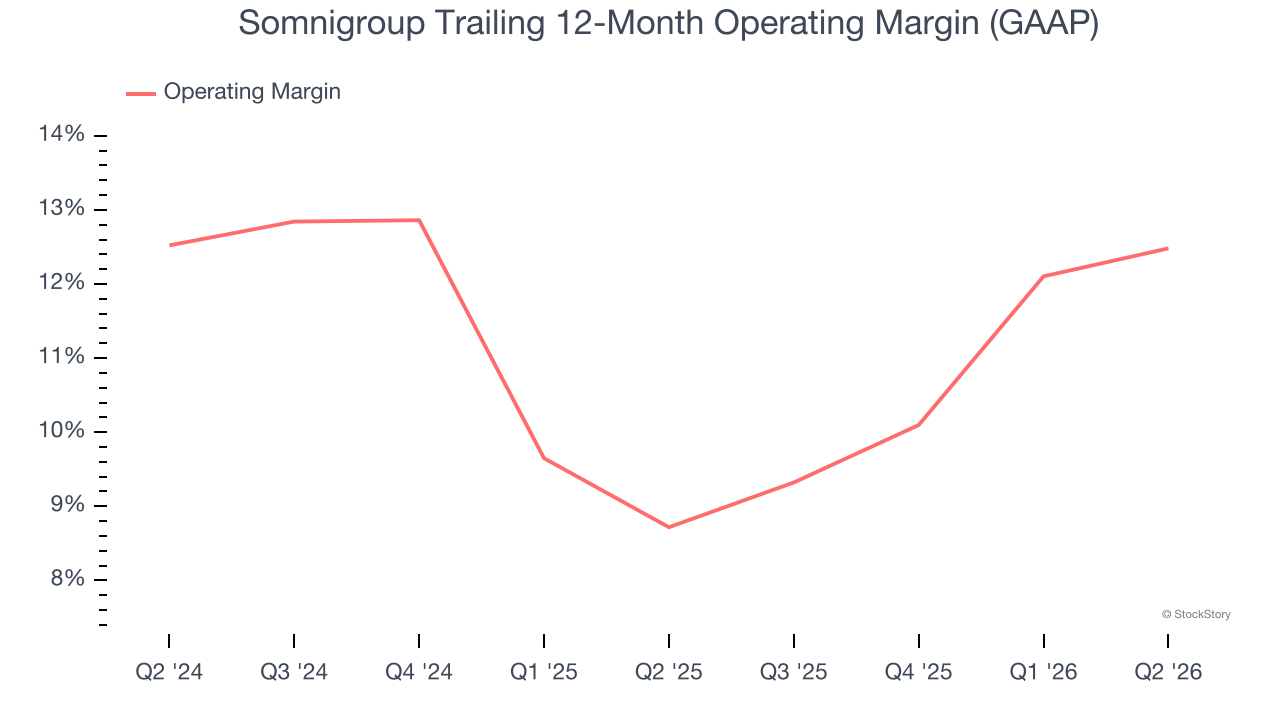
In Q2, Somnigroup generated an operating margin profit margin of 11.1%, up 1.5 percentage points year on year. This increase was a welcome development, especially since its revenue fell, showing it was more efficient because it scaled down its expenses.
Earnings Per Share
Revenue trends explain a company’s historical growth, but the long-term change in earnings per share (EPS) points to the profitability of that growth — for example, a company could inflate its sales through excessive spending on advertising and promotions.
Somnigroup’s flat EPS over the last five years was below its 11.6% annualized revenue growth. This tells us the company became less profitable on a per-share basis as it expanded.
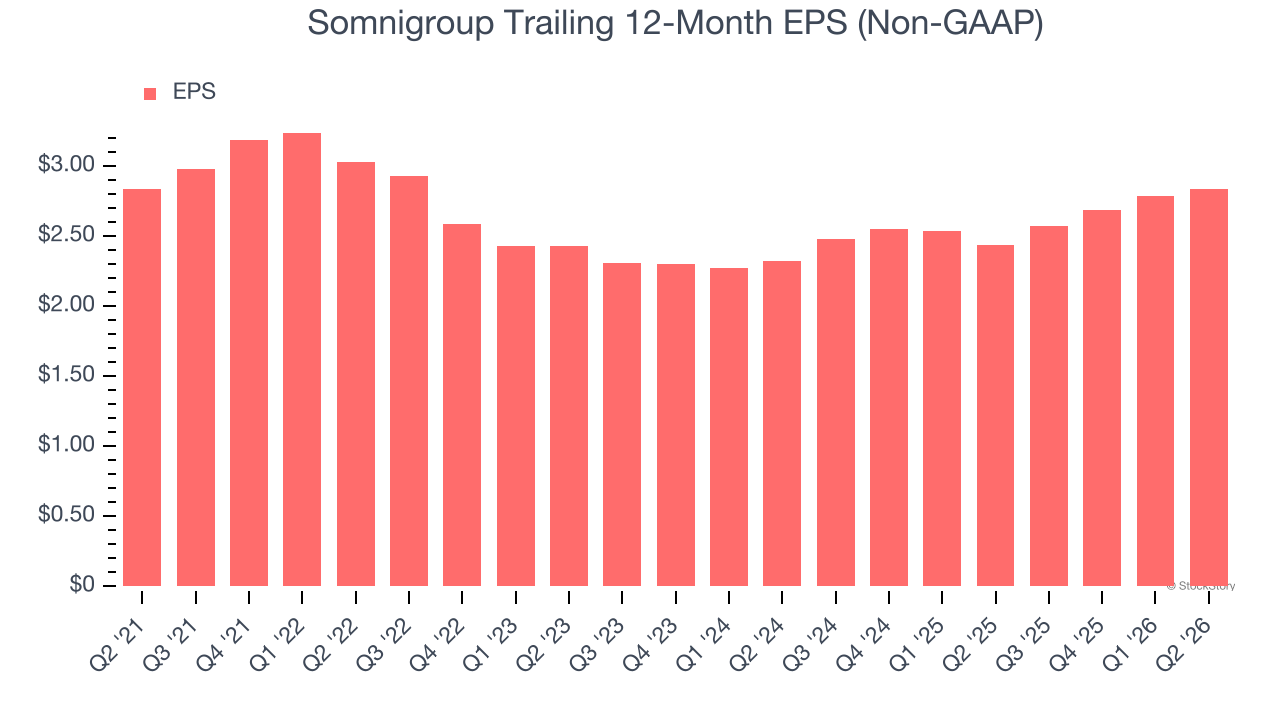
In Q2, Somnigroup reported adjusted EPS of $0.58, up from $0.53 in the same quarter last year. This print was close to analysts’ estimates. Over the next 12 months, Wall Street expects Somnigroup’s full-year EPS to grow 21.8% from $2.84 to $3.46.
Key Takeaways from Somnigroup’s Q2 Results
We struggled to find many positives in these results. Its revenue missed and its full-year EPS guidance fell short of Wall Street’s estimates. Overall, this was a weaker quarter. The stock remained flat at $69.74 immediately after reporting.
Should you buy the stock or not? What happened in the latest quarter matters, but not as much as longer-term business quality and valuation, when deciding whether to invest in this stock. We cover that in our actionable full research report which you can read here (it’s free).