

Exercise equipment company Peloton (NASDAQ:PTON) reported Q2 CY2026 results exceeding the market’s revenue expectations, but sales were flat year on year at $607.7 million. On the other hand, next quarter’s revenue guidance of $555 million was less impressive, coming in 1.9% below analysts’ estimates. Its GAAP profit of $0.13 per share was in line with analysts’ consensus estimates.
Is now the time to buy Peloton? Find out by accessing our full research report, it’s free.
Peloton (PTON) Q2 CY2026 Highlights:
- Revenue: $607.7 million vs analyst estimates of $595.7 million (flat year on year, 2% beat)
- EPS (GAAP): $0.13 vs analyst estimates of $0.12 (in line)
- Adjusted EBITDA: $142.3 million vs analyst estimates of $149.4 million (23.4% margin, 4.8% miss)
- Revenue Guidance for Q3 CY2026 is $555 million at the midpoint, below analyst estimates of $566 million
- EBITDA guidance for the upcoming financial year 2027 is $500 million at the midpoint, below analyst estimates of $506.7 million
- Operating Margin: 13.3%, up from 4.9% in the same quarter last year
- Free Cash Flow Margin: 14.6%, down from 18.5% in the same quarter last year
- Connected Fitness Subscribers: down 247,000 year on year
- Market Capitalization: $2.82 billion
Company Overview
Started as a Kickstarter campaign, Peloton (NASDAQ: PTON) is a fitness technology company known for its at-home exercise equipment and interactive online workout classes.
Revenue Growth
A company’s long-term sales performance is one signal of its overall quality. Even a bad business can shine for one or two quarters, but a top-tier one grows for years. Peloton’s demand was weak over the last five years as its sales fell at a 9.5% annual rate. This wasn’t a great result and is a sign of poor business quality.
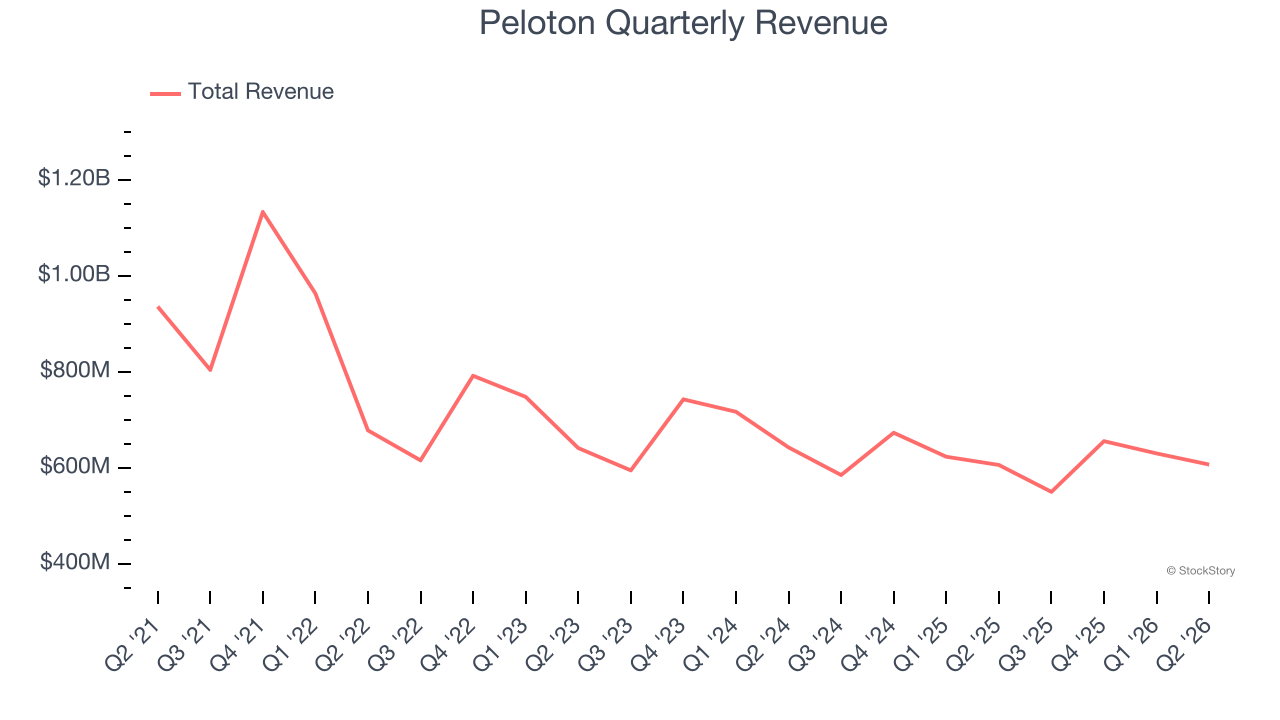
We at StockStory place the most emphasis on long-term growth, but within consumer discretionary, a stretched historical view may miss a company riding a successful new product or trend. Peloton’s annualized revenue declines of 4.8% over the last two years suggest its demand continued shrinking. 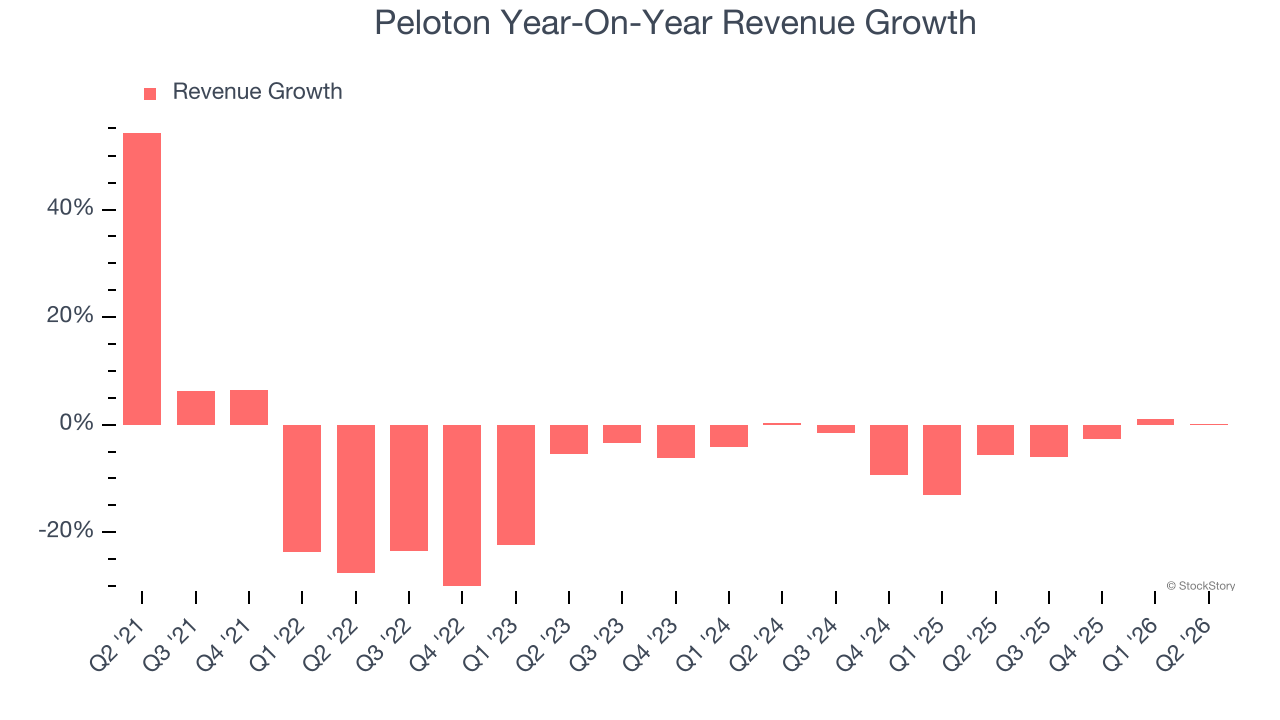
We can dig further into the company’s revenue dynamics by analyzing its number of connected fitness subscribers, which reached 2.55 million in the latest quarter. Over the last two years, Peloton’s connected fitness subscribers averaged 5.1% year-on-year declines. Because this number aligns with its revenue growth during the same period, we can see the company’s monetization was fairly consistent. 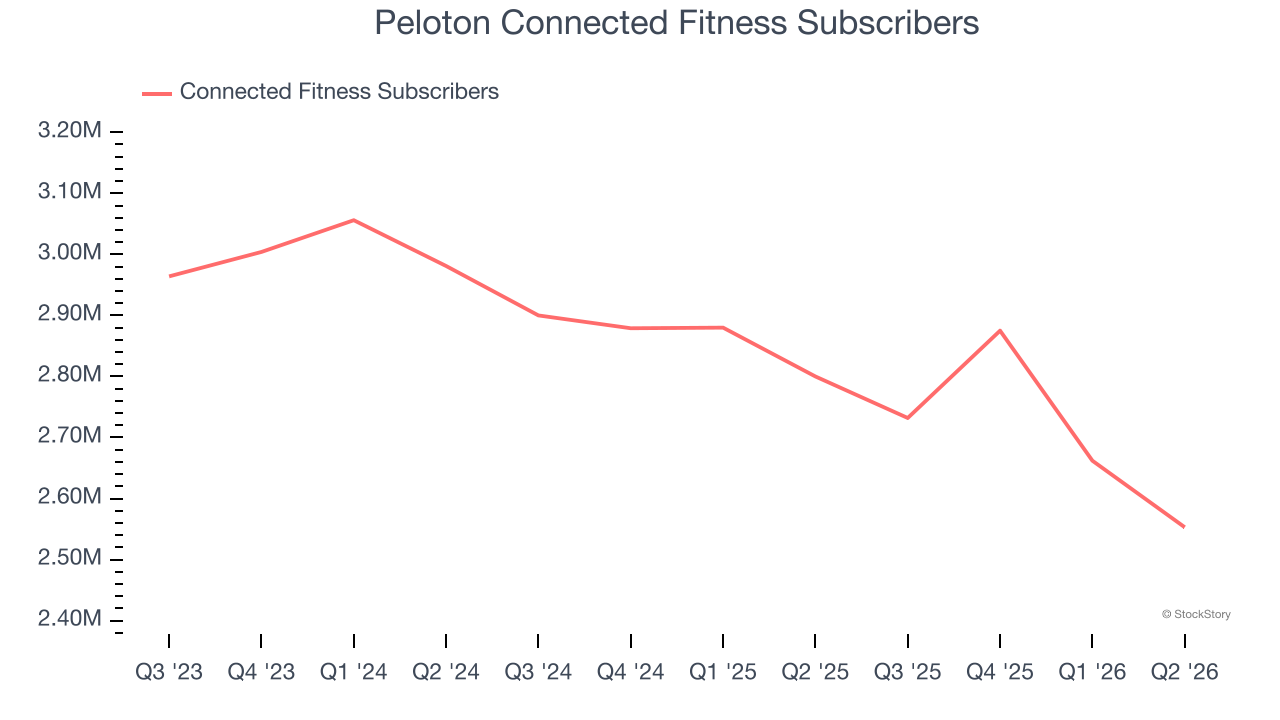
This quarter, Peloton’s $607.7 million of revenue was flat year on year but beat Wall Street’s estimates by 2%. Company management is currently guiding for flat sales next quarter.
Looking further ahead, sell-side analysts expect revenue to remain flat over the next 12 months. While this projection suggests its newer products and services will fuel better top-line performance, it is still below average for the sector.
WHILE YOU’RE HERE: The Next Palantir? One satellite company captures images of every point on Earth. Every single day. The Pentagon wants it. Hedge funds are using it to beat earnings. You’ve probably never heard of it.
This is what the early days of Palantir looked like before it became a giant. Same playbook. Different technology. If you missed Palantir, you need to see this. Claim The Stock Ticker for Free HERE.
Operating Margin
Peloton’s operating margin has risen over the last 12 months and averaged 2.5% over the last two years. The company’s higher efficiency is a breath of fresh air, but its suboptimal cost structure means it still sports inadequate profitability for a consumer discretionary business.
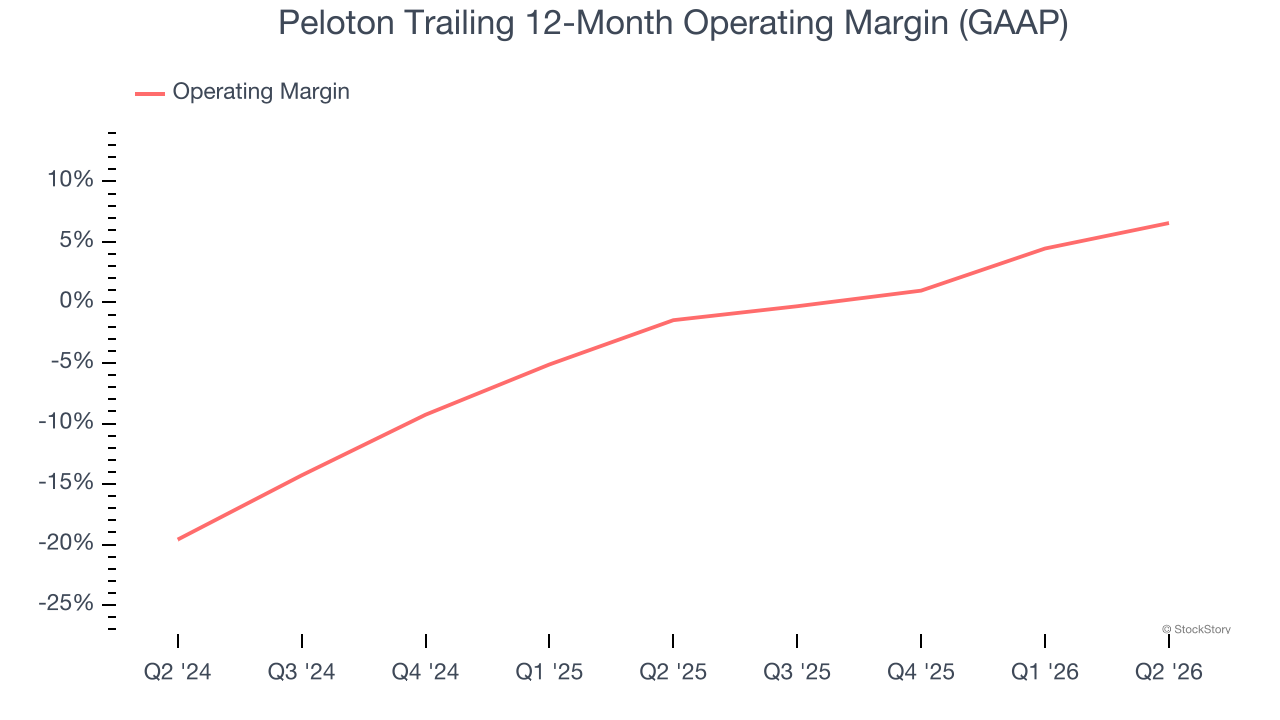
In Q2, Peloton generated an operating margin profit margin of 13.3%, up 8.5 percentage points year on year. This increase was a welcome development and shows it was more efficient.
Earnings Per Share
Revenue trends explain a company’s historical growth, but the long-term change in earnings per share (EPS) points to the profitability of that growth — for example, a company could inflate its sales through excessive spending on advertising and promotions.
Peloton’s full-year EPS flipped from negative to positive over the last five years. This is encouraging and shows it’s at a critical moment in its life.
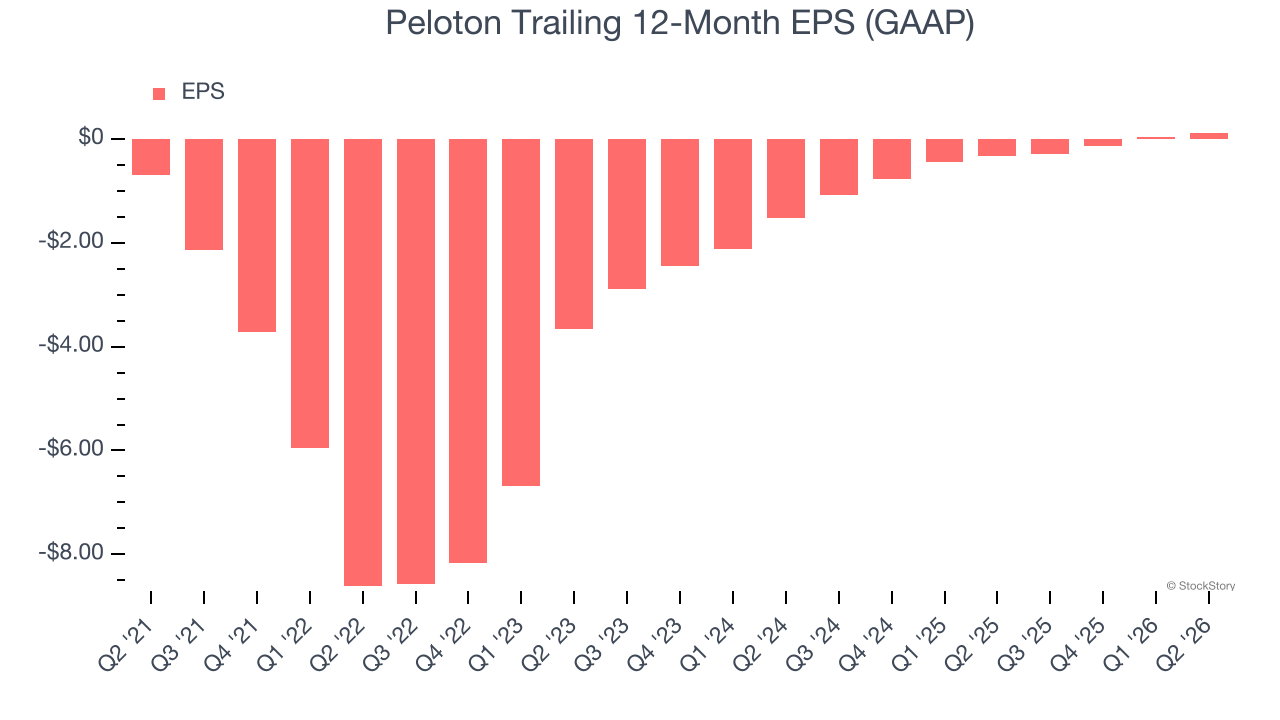
In Q2, Peloton reported EPS of $0.13, up from $0.04 in the same quarter last year. This print beat analysts’ estimates by 7.1%. Over the next 12 months, Wall Street expects Peloton’s full-year EPS to grow 150% from $0.12 to $0.31.
Key Takeaways from Peloton’s Q2 Results
It was encouraging to see Peloton beat analysts’ revenue expectations this quarter. We were also glad its EPS was in line with Wall Street’s estimates. On the other hand, its full-year revenue guidance missed and its revenue guidance for next quarter fell short of Wall Street’s estimates. Overall, this was a softer quarter. The stock traded down 13.7% to $5.63 immediately after reporting.
Peloton’s earnings report left more to be desired. Let’s look forward to see if this quarter has created an opportunity to buy the stock. If you’re making that decision, you should consider the bigger picture of valuation, business qualities, as well as the latest earnings. We cover that in our actionable full research report which you can read here (it’s free).