
Student loan servicer Navient (NASDAQ:NAVI) will be reporting earnings this Thursday afternoon. Here’s what to expect.
Navient beat analysts’ revenue expectations last quarter, reporting revenues of $142 million, down 27.2% year on year. It was an exceptional quarter for the company, with a beat of analysts’ EPS estimates and an impressive beat of analysts’ net interest income estimates.
Is Navient a buy or sell going into earnings? Read our full analysis here, it’s free for active Edge members.
This quarter, the market is expecting Navient’s revenue to decline 12.2% year on year, improving from the 31.4% decrease it recorded in the same quarter last year.
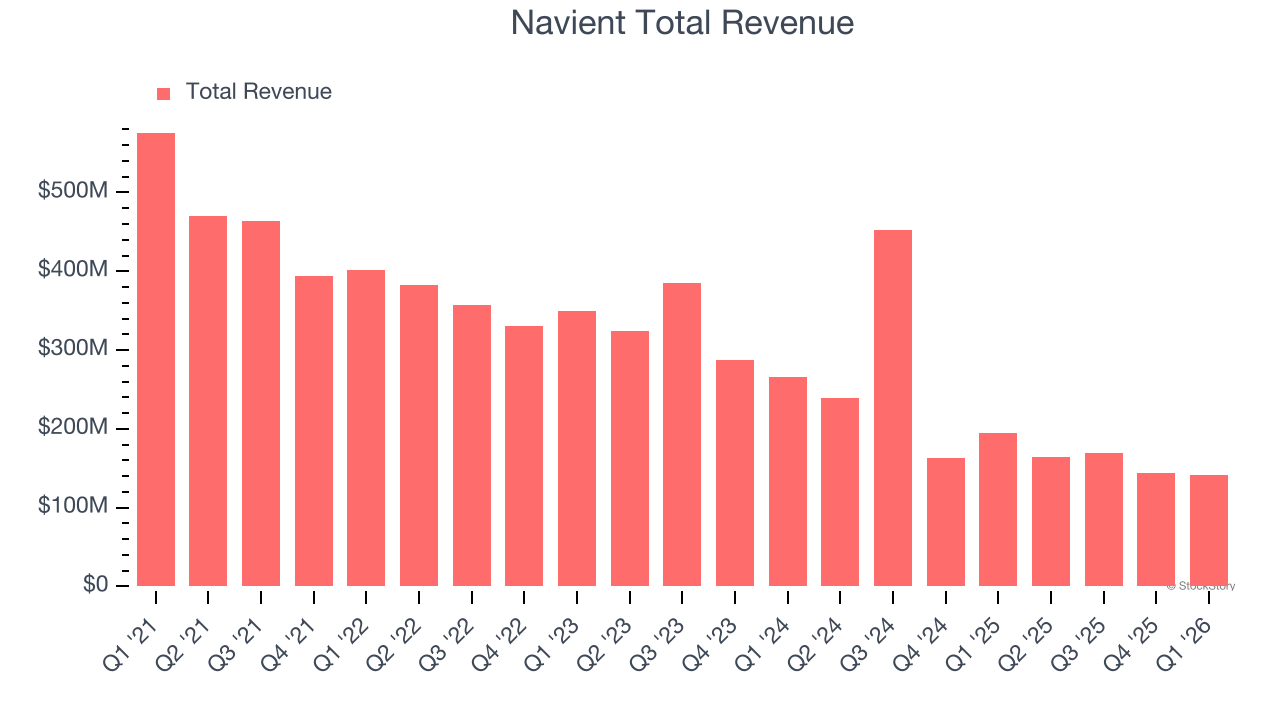
Analysts covering the company have generally reconfirmed their estimates over the last 30 days, suggesting they anticipate the business will stay the course heading into earnings. Navient has missed Wall Street’s revenue estimates multiple times over the last two years.
Looking at Navient’s peers in the consumer finance segment, some have already reported their Q2 results, giving us a hint as to what we can expect. Sallie Mae posted flat year-on-year revenue, missing analysts’ expectations by 1.8%, and Bread Financial reported revenues up 6.9%, topping estimates by 3.5%. Sallie Mae’s stock price was unchanged after the resultswhile Bread Financial was up 2.4%.
Read our full analysis of Sallie Mae’s results here and Bread Financial’s results here.
There has been positive sentiment among investors in the consumer finance segment, with share prices up 6.5% on average over the last month. Navient is up 10.5% during the same time and is heading into earnings with an average analyst price target of $9.06 (compared to the current share price of $9.27).
ONE MORE THING: The $21 AI Application Stock Wall Street Forgot. While Wall Street obsesses over who’s building AI, one company is already using it to print money. And nobody’s paying attention.
AI chip stocks trade at ridiculous valuations. This company processes a trillion consumer signals monthly using AI and trades at a third of the price. The gap won’t last. The institutions will figure it out. You need to see this first. Read the FREE Report Before They Notice.