

Digital advertising platform Magnite (NASDAQ:MGNI) missed Wall Street’s revenue expectations in Q2 CY2026, but sales rose 11.2% year on year to $192.8 million. Its non-GAAP profit of $0.26 per share was in line with analysts’ consensus estimates.
Is now the time to buy Magnite? Find out by accessing our full research report, it’s free.
Magnite (MGNI) Q2 CY2026 Highlights:
- Revenue: $192.8 million vs analyst estimates of $196.4 million (11.2% year-on-year growth, 1.8% miss)
- Adjusted EPS: $0.26 vs analyst estimates of $0.26 (in line)
- Adjusted EBITDA: $70.6 million vs analyst estimates of $63.12 million (36.6% margin, 11.8% beat)
- Operating Margin: 16.2%, up from 12.7% in the same quarter last year
- Free Cash Flow Margin: 92.4%, up from 1.4% in the same quarter last year
- Market Capitalization: $2.99 billion
“We significantly beat consensus expectations on both the top and bottom line in the second quarter, driven by outperformance in CTV—which grew 36% year-over-year—and a return to growth in DV+. Our CTV momentum continues to be broad-based across leading publisher partners and anchored by the strategic differentiation of SpringServe. On the bottom line, we delivered 30% Adjusted EBITDA growth with a 37% margin. Given this strong execution and ongoing shift toward programmatic streaming, we are also raising both our full-year top-line and margin expectations. Furthermore, we are pleased with our agentic product launches and partner support, and view these as a great future tailwind. We are uniquely positioned between supply and demand, and with our agentic offerings we believe we will benefit from serving as vital infrastructure for the future of digital advertising,” said Michael G. Barrett, CEO of Magnite.
Company Overview
Born from the 2020 merger of Rubicon Project and Telaria, Magnite (NASDAQ:MGNI) operates the world's largest independent sell-side advertising platform that automates the buying and selling of digital advertising inventory across all channels and formats.
Revenue Growth
Reviewing a company’s long-term sales performance reveals insights into its quality. Any business can put up a good quarter or two, but the best consistently grow over the long haul.
With $742 million in revenue over the past 12 months, Magnite is a small player in the business services space, which sometimes brings disadvantages compared to larger competitors benefiting from economies of scale and numerous distribution channels. On the bright side, it can grow faster because it has more room to expand.
As you can see below, Magnite’s sales grew at an incredible 18.4% compounded annual growth rate over the last five years. This is an encouraging starting point for our analysis because it shows Magnite’s demand was higher than many business services companies.
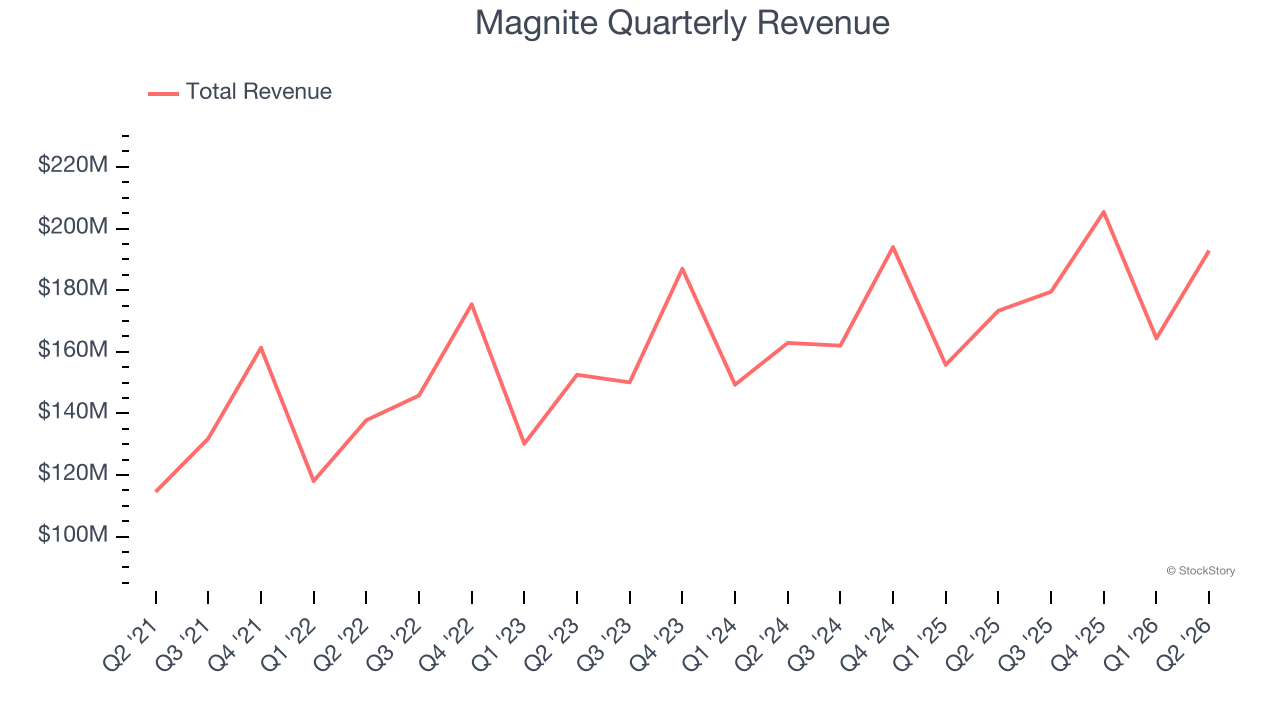
Long-term growth is the most important, but within business services, a half-decade historical view may miss new innovations or demand cycles. Magnite’s annualized revenue growth of 6.9% over the last two years is below its five-year trend, but we still think the results were respectable. 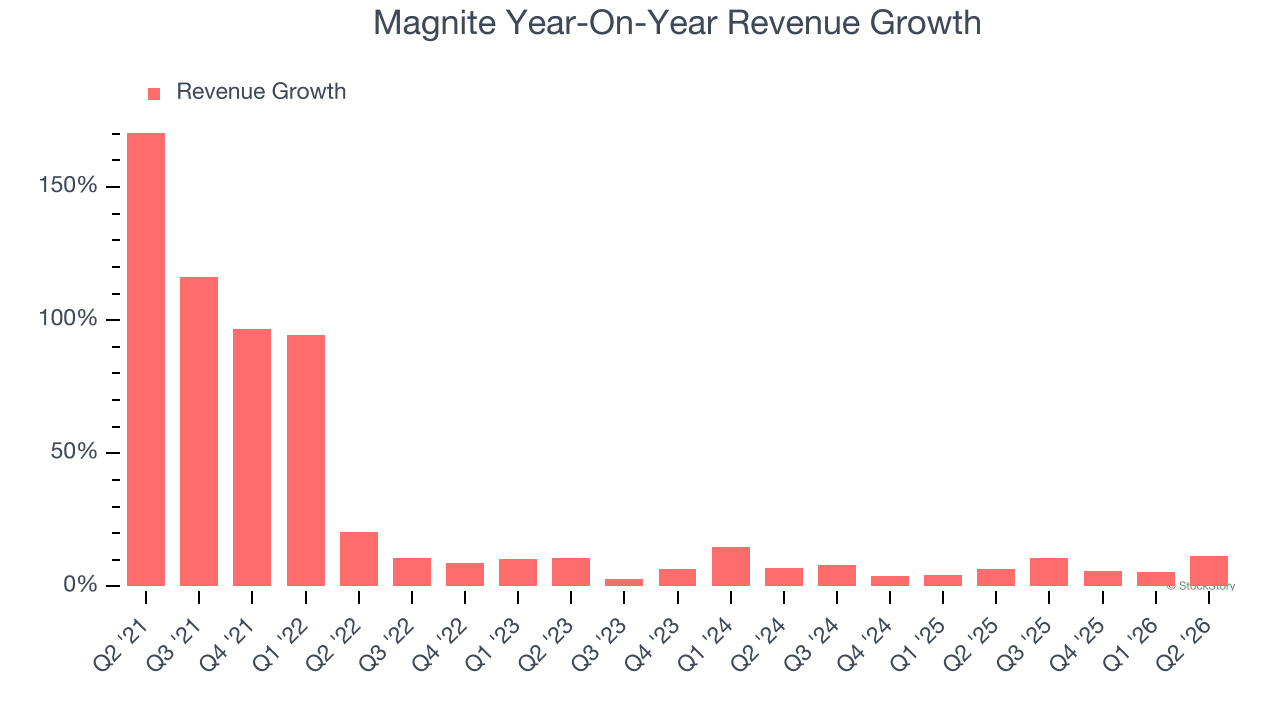
This quarter, Magnite’s revenue grew by 11.2% year on year to $192.8 million but fell short of Wall Street’s estimates.
Looking ahead, sell-side analysts expect revenue to grow 14.4% over the next 12 months, an improvement versus the last two years. This projection is admirable and indicates its newer products and services will fuel better top-line performance.
ONE MORE THING: 3 Hidden Platforms Growing 3X Faster than Amazon, Google, and PayPal. Amazon, Google, and Meta all followed the same playbook: Dominate an ignored market. Build an unbeatable moat. Scale until you’re unstoppable.
These three platforms are running that exact playbook right now. The early investors in Amazon made fortunes. The early investors in these could do the same. Get All 3 Stocks Here for FREE.
Adjusted Operating Margin
Magnite was profitable over the last five years but held back by its large cost base. Its average adjusted operating margin of 7.8% was weak for a business services business.
On the plus side, Magnite’s adjusted operating margin rose by 30.6 percentage points over the last five years, as its sales growth gave it immense operating leverage.
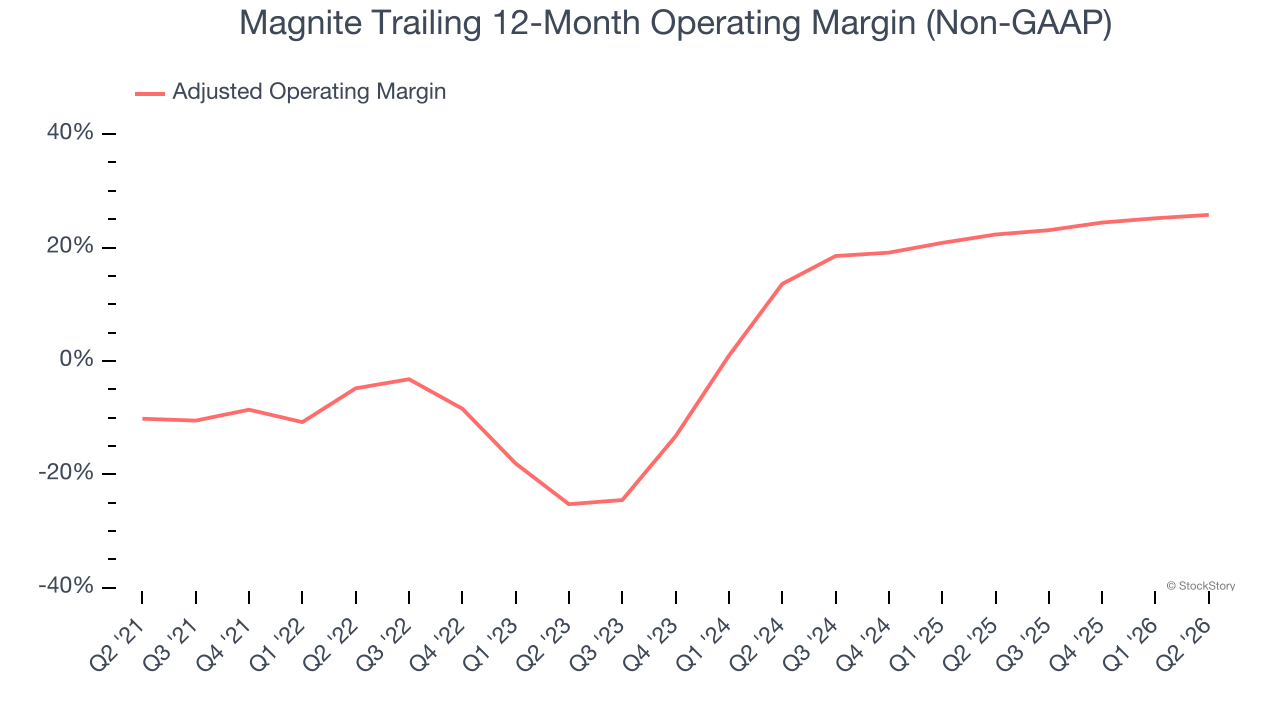
This quarter, Magnite generated an adjusted operating margin profit margin of 26.4%, up 2.4 percentage points year on year. This increase was a welcome development and shows it was more efficient.
Earnings Per Share
Revenue trends explain a company’s historical growth, but the long-term change in earnings per share (EPS) points to the profitability of that growth — for example, a company could inflate its sales through excessive spending on advertising and promotions.
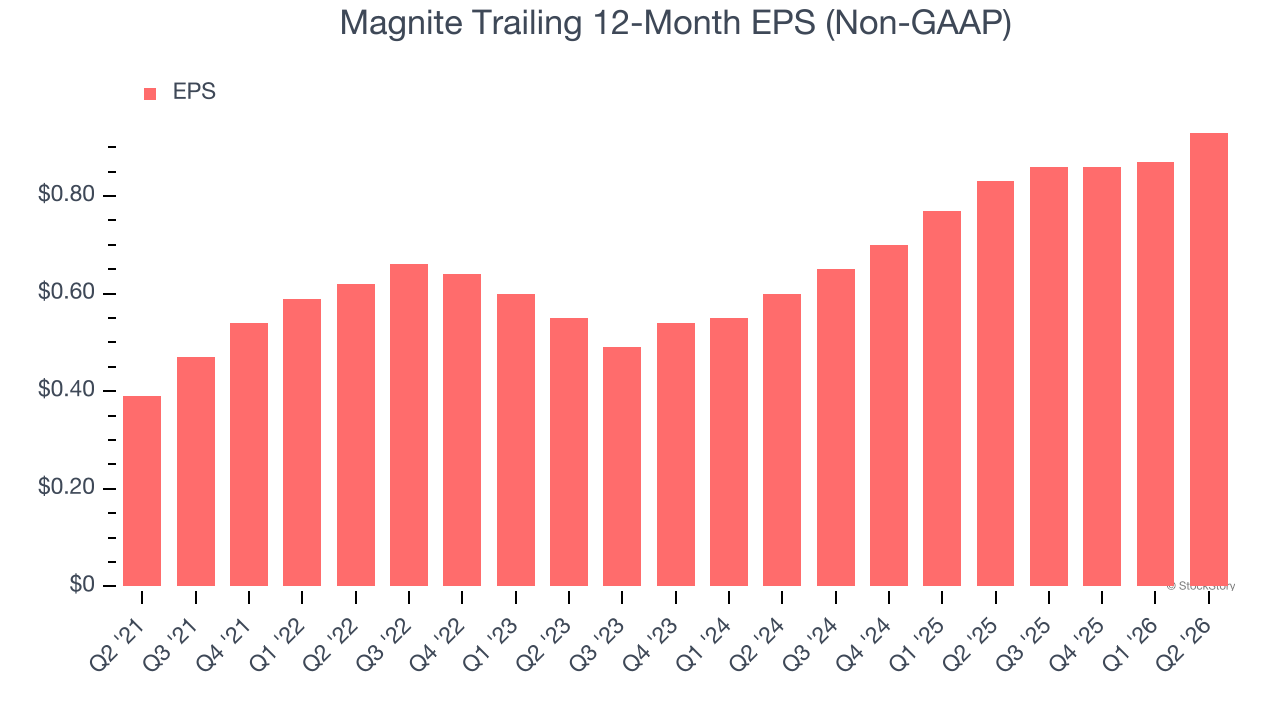
Magnite’s astounding 19% annual EPS growth over the last five years aligns with its revenue performance. This tells us its incremental sales were profitable.
Like with revenue, we analyze EPS over a shorter period to see if we are missing a change in the business.
Magnite’s two-year annual EPS growth of 24.5% was fantastic and topped its 6.9% two-year revenue growth.
We can take a deeper look into Magnite’s earnings to better understand the drivers of its performance. Magnite’s adjusted operating margin has expanded over the last two years. This was the most relevant factor (aside from the revenue impact) behind its higher earnings; interest expenses and taxes can also affect EPS but don’t tell us as much about a company’s fundamentals.
In Q2, Magnite reported adjusted EPS of $0.26, up from $0.20 in the same quarter last year. Despite growing year on year, this print slightly missed analysts’ estimates, but we care more about long-term adjusted EPS growth than short-term movements. Over the next 12 months, Wall Street expects Magnite’s full-year EPS to grow 26.3% from $0.93 to $1.17.
Key Takeaways from Magnite’s Q2 Results
We struggled to find many positives in these results. Its revenue missed and its EPS was in line with Wall Street’s estimates. Overall, this was a softer quarter. The stock traded up 8.6% to $22.42 immediately after reporting.
Is Magnite an attractive investment opportunity at the current price? If you’re making that decision, you should consider the bigger picture of valuation, business qualities, as well as the latest earnings. We cover that in our actionable full research report which you can read here (it’s free).