

Since February 2026, Carrier Global has been in a holding pattern, posting a small return of 2.8% while floating around $64.86. The stock also fell short of the S&P 500’s 11.8% gain during that period.
Is there a buying opportunity in Carrier Global, or does it present a risk to your portfolio? See what our analysts have to say in our full research report, it’s free.
Why Do We Think Carrier Global Will Underperform?
We’re cautious about Carrier Global. Here are three reasons we avoid CARR, plus one stock we’d rather own.
1. Core Business Falling Behind as Demand Plateaus
Investors interested in HVAC and Water Systems companies should track organic revenue in addition to reported revenue. This metric gives visibility into Carrier Global’s core business because it excludes one-time events such as mergers, acquisitions, and divestitures along with foreign currency fluctuations - non-fundamental factors that can manipulate the income statement.
Over the last two years, Carrier Global failed to grow its organic revenue. This performance was underwhelming and implies it may need to improve its products, pricing, or go-to-market strategy. It also suggests Carrier Global might have to lean into acquisitions to accelerate growth, which isn’t ideal because M&A can be expensive and risky (integrations often disrupt focus). 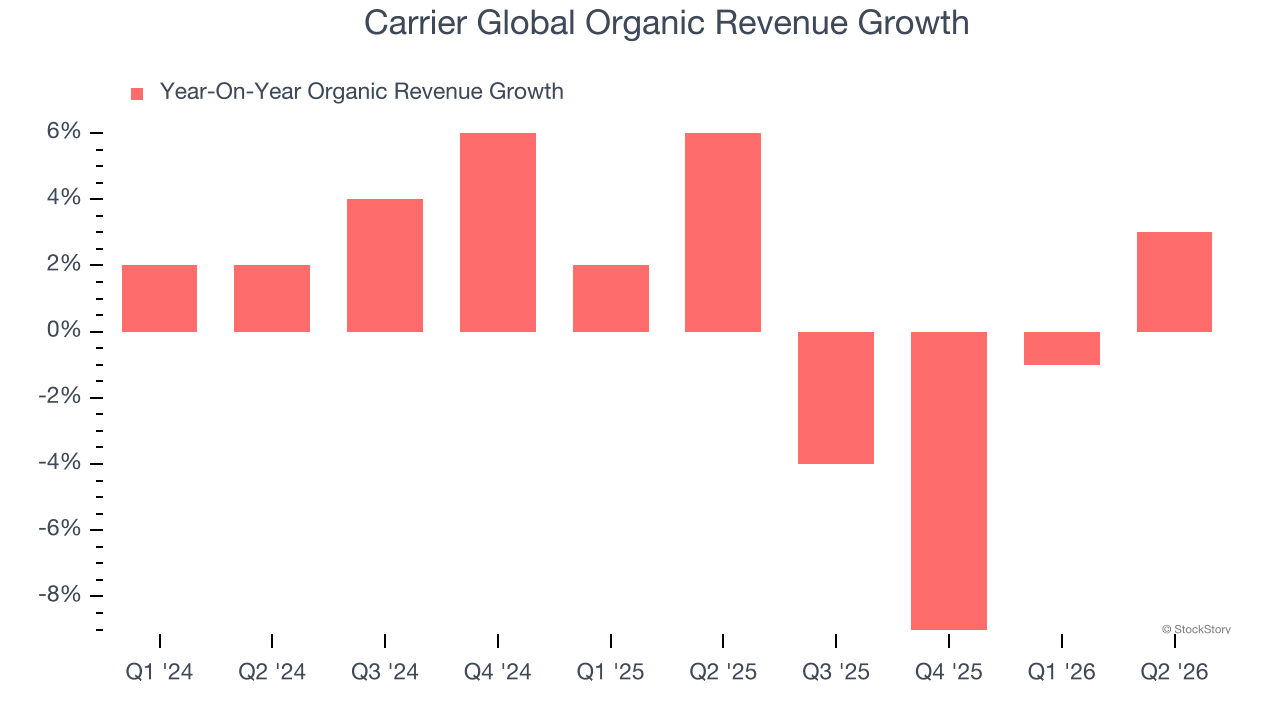
2. EPS Barely Growing
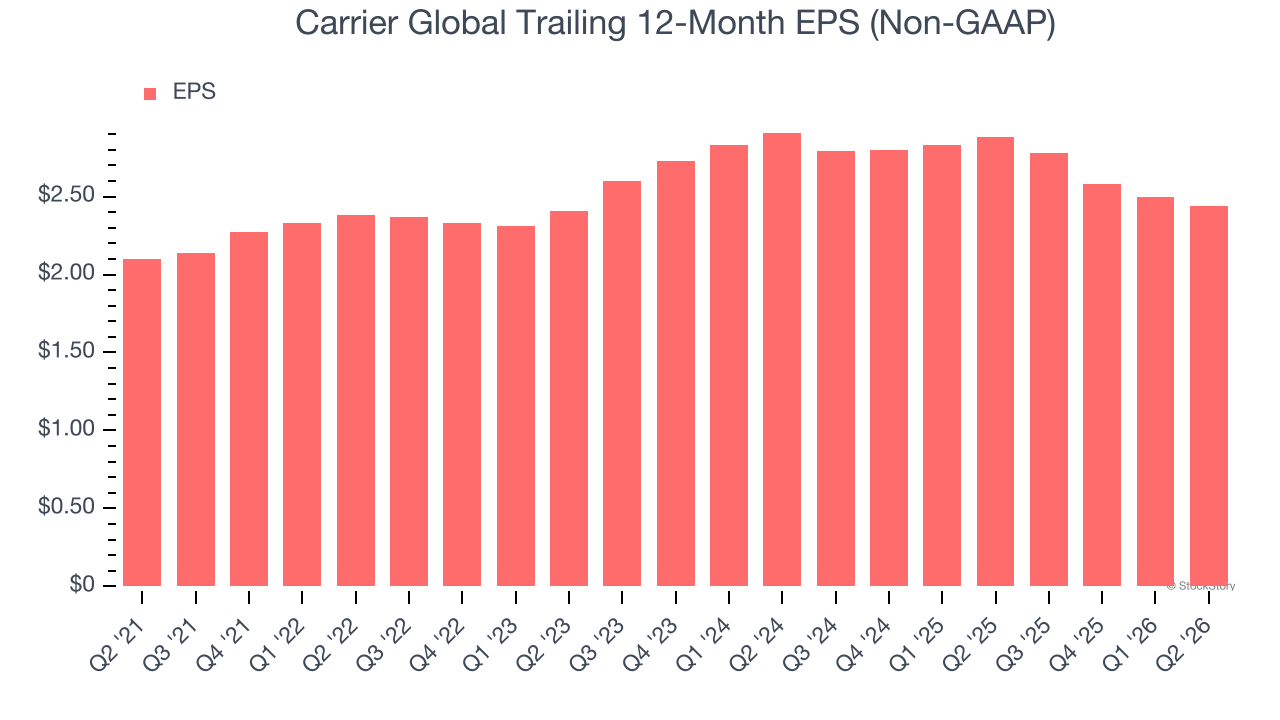
Analyzing the long-term change in earnings per share (EPS) shows whether a company’s incremental sales were profitable — for example, revenue could be inflated through excessive spending on advertising and promotions.
Carrier Global’s weak 3% annual EPS growth over the last five years aligns with its revenue performance. This tells us it maintained its per-share profitability as it expanded.
3. New Investments Fail to Bear Fruit as ROIC Declines
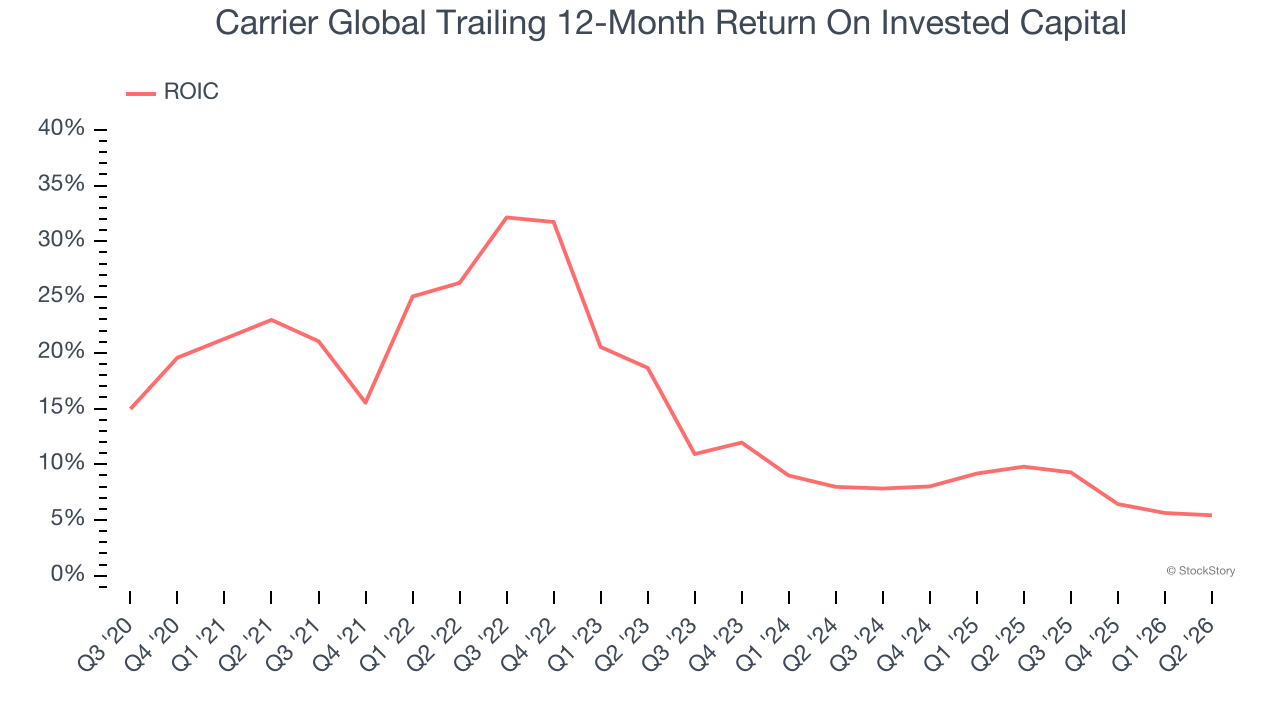
ROIC, or return on invested capital, is a metric showing how much operating profit a company generates relative to the money it has raised (debt and equity).
Unfortunately, Carrier Global’s ROIC has decreased significantly over the last few years. We like what management has done in the past, but its declining returns are perhaps a symptom of fewer profitable growth opportunities.
Final Judgment
Carrier Global doesn’t pass our quality test. With its shares underperforming the market lately, the stock trades at 20.5× forward P/E (or $64.86 per share). This multiple tells us a lot of good news is priced in - you can find more timely opportunities elsewhere. Let us point you toward our favorite semiconductor picks and shovels play.
High-Quality Stocks for All Market Conditions
WHILE YOU’RE HERE: Top 9 Market-Beating Stocks. The best stocks don’t just beat the market once. They do it again. And again. Robust revenue growth, rising free cash flow, returns on capital that leave their competition in the dust. The market has already rewarded these businesses.
But our AI platform says the party isn’t over. Find out which 9 stocks made the cut this week — FREE. Get Our Top 9 Market-Beating Stocks for Free HERE.
Stocks that have made our list include now familiar names such as Nvidia (+1,460% between June 2020 and June 2025) as well as under-the-radar businesses like the once-micro-cap company Tecnoglass (+1,552% between June 2020 and June 2025). Find your next big winner with StockStory today.