

Specialty insurance provider Palomar Holdings (NASDAQ:PLMR) reported Q2 CY2026 results exceeding the market’s revenue expectations, with sales up 54.7% year on year to $314.4 million. Its non-GAAP profit of $2.36 per share was 6.6% above analysts’ consensus estimates.
Is now the time to buy Palomar Holdings? Find out by accessing our full research report, it’s free.
Palomar Holdings (PLMR) Q2 CY2026 Highlights:
- Net Premiums Earned: $287 million vs analyst estimates of $280.2 million (59.5% year-on-year growth, 2.4% beat)
- Revenue: $314.4 million vs analyst estimates of $299.5 million (54.7% year-on-year growth, 5% beat)
- Combined Ratio: 83.3% vs analyst estimates of 83% (32.5 basis point miss)
- Adjusted EPS: $2.36 vs analyst estimates of $2.21 (6.6% beat)
- Market Capitalization: $3.62 billion
Mac Armstrong, Chairman and Chief Executive Officer, commented, “The second quarter of 2026 was another strong one for Palomar; highlighted by record adjusted net income, our 15th consecutive earnings beat and the third increase to our full-year adjusted net income guidance. Gross written premium increased 27% year-over-year, adjusted net income grew 31%, adjusted earnings per share grew 34%, adjusted combined ratio was 77% and our adjusted return on equity was 26% - all outstanding results. Bolstering our financial performance were several operational achievements including the launch of the PLMR.Farm, our innovative crop policy administration system, and exceptional new additions to our team. These results demonstrate our ability to execute in a dynamic insurance market while maintaining discipline in underwriting and capital allocation.
Company Overview
Founded in 2013 to fill gaps in catastrophe insurance markets, Palomar Holdings (NASDAQ:PLMR) is a specialty insurance provider that offers property and casualty insurance products in underserved markets, with a focus on earthquake coverage.
Revenue Growth
Big picture, insurers generate revenue from three key sources. The first is the core business of underwriting policies. The second source is income from investing the “float” (premiums collected upfront not yet paid out as claims) in assets such as fixed-income assets and equities. The third is fees from various sources such as policy administration, annuities, or other value-added services. Thankfully, Palomar Holdings’s 41.2% annualized revenue growth over the last five years was incredible. Its growth surpassed the average insurance company and shows its offerings resonate with customers, a great starting point for our analysis.
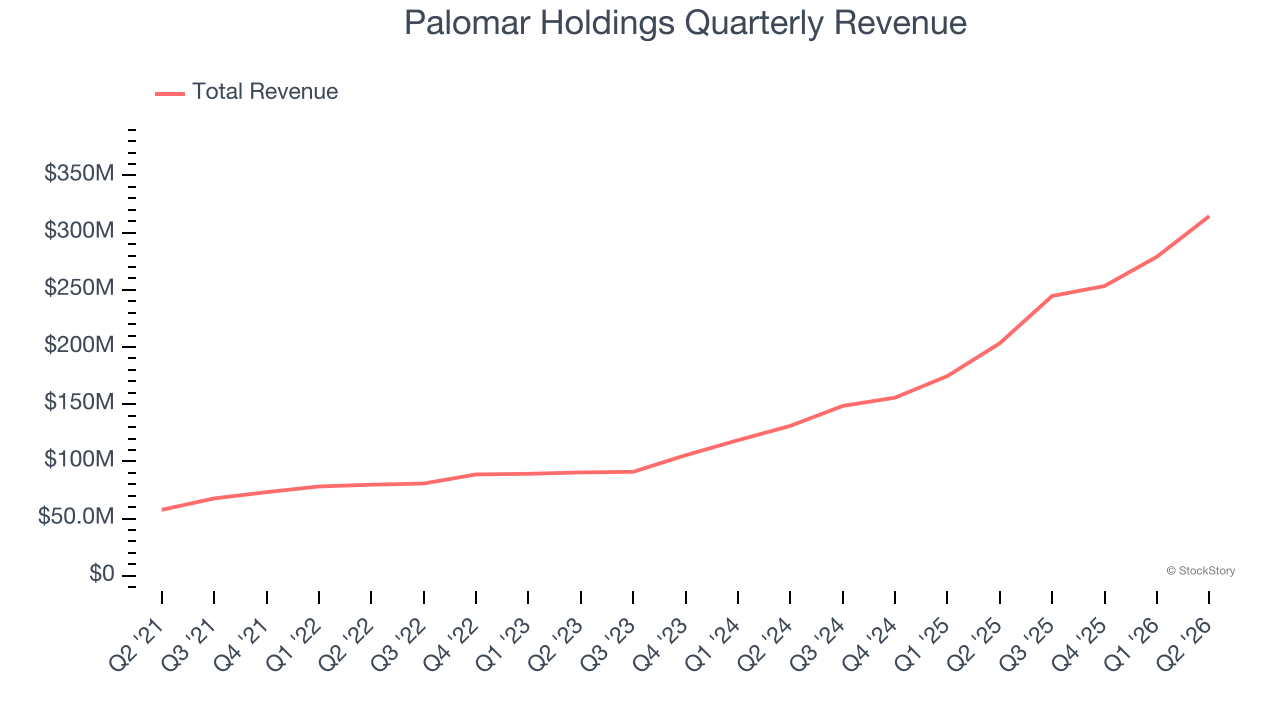
We at StockStory place the most emphasis on long-term growth, but within financials, a half-decade historical view may miss recent interest rate changes, market returns, and industry trends. Palomar Holdings’s annualized revenue growth of 56.4% over the last two years is above its five-year trend, suggesting its demand was strong and recently accelerated. 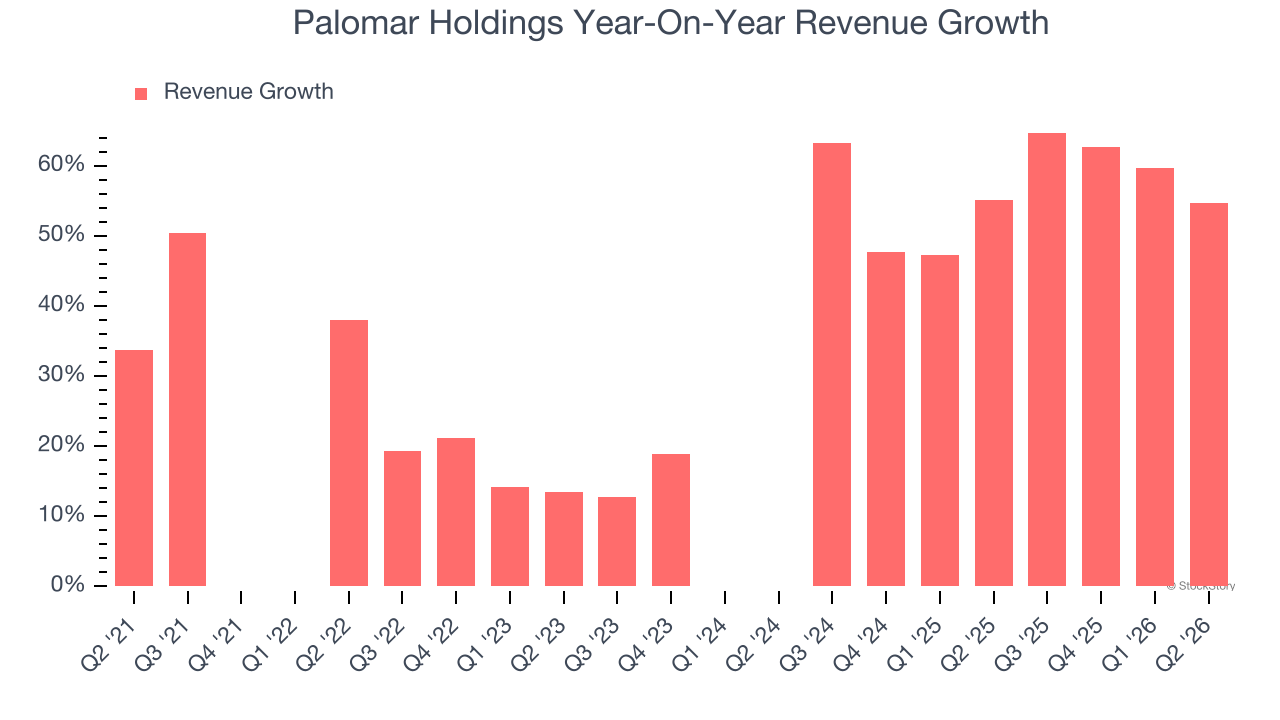 Note: Quarters not shown were determined to be outliers because they were impacted by outsized investment gains/losses that are not indicative of the recurring fundamentals of the business.
This quarter, Palomar Holdings reported magnificent year-on-year revenue growth of 54.7%, and its $314.4 million of revenue beat Wall Street’s estimates by 5%.
Net premiums earned made up 92.7% of the company’s total revenue during the last five years, meaning Palomar Holdings lives and dies by its underwriting activities because non-insurance operations barely move the needle.
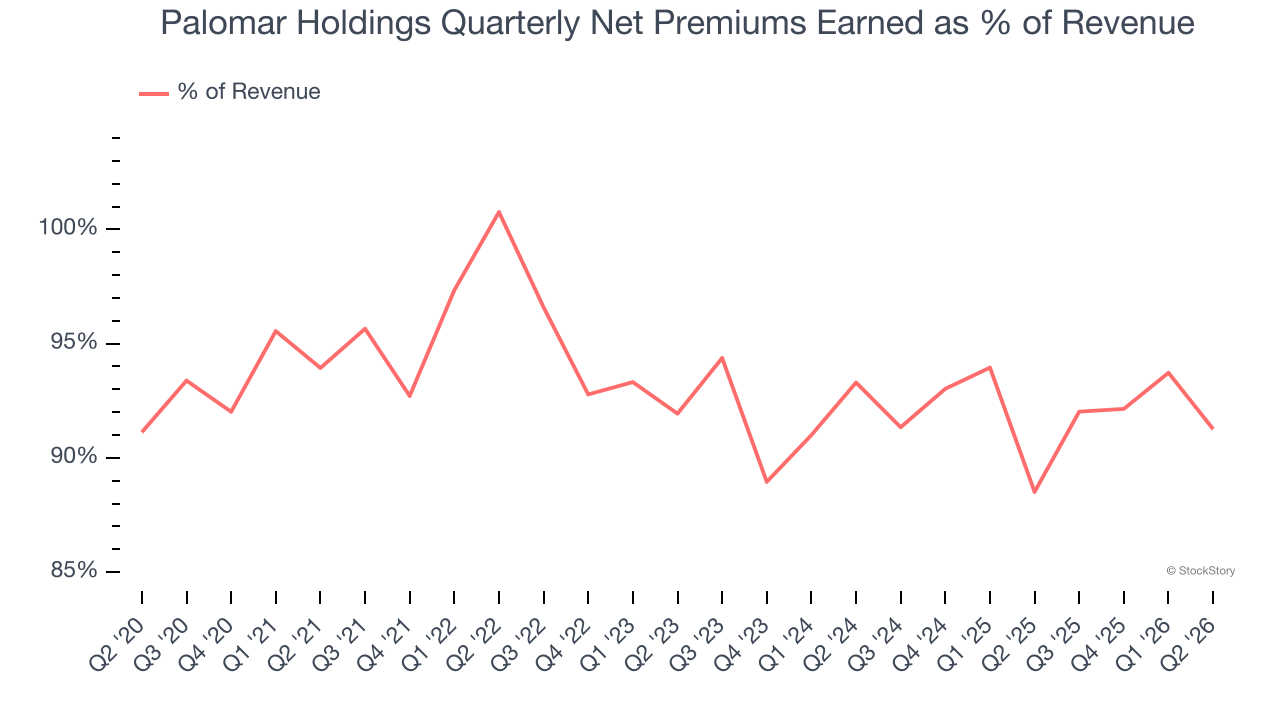
Our experience and research show the market cares primarily about an insurer’s net premiums earned growth as investment and fee income are considered more susceptible to market volatility and economic cycles.
ALSO WORTH WATCHING: Nvidia’s Quiet Partner. Nvidia’s chips cost a hundred grand. The connectors that make them work cost even more. One company makes them all.
Every AI server needs specialized infrastructure the chip companies don’t make. High-speed cables. Power connectors. Thermal sensors. This 90-year-old company built a monopoly on it. The AI boom just started. This stock is still flying under the radar. Claim The Stock Ticker Here for FREE.
Net Premiums Earned
When insurers sell policies, they protect themselves from extremely large losses or an outsized accumulation of losses with reinsurance (insurance for insurance companies). Net premiums earned are therefore net of what’s ceded to reinsurers as a risk mitigation and transfer strategy.
Palomar Holdings’s net premiums earned has grown at a 40.8% annualized rate over the last five years, much better than the broader insurance industry and in line with its total revenue.
When analyzing Palomar Holdings’s net premiums earned over the last two years, we can see that growth accelerated to 56.8% annually. This performance was similar to its total revenue.
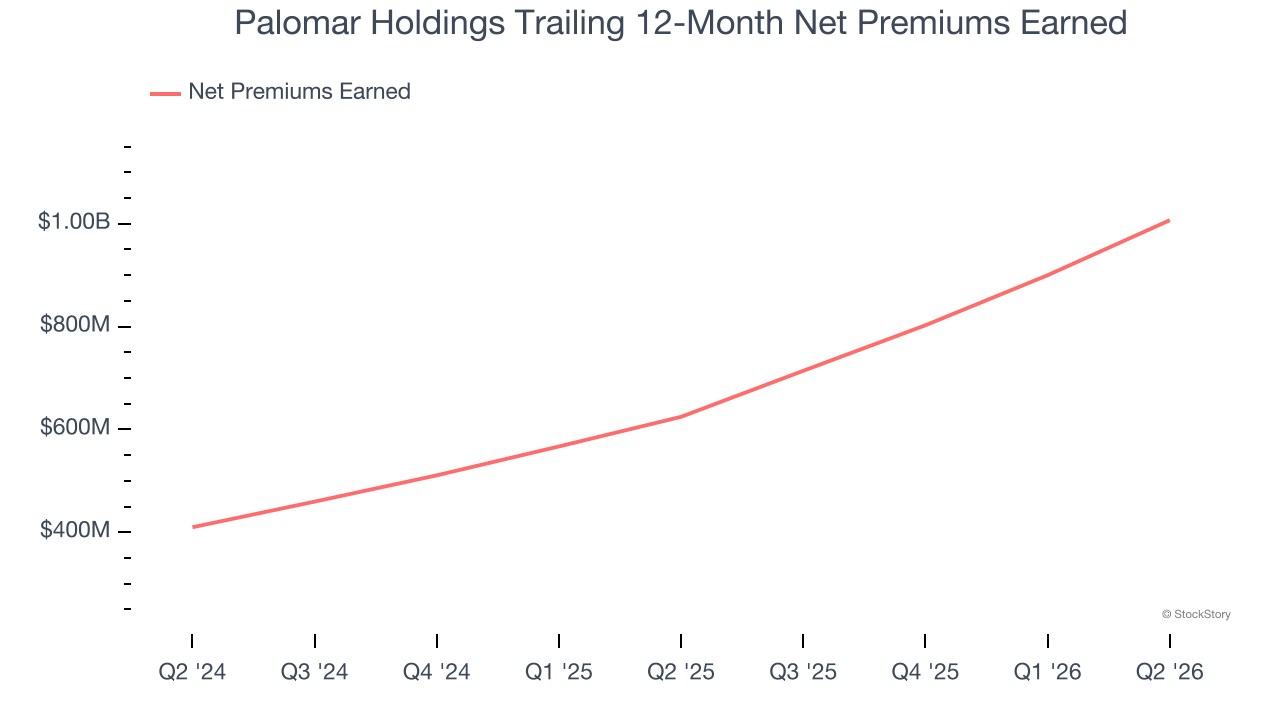
In Q2, Palomar Holdings produced $287 million of net premiums earned, up a hearty 59.5% year on year and topping Wall Street Consensus estimates by 2.4%.
Key Takeaways from Palomar Holdings’s Q2 Results
We were impressed by how significantly Palomar Holdings blew past analysts’ revenue expectations this quarter. We were also glad its net premiums earned outperformed Wall Street’s estimates. Zooming out, we think this was a good print with some key areas of upside. Investors were likely hoping for more, and shares traded down 1.3% to $134.51 immediately after reporting.
So do we think Palomar Holdings is an attractive buy at the current price? We think that the latest quarter is only one piece of the longer-term business quality puzzle. Quality, when combined with valuation, can help determine if the stock is a buy. We cover that in our actionable full research report which you can read here (it’s free).