

Solar power systems company SolarEdge (NASDAQ:SEDG) beat Wall Street’s revenue expectations in Q1 CY2026, with sales up 41.5% year on year to $310.5 million. On the other hand, next quarter’s revenue guidance of $340 million was less impressive, coming in 0.7% below analysts’ estimates. Its non-GAAP loss of $0.43 per share was 59.9% below analysts’ consensus estimates.
Is now the time to buy SolarEdge? Find out by accessing our full research report, it’s free.
SolarEdge (SEDG) Q1 CY2026 Highlights:
- Revenue: $310.5 million vs analyst estimates of $304.5 million (41.5% year-on-year growth, 2% beat)
- Adjusted EPS: -$0.43 vs analyst expectations of -$0.27 (59.9% miss)
- Adjusted EBITDA: -$29.25 million (-9.4% margin, 70.1% year-on-year growth)
- Revenue Guidance for Q2 CY2026 is $340 million at the midpoint, below analyst estimates of $342.3 million
- Adjusted EBITDA Margin: -9.4%, up from -44.5% in the same quarter last year
- Free Cash Flow Margin: 6.7%, down from 10.8% in the same quarter last year
- Market Capitalization: $2.71 billion
Company Overview
Established in 2006, SolarEdge (NASDAQ: SEDG) creates advanced systems to improve the efficiency of solar panels.
Revenue Growth
A company’s long-term sales performance can indicate its overall quality. Even a bad business can shine for one or two quarters, but a top-tier one grows for years. Over the last five years, SolarEdge’s demand was weak and its revenue declined by 2.3% per year. This was below our standards and suggests it’s a low quality business.
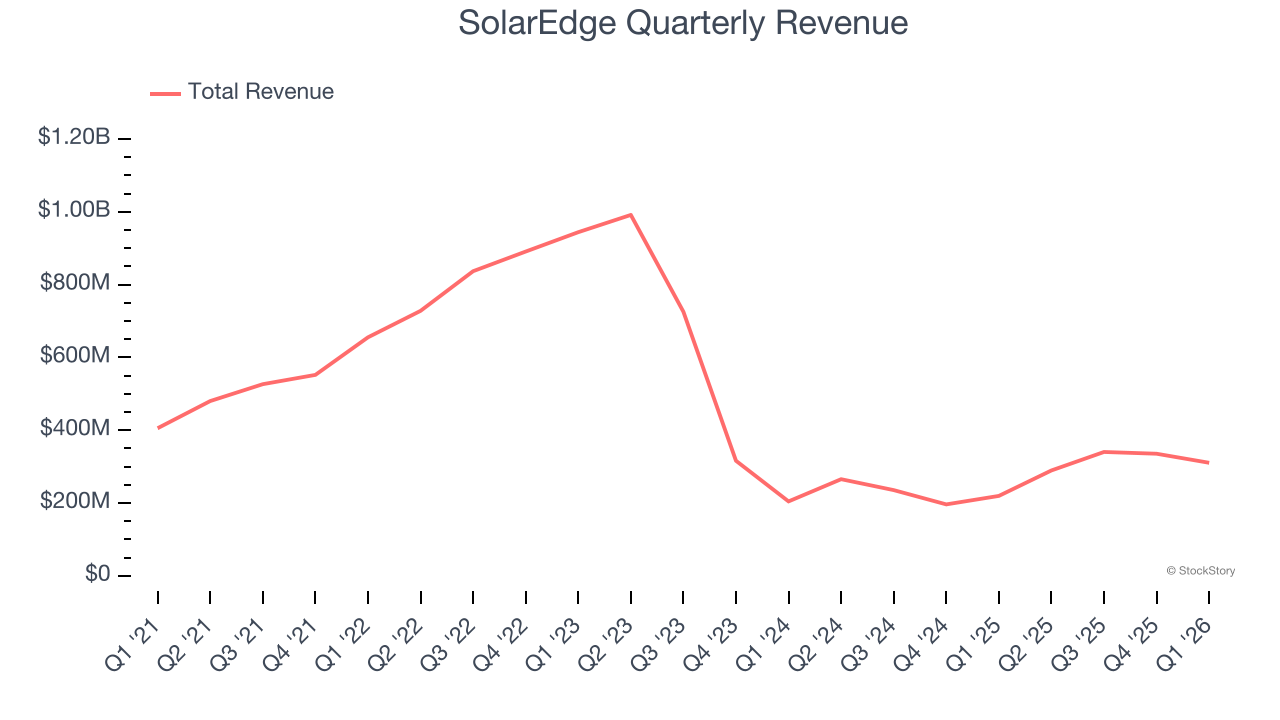
We at StockStory place the most emphasis on long-term growth, but within industrials, a half-decade historical view may miss cycles, industry trends, or a company capitalizing on catalysts such as a new contract win or a successful product line. SolarEdge’s recent performance shows its demand remained suppressed as its revenue has declined by 24.5% annually over the last two years. 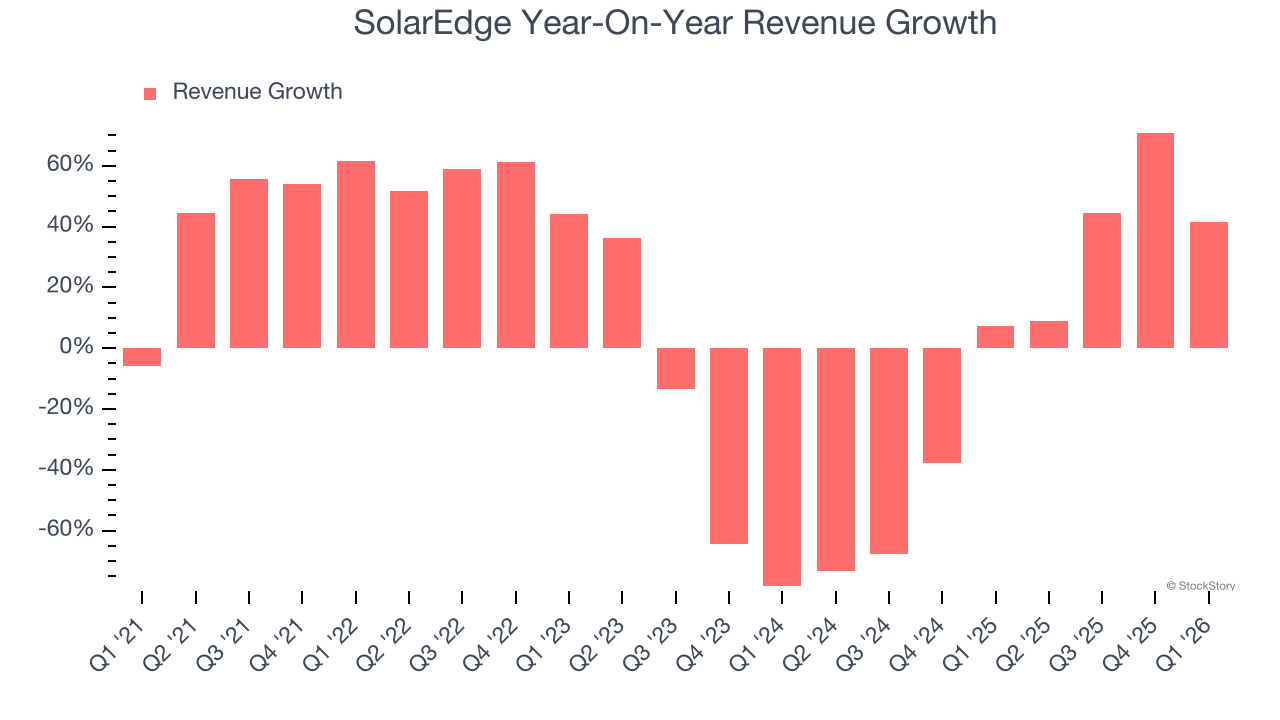
This quarter, SolarEdge reported magnificent year-on-year revenue growth of 41.5%, and its $310.5 million of revenue beat Wall Street’s estimates by 2%. Company management is currently guiding for a 17.5% year-on-year increase in sales next quarter.
Looking further ahead, sell-side analysts expect revenue to grow 11.4% over the next 12 months, an improvement versus the last two years. This projection is admirable and implies its newer products and services will spur better top-line performance.
ALSO WORTH WATCHING: Nvidia’s Quiet Partner. Nvidia’s chips cost a hundred grand. The connectors that make them work cost even more. One company makes them all.
Every AI server needs specialized infrastructure the chip companies don’t make. High-speed cables. Power connectors. Thermal sensors. This 90-year-old company built a monopoly on it. The AI boom just started. This stock is still flying under the radar. Claim The Stock Ticker Here for FREE.
Operating Margin
SolarEdge’s high expenses have contributed to an average operating margin of negative 16.9% over the last five years. Unprofitable industrials companies require extra attention because they could get caught swimming naked when the tide goes out. It’s hard to trust that the business can endure a full cycle.
Analyzing the trend in its profitability, SolarEdge’s operating margin decreased by 29.6 percentage points over the last five years. SolarEdge’s performance was poor no matter how you look at it - it shows that costs were rising and it couldn’t pass them onto its customers.
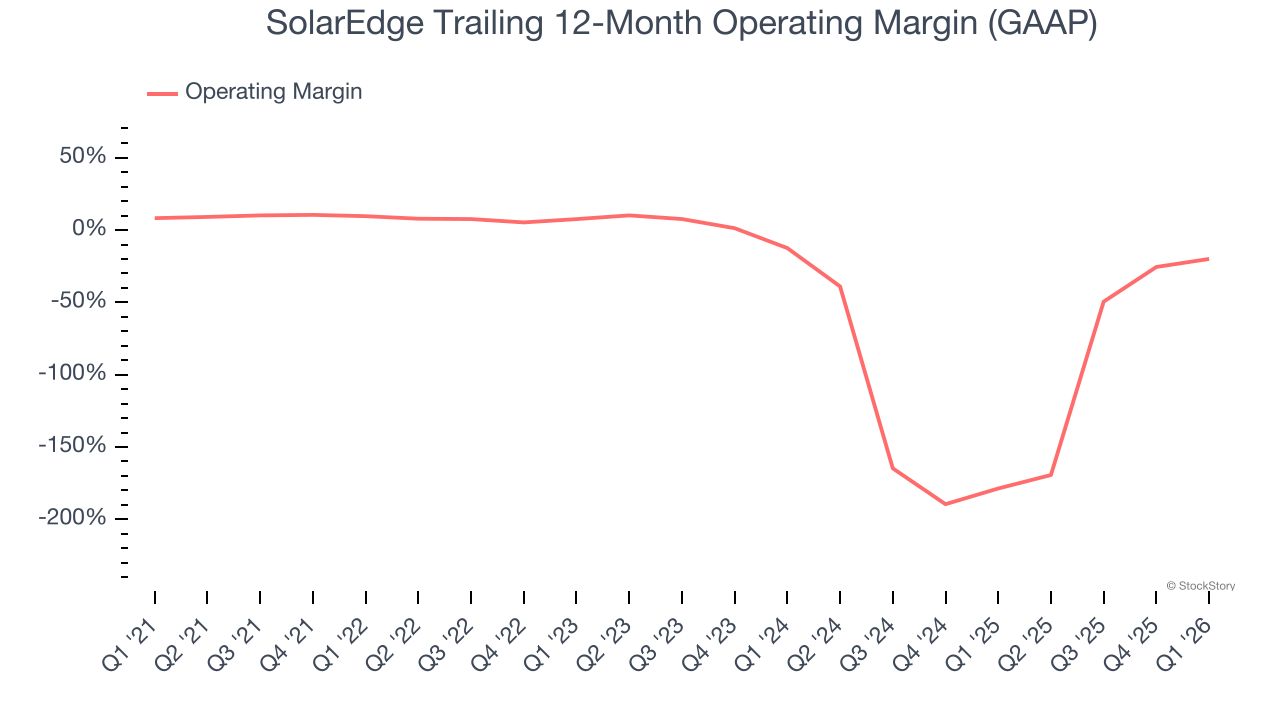
SolarEdge’s operating margin was negative 17.7% this quarter. The company's consistent lack of profits raise a flag.
Earnings Per Share
Revenue trends explain a company’s historical growth, but the long-term change in earnings per share (EPS) points to the profitability of that growth – for example, a company could inflate its sales through excessive spending on advertising and promotions.
Sadly for SolarEdge, its EPS declined by 19.2% annually over the last five years, more than its revenue. This tells us the company struggled because its fixed cost base made it difficult to adjust to shrinking demand.
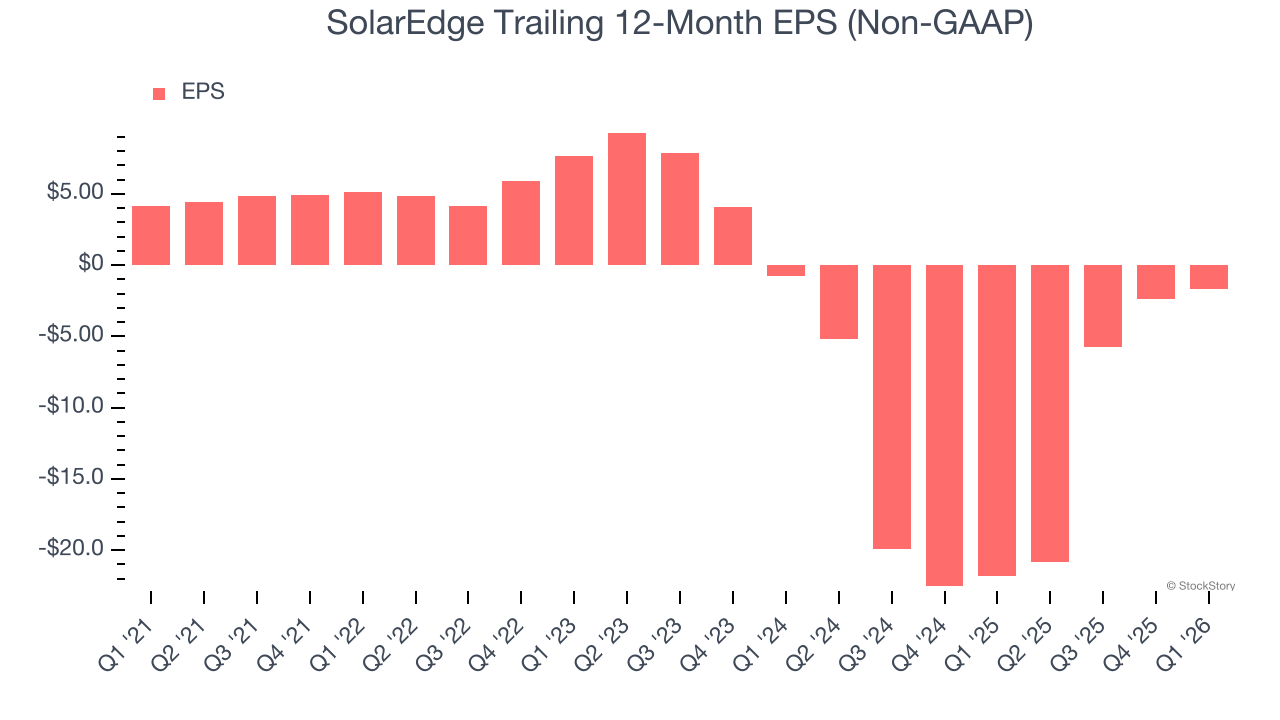
Diving into the nuances of SolarEdge’s earnings can give us a better understanding of its performance. As we mentioned earlier, SolarEdge’s operating margin expanded this quarter but declined by 29.6 percentage points over the last five years. Its share count also grew by 8.1%, meaning the company not only became less efficient with its operating expenses but also diluted its shareholders. 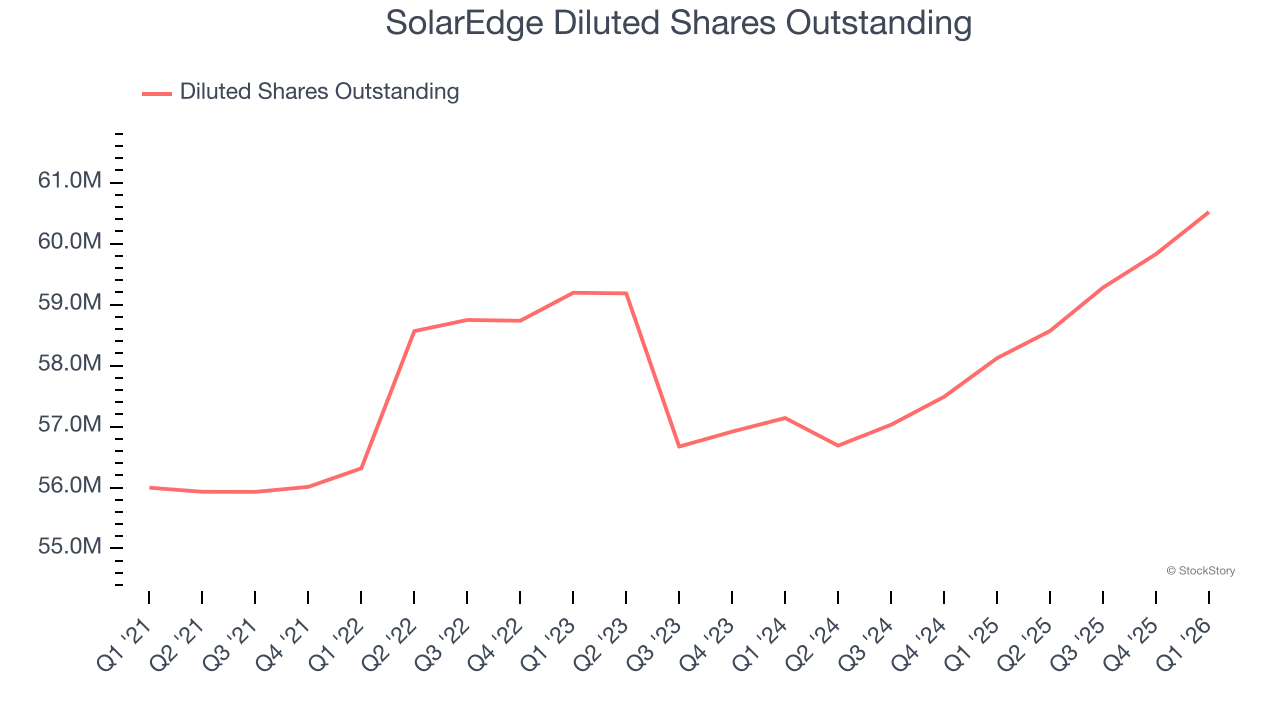
Like with revenue, we analyze EPS over a shorter period to see if we are missing a change in the business.
For SolarEdge, its two-year annual EPS declines of 50.1% show it’s continued to underperform. These results were bad no matter how you slice the data.
In Q1, SolarEdge reported adjusted EPS of negative $0.43, up from negative $1.14 in the same quarter last year. Despite growing year on year, this print missed analysts’ estimates. Over the next 12 months, Wall Street is optimistic. Analysts forecast SolarEdge’s full-year EPS of negative $1.69 will flip to positive $0.48.
Key Takeaways from SolarEdge’s Q1 Results
We were impressed by how significantly SolarEdge blew past analysts’ adjusted operating income expectations this quarter. We were also glad its revenue outperformed Wall Street’s estimates. On the other hand, its EBITDA missed and its EPS fell short of Wall Street’s estimates. Overall, this was a softer quarter. The stock traded down 5.4% to $42.25 immediately following the results.
The latest quarter from SolarEdge’s wasn’t that good. One earnings report doesn’t define a company’s quality, though, so let’s explore whether the stock is a buy at the current price. We think that the latest quarter is only one piece of the longer-term business quality puzzle. Quality, when combined with valuation, can help determine if the stock is a buy. We cover that in our actionable full research report which you can read here (it’s free).