

E-commerce platform Shopify (NASDAQ:SHOP) reported revenue ahead of Wall Street’s expectations in Q1 CY2026, with sales up 34.3% year on year to $3.17 billion. The company expects next quarter’s revenue to be around $3.42 billion, close to analysts’ estimates. Its GAAP profit of $0.45 per share was 90.2% above analysts’ consensus estimates.
Is now the time to buy Shopify? Find out by accessing our full research report, it’s free.
Shopify (SHOP) Q1 CY2026 Highlights:
- Revenue: $3.17 billion vs analyst estimates of $3.09 billion (34.3% year-on-year growth, 2.5% beat)
- EPS (GAAP): $0.45 vs analyst estimates of $0.24 (90.2% beat)
- Adjusted Operating Income: $514 million vs analyst estimates of $470 million (16.2% margin, 9.4% beat)
- Revenue Guidance for Q2 CY2026 is $3.42 billion at the midpoint, roughly in line with what analysts were expecting
- Implied Operating Profit Guidance for Q2 CY2026 below what analysts were expecting
- Operating Margin: 12.1%, up from 8.6% in the same quarter last year
- Free Cash Flow Margin: 15%, down from 19.5% in the previous quarter
- Market Capitalization: $166.3 billion
Company Overview
Starting with just three people selling snowboards online in 2004, Shopify (NASDAQ:SHOP) provides a comprehensive platform that enables merchants of all sizes to create, manage and grow their businesses across multiple sales channels.
Revenue Growth
Examining a company’s long-term performance can provide clues about its quality. Any business can put up a good quarter or two, but the best consistently grow over the long haul. Luckily, Shopify’s sales grew at an impressive 29.1% compounded annual growth rate over the last five years. Its growth surpassed the average software company and shows its offerings resonate with customers, a great starting point for our analysis.
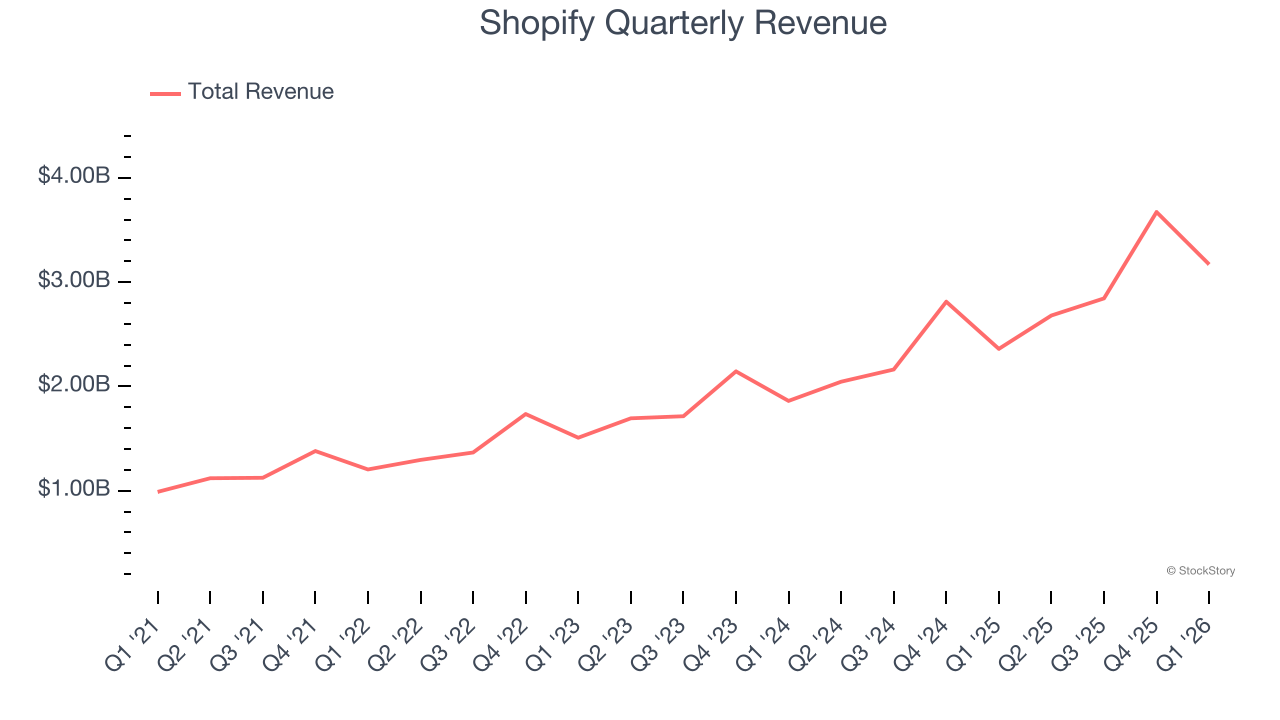
Long-term growth is the most important, but within software, a half-decade historical view may miss new innovations or demand cycles. Shopify’s annualized revenue growth of 29.2% over the last two years aligns with its five-year trend, suggesting its demand was predictably strong. 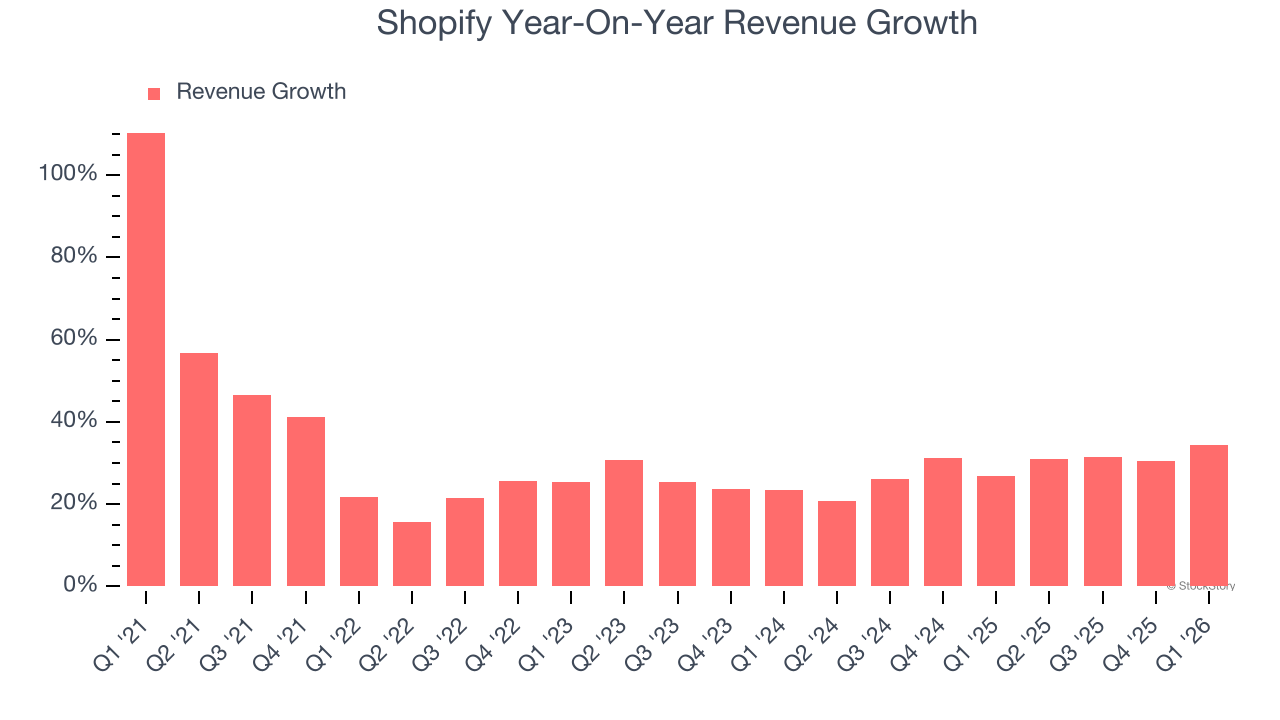
This quarter, Shopify reported wonderful year-on-year revenue growth of 34.3%, and its $3.17 billion of revenue exceeded Wall Street’s estimates by 2.5%. Company management is currently guiding for a 27.5% year-on-year increase in sales next quarter.
Looking further ahead, sell-side analysts expect revenue to grow 25% over the next 12 months, a deceleration versus the last two years. Still, this projection is eye-popping given its scale and implies the market sees success for its products and services.
ONE MORE THING: 3 Hidden Platforms Growing 3X Faster than Amazon, Google, and PayPal. Amazon, Google, and Meta all followed the same playbook: Dominate an ignored market. Build an unbeatable moat. Scale until you’re unstoppable.
These three platforms are running that exact playbook right now. The early investors in Amazon made fortunes. The early investors in these could do the same. Get All 3 Stocks Here for FREE.
Gross Merchandise Value
GMV, or gross merchandise value, is the total value of goods and services sold on Shopify’s platform. This is the number from which the company will ultimately collect fees (usually called a take rate), and the higher it is, the higher the switching costs, enabling Shopify to monetize in additional ways (like subscription revenue for more services).
Shopify’s GMV punched in at $100.7 billion in Q1, and over the last four quarters, its growth was fantastic as it averaged 32.1% year-on-year increases. This performance aligned with its total sales growth and shows the company is capturing significant demand. It also indicates that customers are highly active and engaged, giving Shopify more opportunities to upsell adjacent products such as loans and AI-driven inventory management software that are accretive to the bottom line. 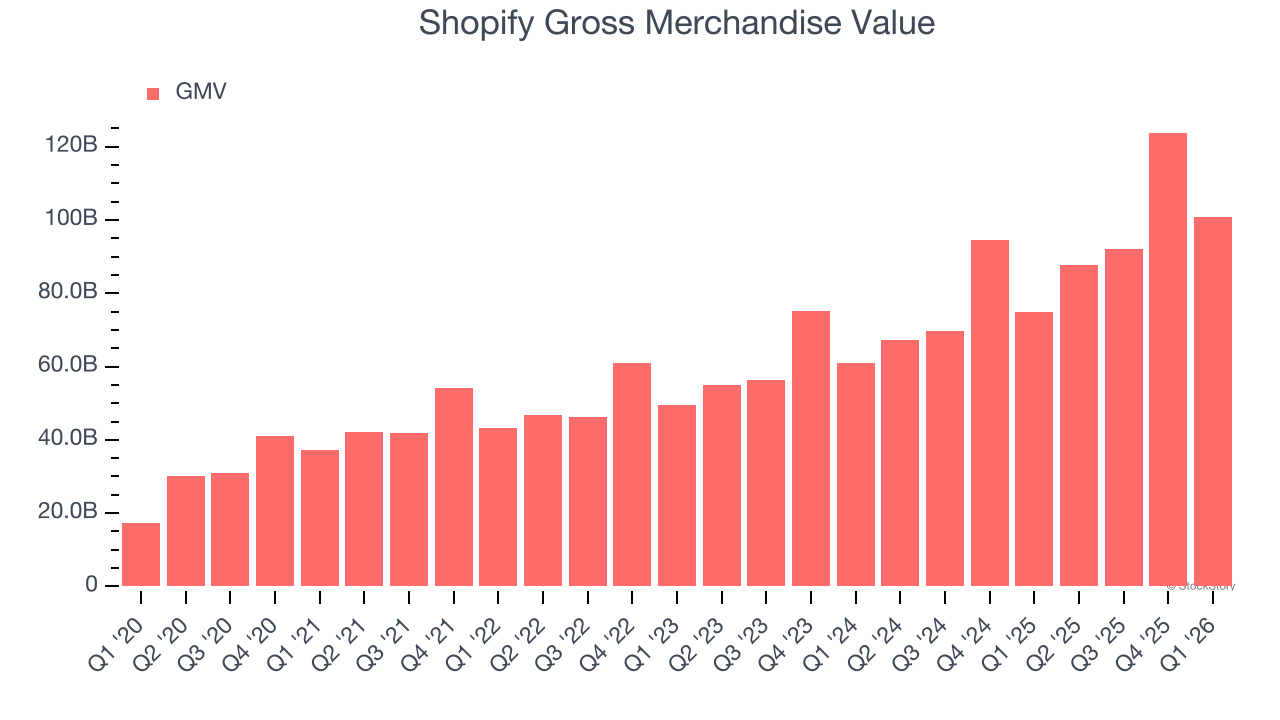
Customer Acquisition Efficiency
The customer acquisition cost (CAC) payback period measures the months a company needs to recoup the money spent on acquiring a new customer. This metric helps assess how quickly a business can break even on its sales and marketing investments.
Shopify is extremely efficient at acquiring new customers, and its CAC payback period checked in at 5.3 months this quarter. The company’s rapid recovery of its customer acquisition costs indicates it has a highly differentiated product offering and a strong brand reputation due to its scale. These dynamics give Shopify more resources to pursue new product initiatives while maintaining the flexibility to increase its sales and marketing investments. 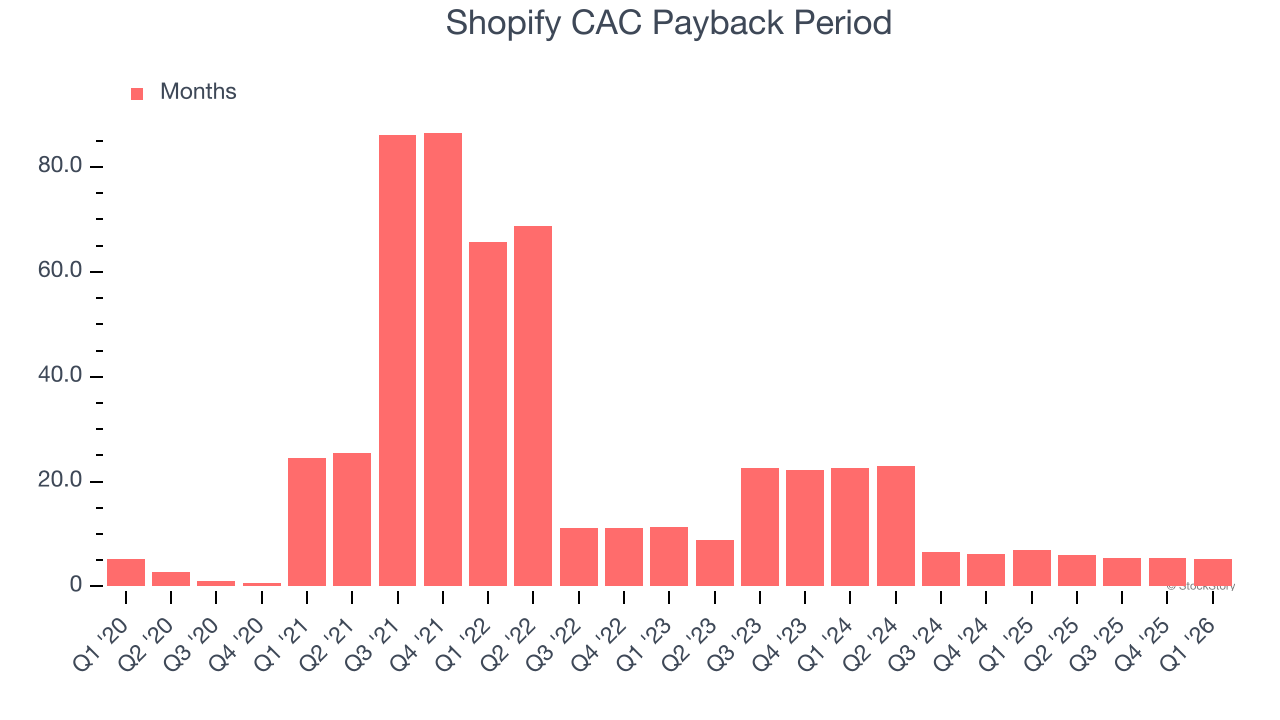
Key Takeaways from Shopify’s Q1 Results
We were impressed by how significantly Shopify blew past analysts’ EBITDA expectations this quarter. We were also happy its gross merchandise volume outperformed Wall Street’s estimates. However, revenue guide for next quarter was just in line and operating profit guidance for next quarter missed. This outlook is weighing on shares. The market seemed to be hoping for more, and the stock traded down 7.3% to $118.29 immediately following the results.
Should you buy the stock or not? When making that decision, it’s important to consider its valuation, business qualities, as well as what has happened in the latest quarter. We cover that in our actionable full research report which you can read here (it’s free).
