

Higher education company Strategic Education (NASDAQ:STRA) missed Wall Street’s revenue expectations in Q1 CY2026, with sales flat year on year at $305.9 million. Its non-GAAP profit of $1.42 per share was 4.9% below analysts’ consensus estimates.
Is now the time to buy Strategic Education? Find out by accessing our full research report, it’s free.
Strategic Education (STRA) Q1 CY2026 Highlights:
- Revenue: $305.9 million vs analyst estimates of $309.8 million (flat year on year, 1.2% miss)
- Adjusted EPS: $1.42 vs analyst expectations of $1.49 (4.9% miss)
- Adjusted EBITDA: $62.15 million vs analyst estimates of $65.75 million (20.3% margin, 5.5% miss)
- Operating Margin: 13.4%, in line with the same quarter last year
- Free Cash Flow Margin: 25.3%, up from 18.9% in the same quarter last year
- Domestic Students: in line with the same quarter last year
- Market Capitalization: $1.87 billion
Company Overview
Formed through the merger of Strayer Education and Capella Education in 2018, Strategic Education (NASDAQ:STRA) is a career-focused higher education provider.
Revenue Growth
Examining a company’s long-term performance can provide clues about its quality. Any business can put up a good quarter or two, but many enduring ones grow for years. Unfortunately, Strategic Education’s 3.6% annualized revenue growth over the last five years was weak. This was below our standard for the consumer discretionary sector and is a rough starting point for our analysis.
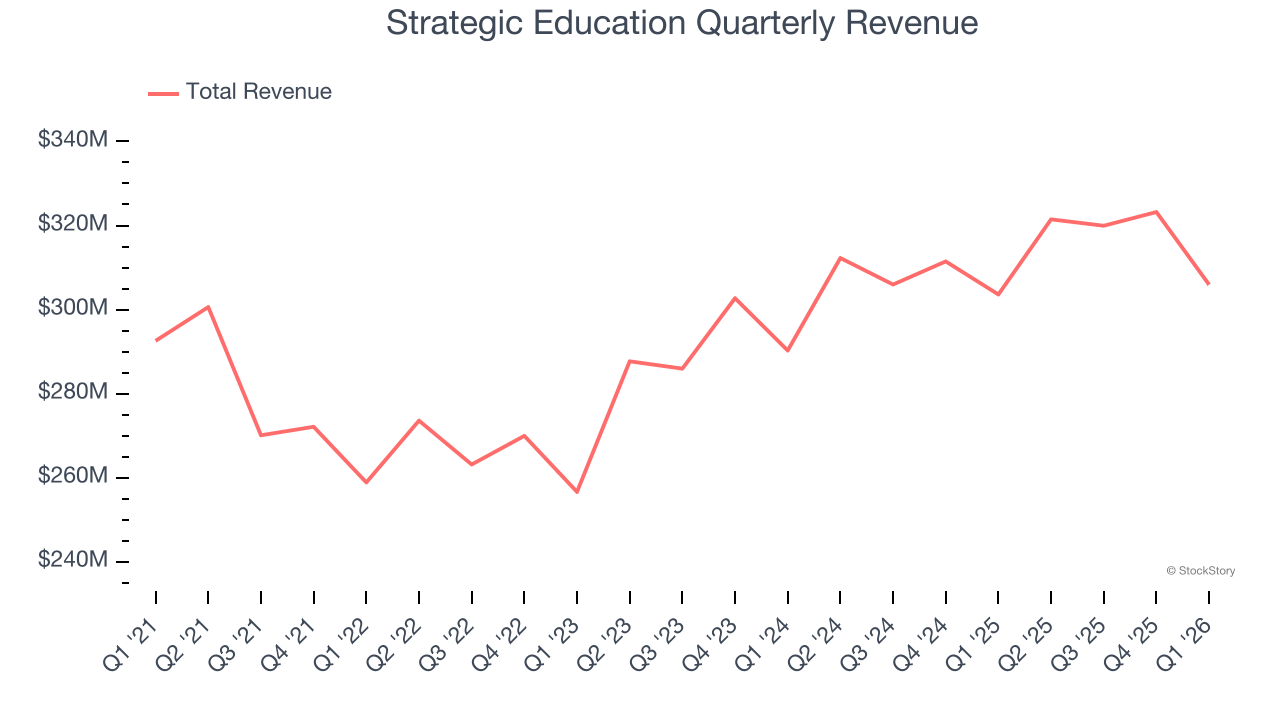
We at StockStory place the most emphasis on long-term growth, but within consumer discretionary, a stretched historical view may miss a company riding a successful new product or trend. Strategic Education’s annualized revenue growth of 4.4% over the last two years aligns with its five-year trend, suggesting its demand was consistently weak. 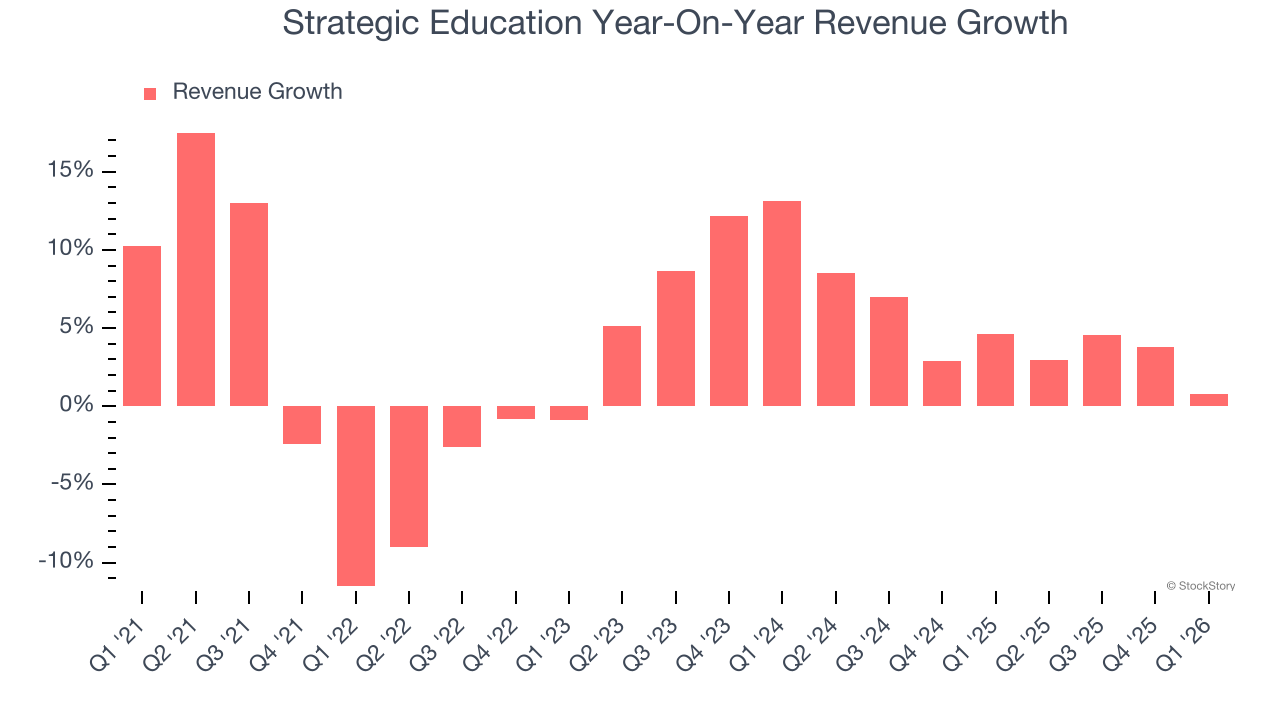
Strategic Education also discloses its number of domestic students and international students, which clocked in at 87,165 and 19,570 in the latest quarter. Over the last two years, both metrics have been flat. Because this performance is worse than its revenue during the same period, we can conclude the company’s monetization has risen. 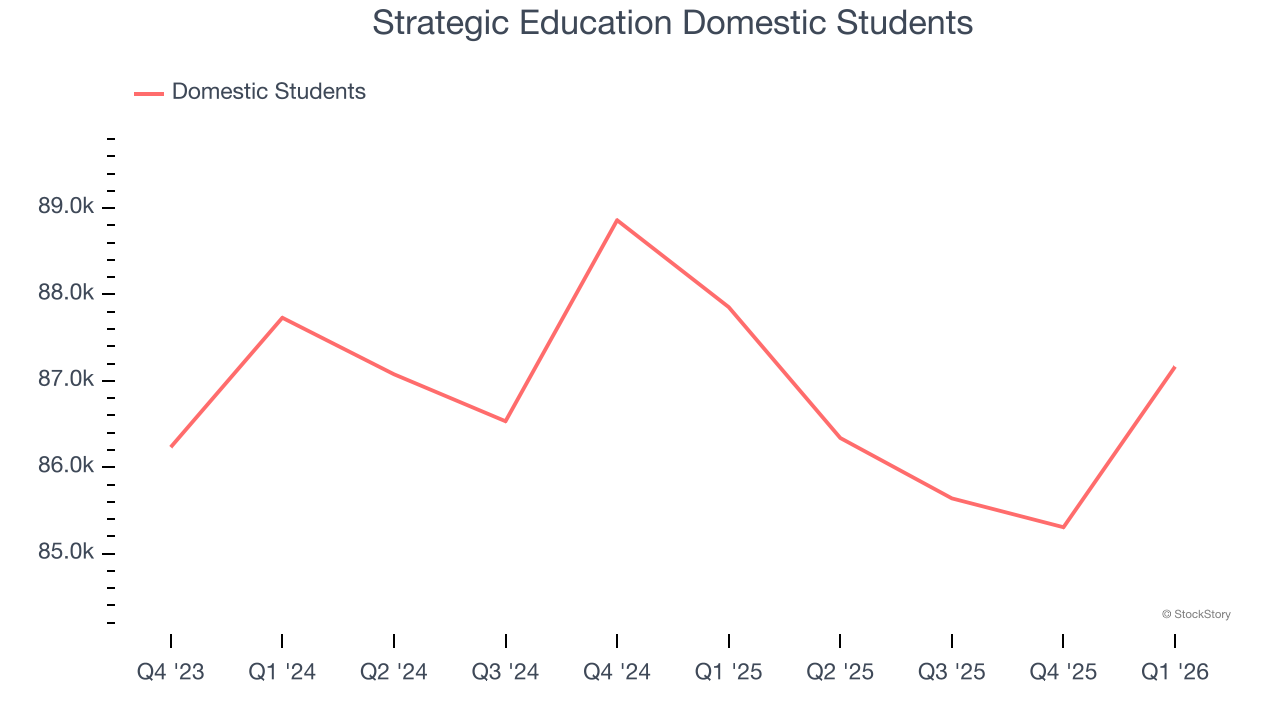
This quarter, Strategic Education’s $305.9 million of revenue was flat year on year, falling short of Wall Street’s estimates.
Looking ahead, sell-side analysts expect revenue to grow 3.3% over the next 12 months, similar to its two-year rate. This projection is underwhelming and suggests its products and services will see some demand headwinds.
ONE MORE THING: 3 Hidden Platforms Growing 3X Faster than Amazon, Google, and PayPal. Amazon, Google, and Meta all followed the same playbook: Dominate an ignored market. Build an unbeatable moat. Scale until you’re unstoppable.
These three platforms are running that exact playbook right now. The early investors in Amazon made fortunes. The early investors in these could do the same. Get All 3 Stocks Here for FREE.
Operating Margin
Operating margin is an important measure of profitability as it shows the portion of revenue left after accounting for all core expenses – everything from the cost of goods sold to advertising and wages. It’s also useful for comparing profitability across companies with different levels of debt and tax rates because it excludes interest and taxes.
Strategic Education’s operating margin has been trending up over the last 12 months and averaged 13.2% over the last two years. The company’s higher efficiency is a breath of fresh air, but its suboptimal cost structure means it still sports inadequate profitability for a consumer discretionary business.
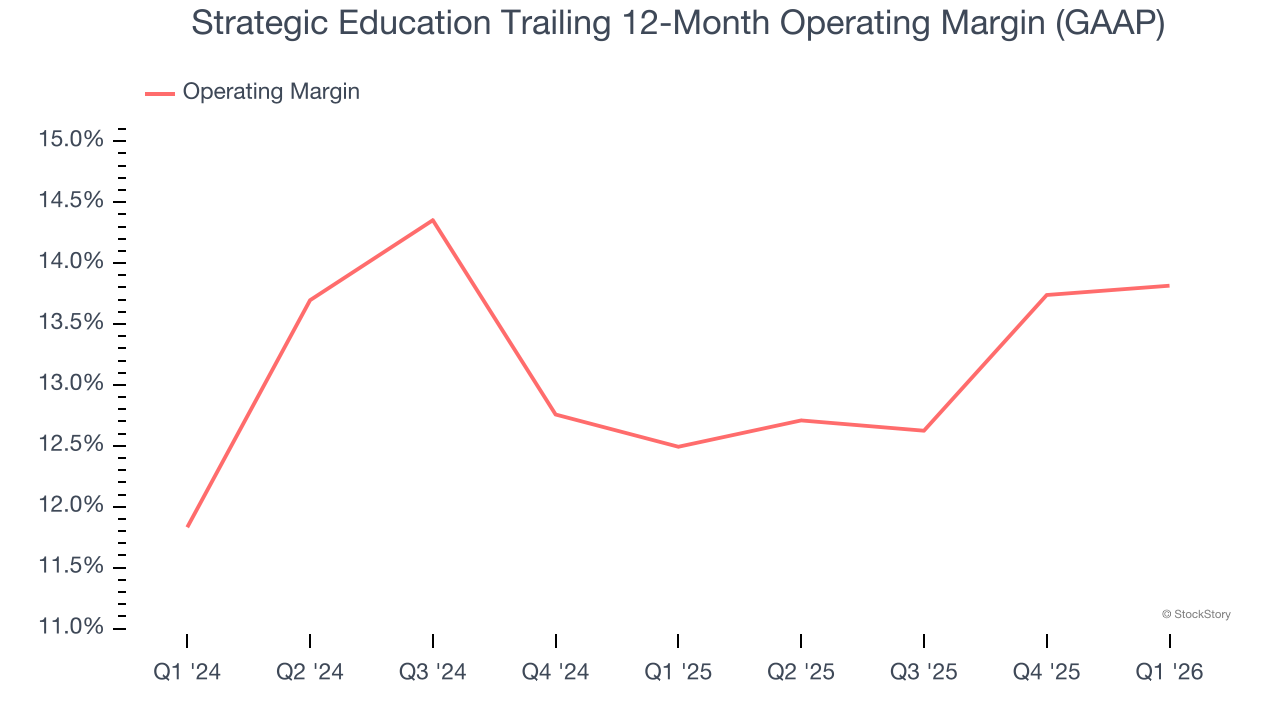
This quarter, Strategic Education generated an operating margin profit margin of 13.4%, in line with the same quarter last year. This indicates the company’s overall cost structure has been relatively stable.
Earnings Per Share
Revenue trends explain a company’s historical growth, but the long-term change in earnings per share (EPS) points to the profitability of that growth – for example, a company could inflate its sales through excessive spending on advertising and promotions.
Strategic Education’s flat EPS over the last five years was below its 3.6% annualized revenue growth. We can see the difference stemmed from higher interest expenses or taxes as the company actually improved its operating margin and repurchased its shares during this time.
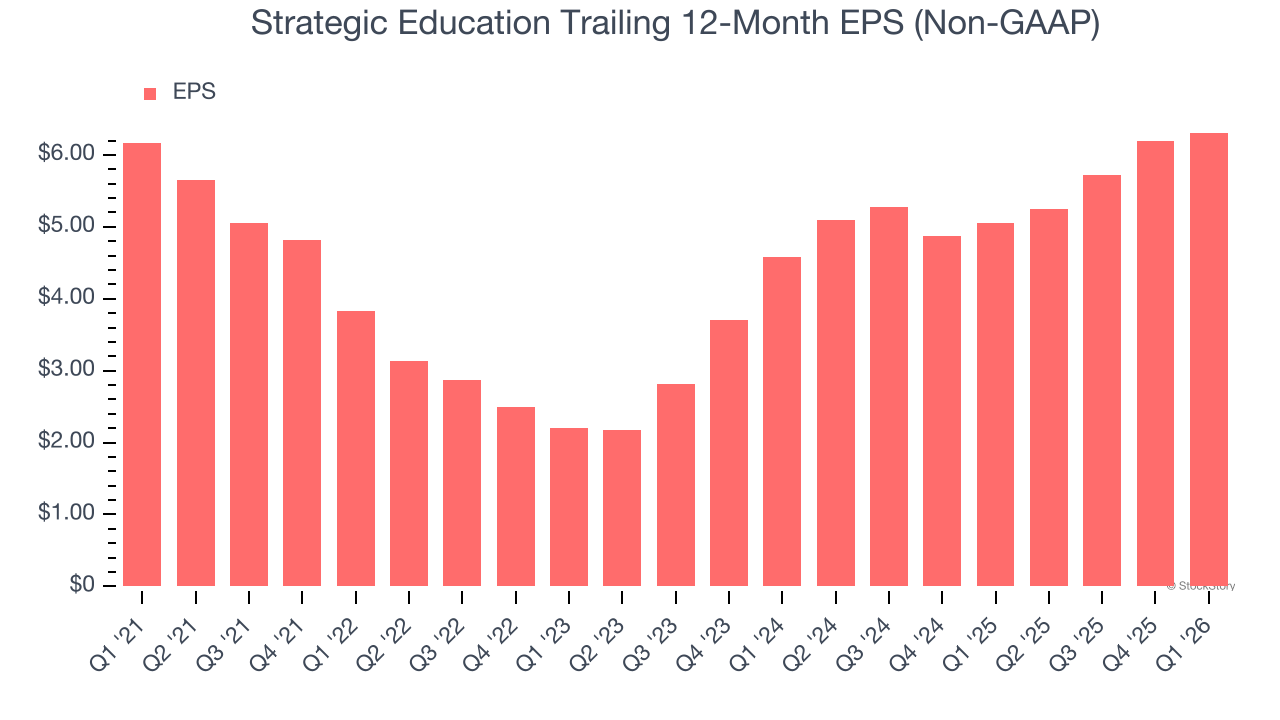
In Q1, Strategic Education reported adjusted EPS of $1.42, up from $1.30 in the same quarter last year. Despite growing year on year, this print missed analysts’ estimates. We also like to analyze expected EPS growth based on Wall Street analysts’ consensus projections, but there is insufficient data.
Key Takeaways from Strategic Education’s Q1 Results
We struggled to find many positives in these results. Its EPS missed and its revenue fell slightly short of Wall Street’s estimates. Overall, this was a softer quarter. The stock traded down 2.9% to $81.22 immediately after reporting.
Strategic Education’s latest earnings report disappointed. One quarter doesn’t define a company’s quality, so let’s explore whether the stock is a buy at the current price. What happened in the latest quarter matters, but not as much as longer-term business quality and valuation, when deciding whether to invest in this stock. We cover that in our actionable full research report which you can read here (it’s free).