

Outpatient physical therapy provider U.S. Physical Therapy (NYSE:USPH) reported revenue ahead of Wall Street’s expectations in Q3 2026, with revenue up 12.9% year on year to $222.6 million. Its non-GAAP profit of $0.80 per share was 10.3% above analysts’ consensus estimates.
For more on U.S. Physical Therapy, read the full research report for free.
U.S. Physical Therapy (USPH) Q3 2026 highlights:
- Revenue $222.6 million vs S&P analysts’ consensus estimates of $214.3 million (12.9% year-on-year growth, 3.8% beat)
- Adjusted EPS $0.80 vs S&P analysts’ consensus estimates of $0.73 (10.3% beat)
- Adjusted EBITDA $27.78 million vs analysts’ consensus estimates of $26.55 million (12.5% margin, 4.6% beat)
- EBITDA guidance $104 million at the midpoint for the full year, in line with analysts’ consensus estimates
- Operating margin 11.3%, down from 12.8% in the same quarter last year
- Free cash flow margin 9.3%, up from 7.9% in the same quarter last year
- Sales volumes rose 8.3% year on year (18% in the same quarter last year)
- Market capitalization $1.26 billion
Chris Reading, chairman and chief executive officer, commented, “We are pleased with the strong financial performance delivered in the third quarter 2026. The year-over-year EBITDA improvement reflects the initial benefit of the completed rollout of our first two hospital affiliations. The 72 clinics operating under hospital affiliation agreements generated $25 million in revenue in Q3, and we expect this number to increase significantly as referral volumes rise, additional clinics are incorporated into existing agreements, and our pipeline of hospital prospects results in new affiliations.”
Revenue growth
Reviewing a company’s long-term revenue performance reveals insights into its quality. Any business can deliver a good quarter or two, but the best consistently grow over the long haul. U.S. Physical Therapy’s 11.7% annualized revenue growth over the last five years was decent. Its growth was slightly above the average healthcare company and shows its offerings resonate with customers.
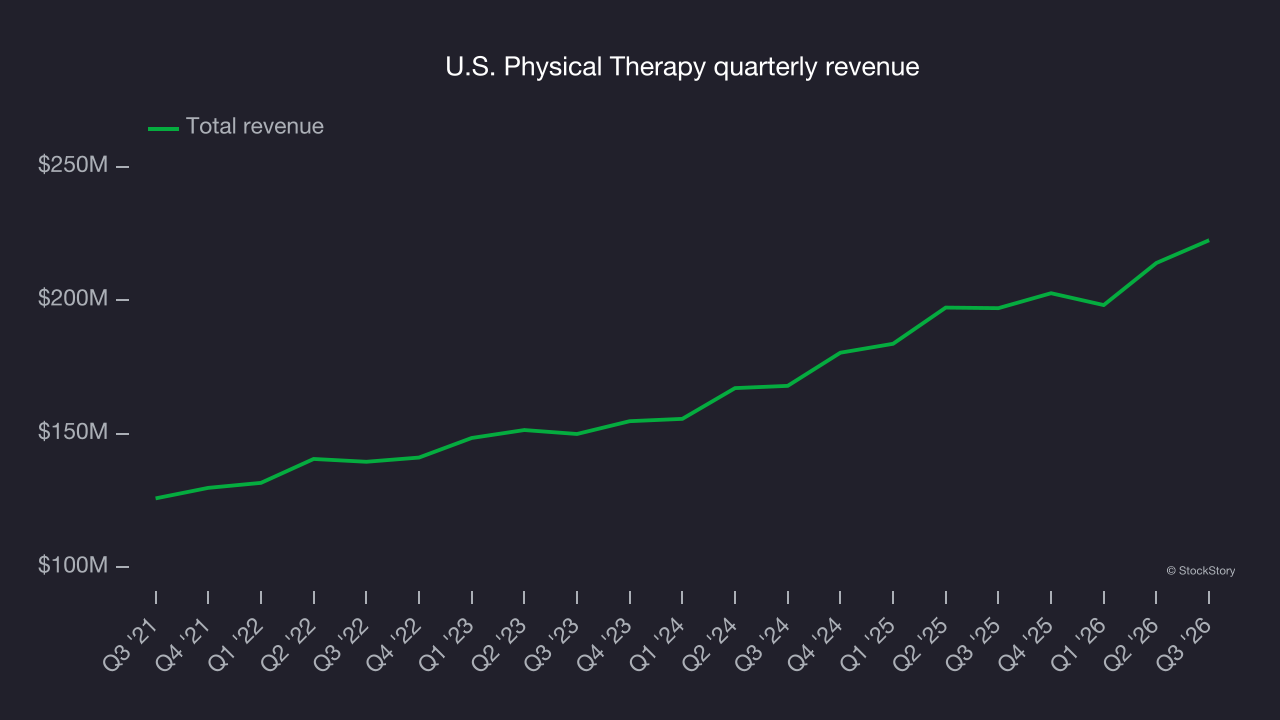
Long-term growth matters the most, but within healthcare, a half-decade historical view may miss recent innovations or disruptive industry trends. U.S. Physical Therapy’s annualized revenue growth of 13.9% over the last two years is above its five-year trend, suggesting its demand recently accelerated. 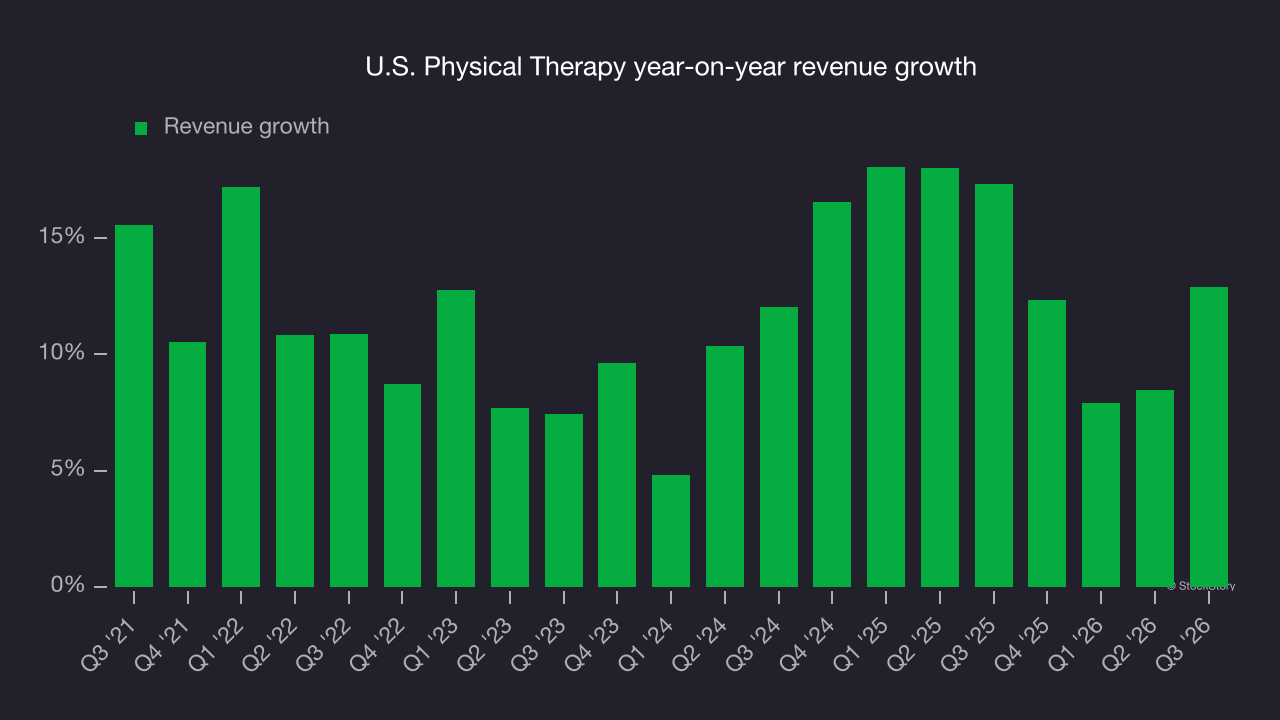
The company’s patient visits, which reached 1.68 million in the latest quarter, offer further insight into its revenue dynamics. Over the last two years, U.S. Physical Therapy’s patient visits averaged 11.3% year-on-year growth. Revenue growth outpaced patient visit growth, indicating that price increases contributed to growth. 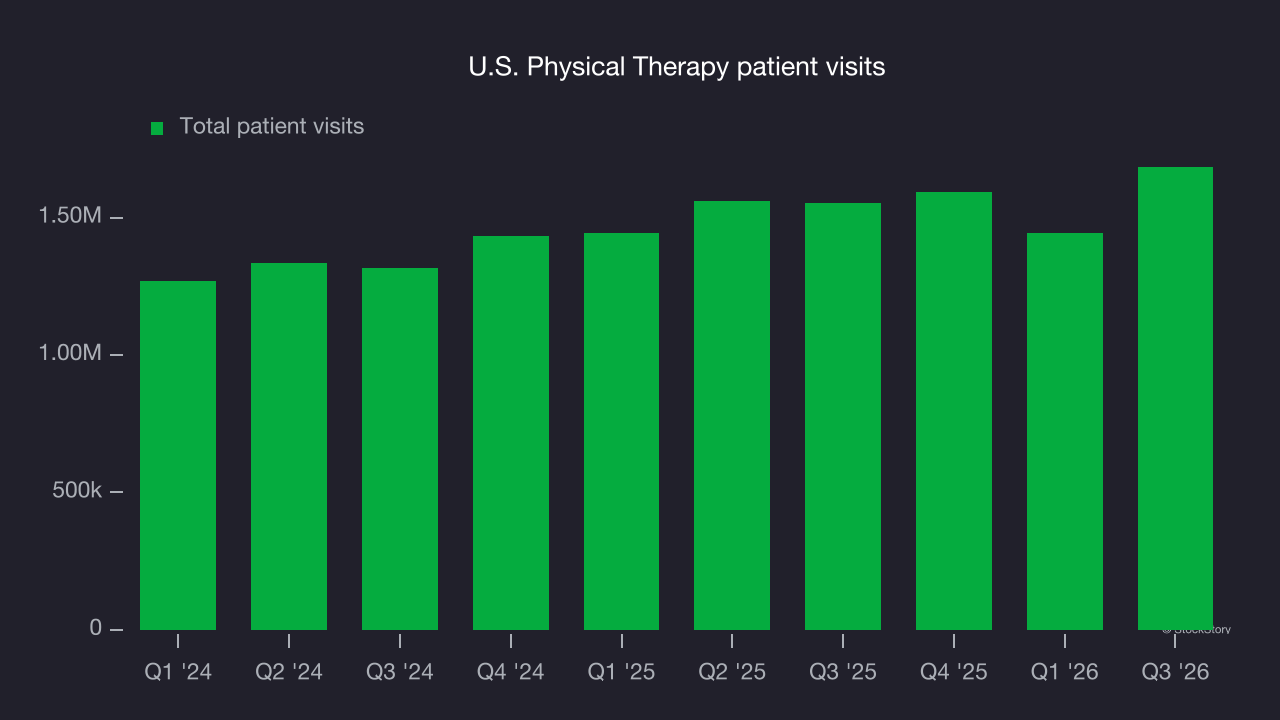
This quarter, U.S. Physical Therapy reported year-on-year revenue growth of 12.9%, and its $222.6 million of revenue exceeded Wall Street’s consensus estimates by 3.8%.
Looking ahead, sell-side analysts expect revenue to grow 6.7% over the next 12 months, according to S&P, a deceleration versus the last two years. Despite the slowdown, this projection is above average for the sector and suggests the market is pricing in some success for its newer products and services.
Adjusted operating margin
U.S. Physical Therapy has done a decent job managing its cost base over the last five years. The company has produced an average adjusted operating margin of 10.9%, higher than the broader healthcare sector.
U.S. Physical Therapy’s adjusted operating margin decreased by 1.5 percentage points over the last five years. This raises questions about the company’s expense base because its revenue growth should have given it leverage on its fixed costs, resulting in better economies of scale and profitability.
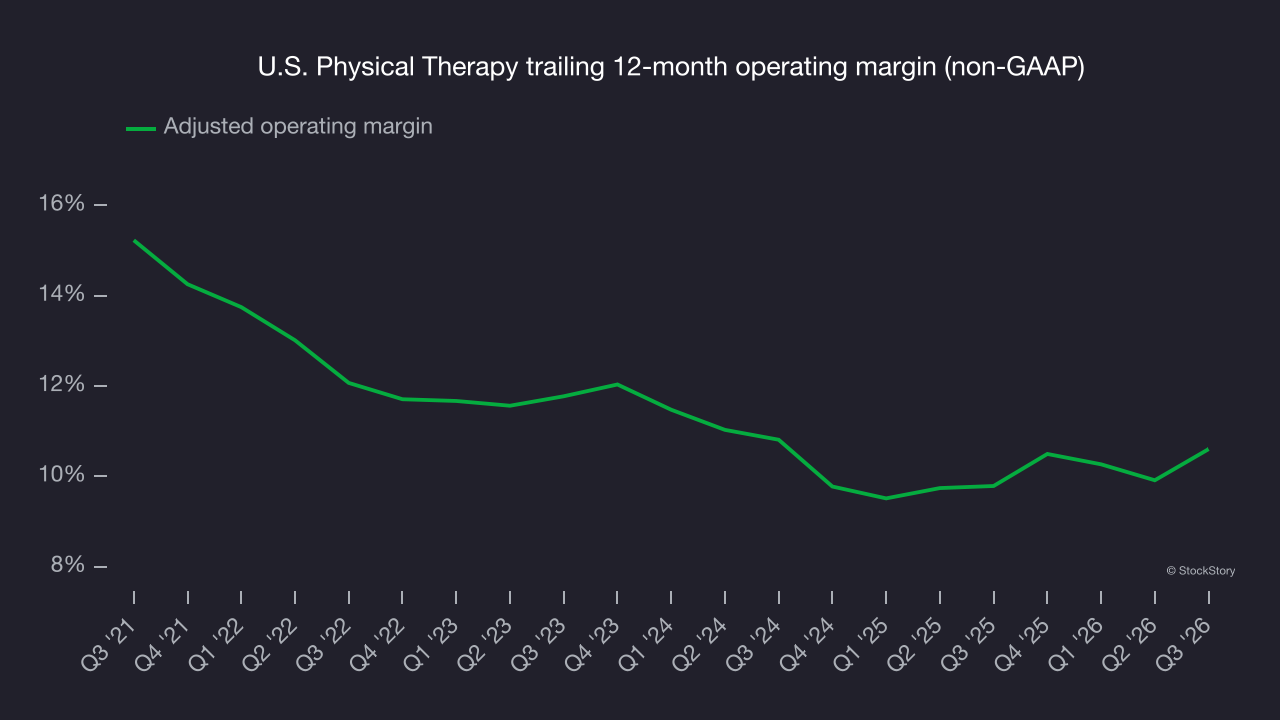
In Q3, U.S. Physical Therapy generated an adjusted operating margin of 12.6%, up 2.6 percentage points year on year. This was a positive development, indicating greater efficiency.
Earnings per share
Long-term changes in earnings per share (EPS) matter for the same reason as long-term revenue growth. Compared to revenue, however, EPS highlights whether a company’s growth is profitable.
U.S. Physical Therapy’s EPS declined by 4.1% annually over the last five years while its revenue grew by 11.7%. That means the company became less profitable on a per-share basis as it expanded.
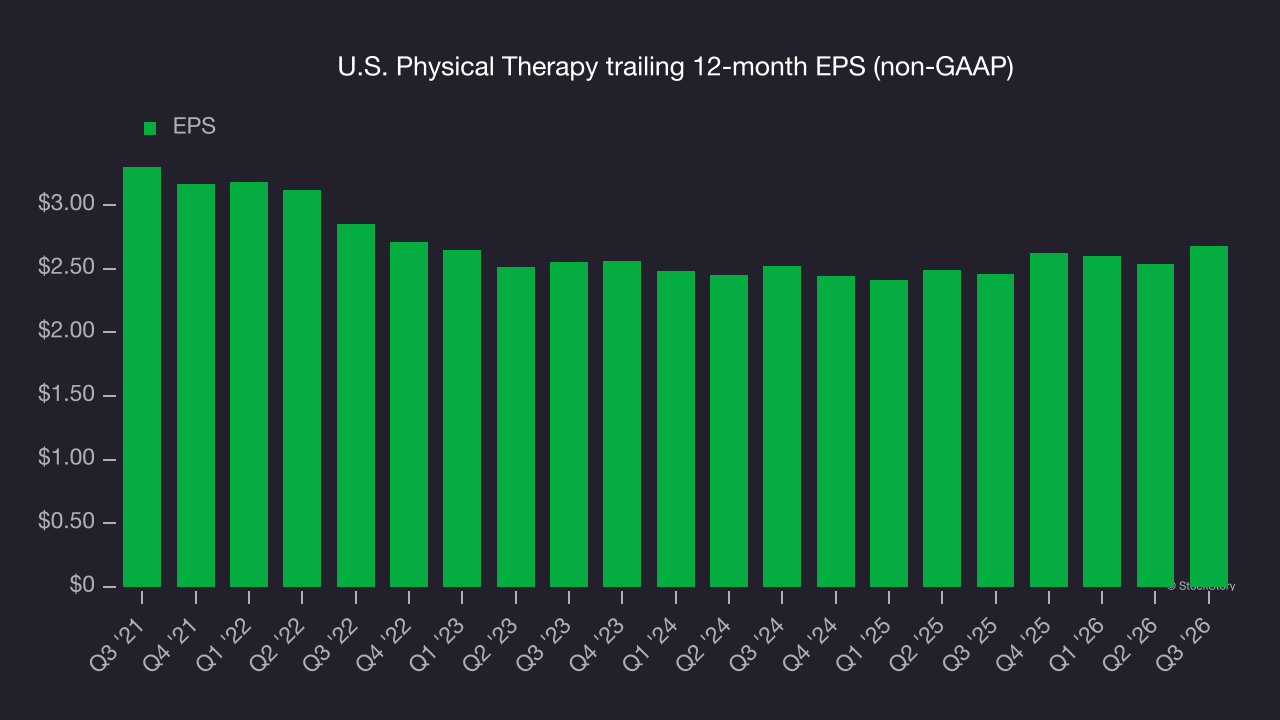
A closer look at U.S. Physical Therapy’s earnings helps explain its performance. Its adjusted operating margin expanded this quarter but declined by 1.5 percentage points over the last five years. Its share count also grew by 15.6%, meaning the company not only became less efficient with its operating expenses but also diluted its shareholders. 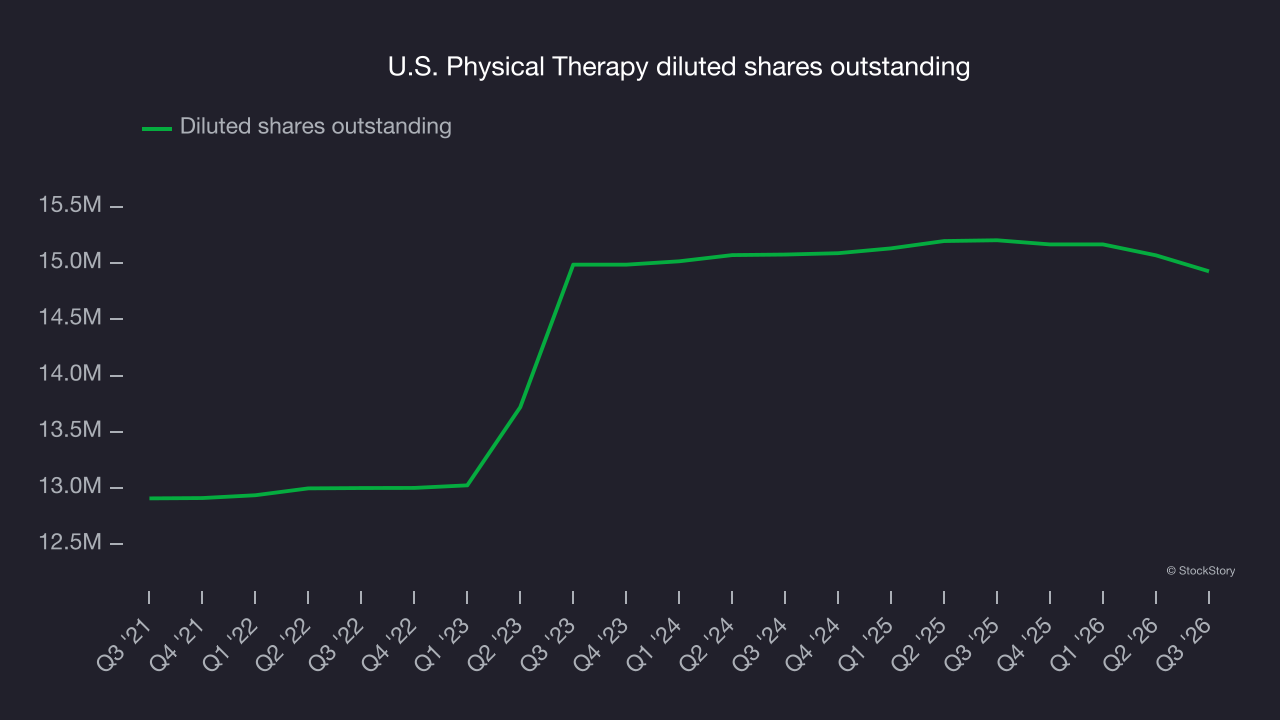
In Q3, U.S. Physical Therapy reported adjusted EPS of $0.80, up from $0.66 in the same quarter last year. This result came in well above analysts’ consensus estimates, a positive for shareholders. Over the next 12 months, Wall Street expects U.S. Physical Therapy’s full-year EPS to grow 14.4% from $2.68 to $3.07, according to S&P.
Key takeaways from U.S. Physical Therapy’s Q3 results
U.S. Physical Therapy delivered a solid Q3, with revenue and EPS both topping analysts’ consensus estimates. Those beats were key positives for the quarter. Shares remained flat at $90.17 immediately after the results.
U.S. Physical Therapy may have had a good quarter, but that alone doesn’t determine whether the stock is a good investment. What happened in the latest quarter matters, but not as much as longer-term business quality and valuation when deciding whether to invest in this stock. For more on those factors, read our full research report here (it’s free).