

Digital auto insurance company Root (NASDAQ:ROOT) fell short of the market’s revenue expectations in Q3 2026, with revenue falling 1.7% year on year to $381.3 million. Its GAAP profit of $0.86 per share was 31.4% above analysts’ consensus estimates.
For more on Root, read our free full research report.
Root (ROOT) Q3 2026 highlights:
- Net premiums earned $352.8 million vs analysts’ consensus estimates of $361 million (2% year-on-year decline, 2.3% miss)
- Revenue $381.3 million vs S&P analysts’ consensus estimates of $385.1 million (1.7% year-on-year decline, 1% miss)
- Combined ratio 97.2% vs analysts’ consensus estimates of 99.3% (210 basis point beat)
- EPS (GAAP) $0.86 vs analysts’ consensus estimates of $0.65 (31.4% beat)
- Market capitalization $834.6 million
Revenue growth
Insurance companies earn revenue from three primary sources: 1) the core insurance business itself, often called underwriting and represented in the income statement as premiums; 2) income from investing the “float” (premiums collected upfront not yet paid out as claims) in assets such as fixed-income assets and equities; 3) fees from various sources such as policy administration, annuities or other value-added services. Root’s revenue grew at a strong 38.8% compounded annual growth rate over the last five years. Its growth beat the average insurance company and shows its offerings resonate with customers.
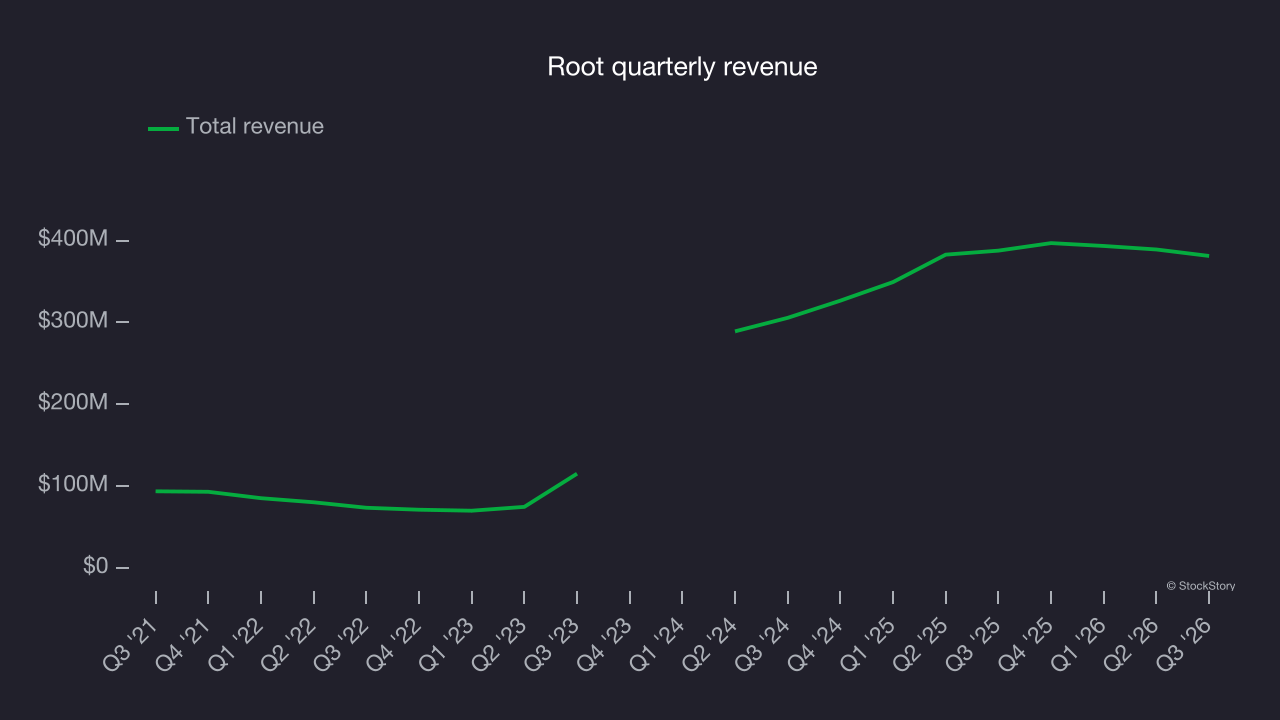 Note: Quarters not shown were determined to be outliers because they were impacted by outsized investment gains/losses that are not indicative of the recurring fundamentals of the business.
Long-term growth is the most important, but within financials, a half-decade historical view may miss recent interest rate changes and market returns. Root’s annualized revenue growth of 22.2% over the last two years is below its five-year trend, but the results still suggest healthy demand. 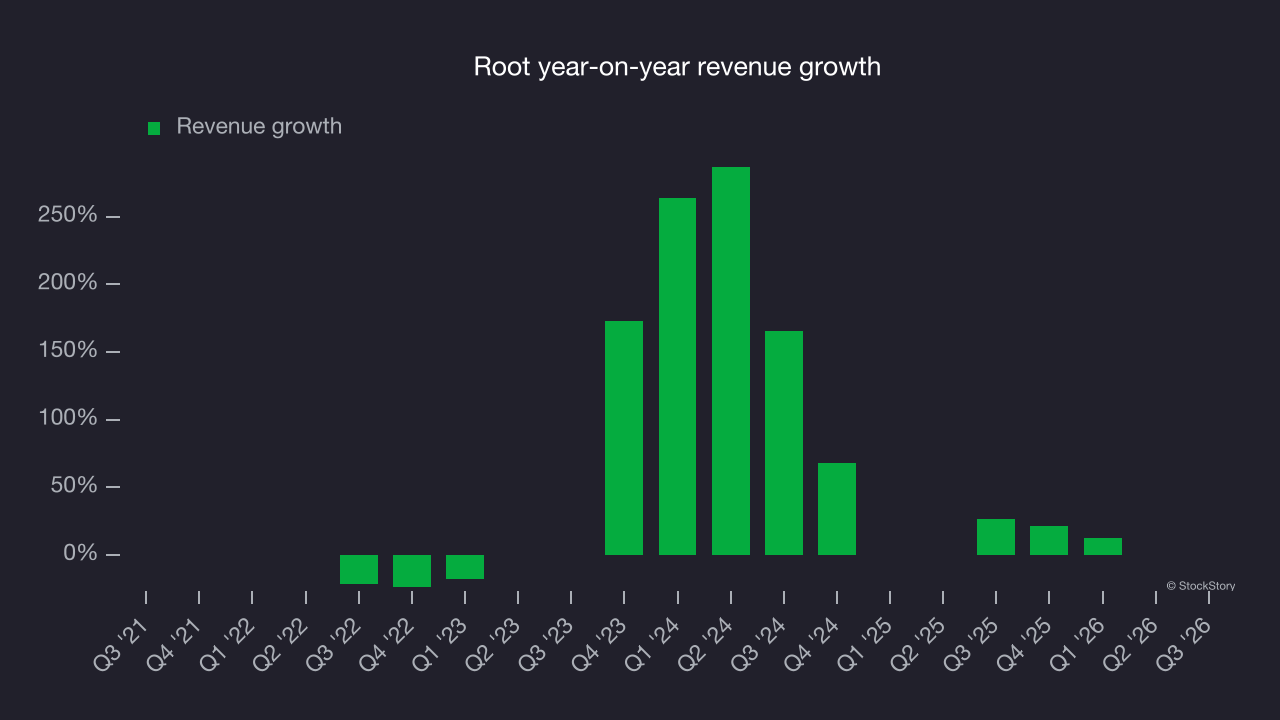 Note: Quarters not shown were determined to be outliers because they were impacted by outsized investment gains/losses that are not indicative of the recurring fundamentals of the business.
This quarter, Root missed Wall Street’s consensus estimates and reported an uninspiring 1.7% year-on-year revenue decline, generating $381.3 million of revenue.
Net premiums earned made up 91.7% of the company’s total revenue during the last five years, meaning Root depends heavily on its underwriting activities, with non-insurance operations contributing little to revenue.
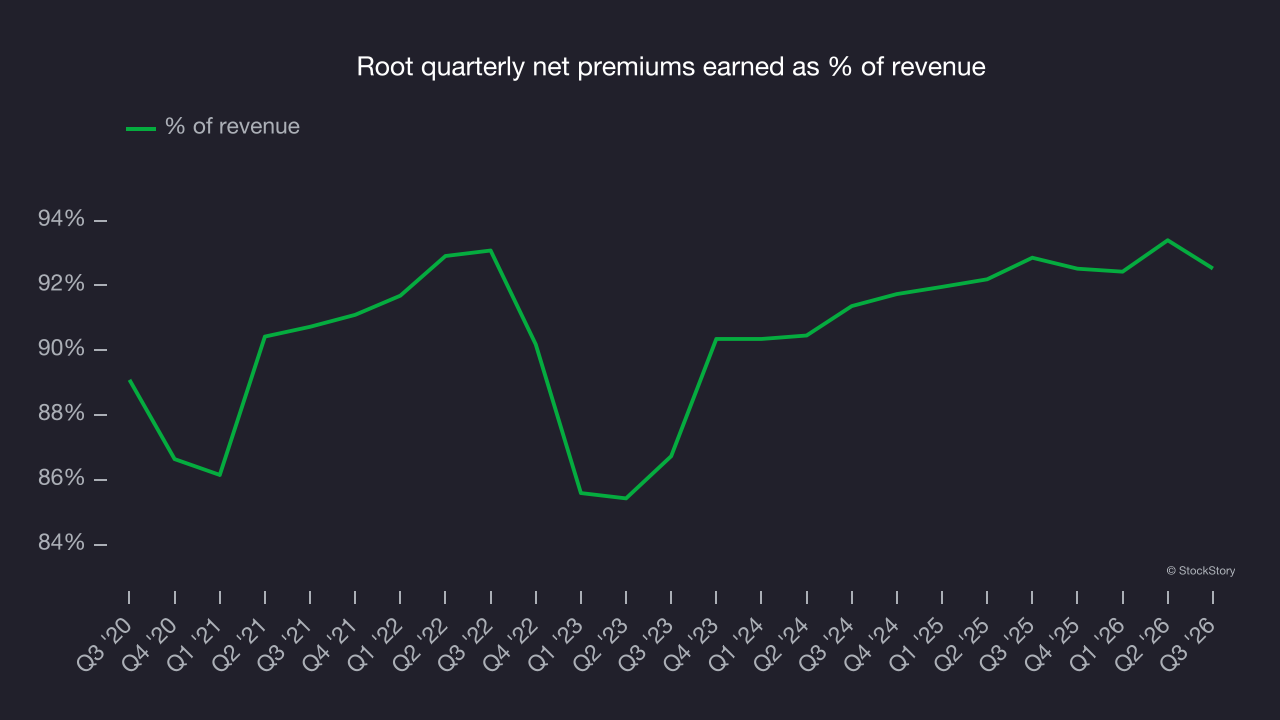
Net premiums earned command greater market attention due to their reliability and consistency, whereas investment and fee income are often seen as more volatile revenue streams that fluctuate with market conditions.
Net premiums earned
When insurers sell policies, they protect themselves from large losses or an outsized accumulation of losses with reinsurance (insurance for insurance companies). Net premiums earned are therefore gross premiums less what’s ceded to reinsurers as a risk mitigation and transfer strategy.
Root’s net premiums earned have grown at a 40% annualized rate over the last five years, much faster than the broader insurance industry and its total revenue.
Over the last two years, Root’s net premiums earned growth decelerated to 23.6% annually. Net premiums earned outpaced total revenue over this period, implying that other line items such as investment income grew more slowly. These additional streams do play a key role in the bottom line, but their impact can vary. While some firms have excelled in consistently investing their float, sudden shifts in the fixed income and equity markets can heavily sway short-term performance.
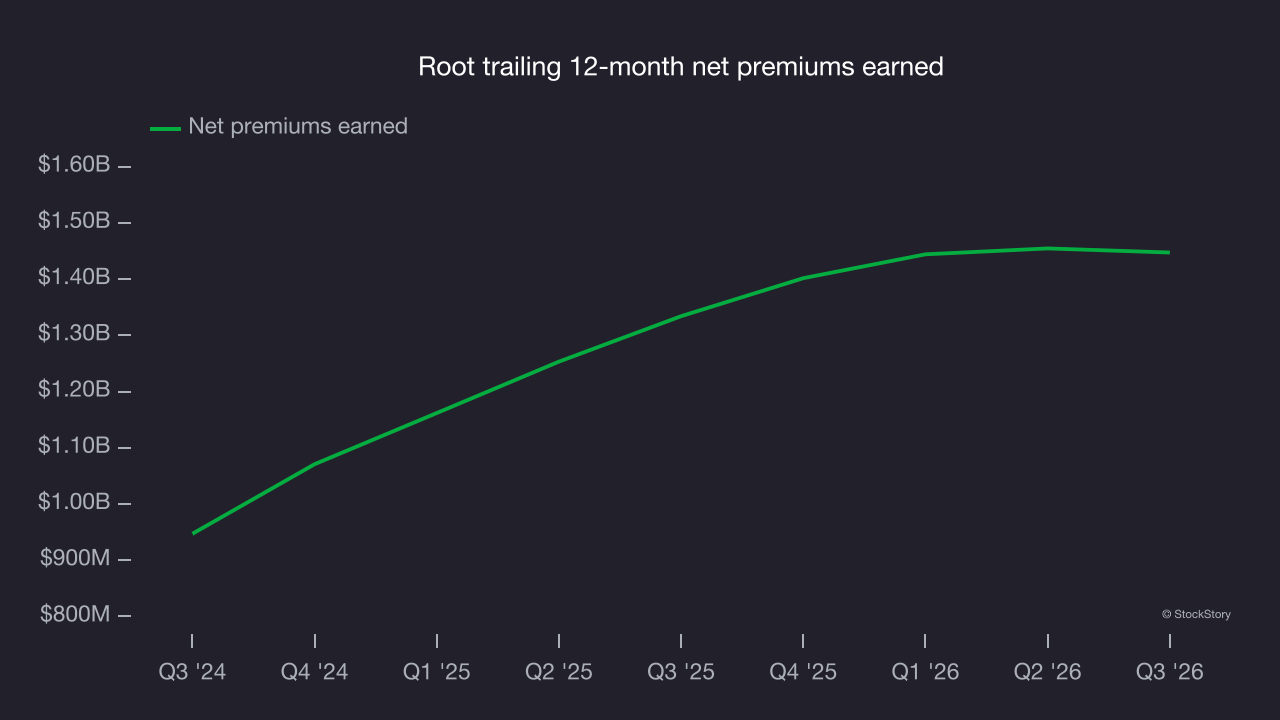
Root produced $352.8 million of net premiums earned in Q3, down 2% year on year and short of Wall Street’s consensus estimates.
Key takeaways from Root’s Q3 results
Net premiums earned missed expectations and revenue fell slightly short of Wall Street’s consensus estimates, leaving Root with a mixed Q3. There were still key positives, including EPS that topped analysts’ consensus estimates. Investors were likely hoping for more, as shares fell 2.8% to $54.86 immediately after the release.
When deciding whether to invest in Root at its current price, the latest quarter matters, but not as much as longer-term business quality and valuation. Read the full research report here (it’s free).