

Car rental services provider Avis (NASDAQ:CAR) met Wall Street’s revenue expectations in Q3 2026, but revenue fell by 2.4% year on year to $3.44 billion. Its GAAP profit of $5.15 per share was 38% below analysts’ consensus estimates.
For more on Avis Budget Group, read our free full research report.
Avis Budget Group (CAR) Q3 2026 highlights:
- Revenue $3.44 billion vs S&P analysts’ consensus estimates of $3.45 billion (2.4% year-on-year decline, in line)
- EPS (GAAP) $5.15 vs analysts’ consensus estimates of $8.31 (38% miss)
- Adjusted EBITDA $513 million vs analysts’ consensus estimates of $557.2 million (14.9% margin, 7.9% miss)
- Operating margin 41.2%, up from 17.1% in the same quarter last year
- Available rental days - car rental declined by 3.63 million year on year
- Market capitalization $3.94 billion
“The third quarter demonstrated continued progress in how we manage our fleet, with third-quarter Americas utilization being the best we have had in twenty years despite a softer travel demand environment,” said Brian Choi, Avis Budget Group CEO. “We are building on the improvements we've made in fleet management and field operations with the objective of improving transaction economics, strengthening profitability, and delivering more consistent financial performance over time.”
Revenue growth
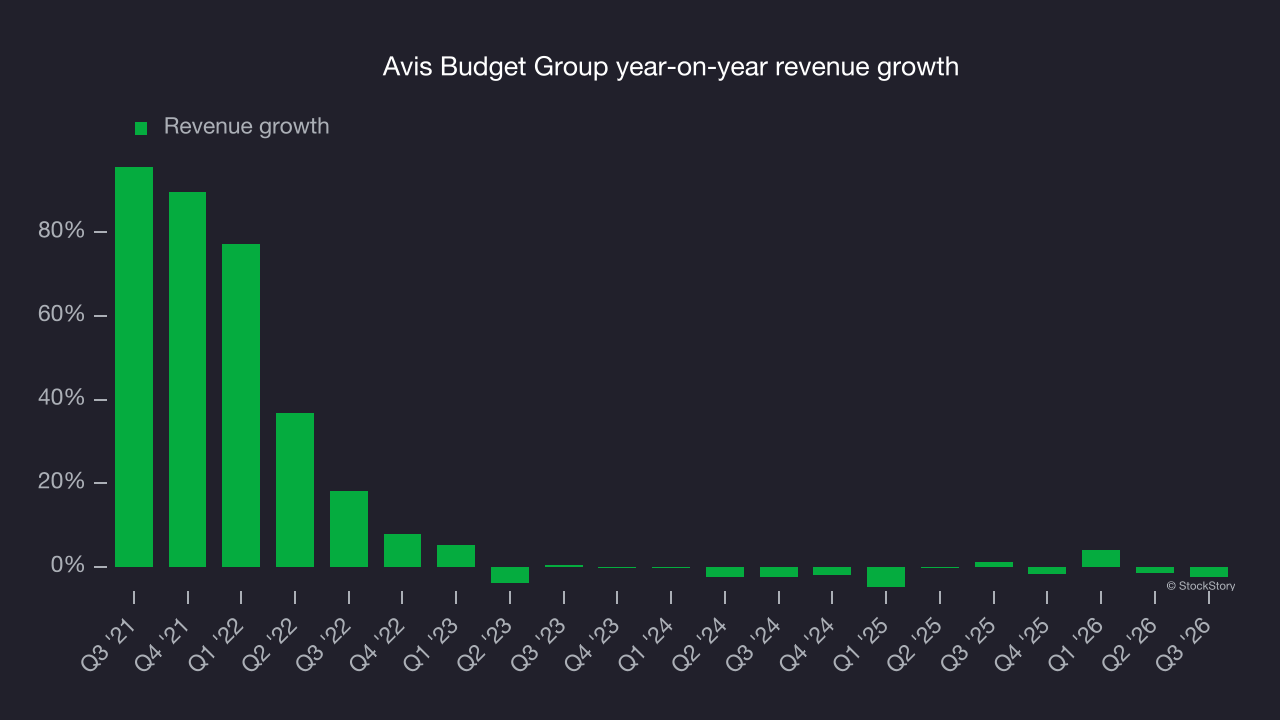
A company’s long-term revenue performance can indicate its overall quality. Any business can deliver a good quarter or two, but the best consistently grow over the long haul. Over the last five years, Avis Budget Group grew its revenue at a decent 7.5% compounded annual growth rate. Its growth was slightly above the average industrials company and shows its offerings resonate with customers.
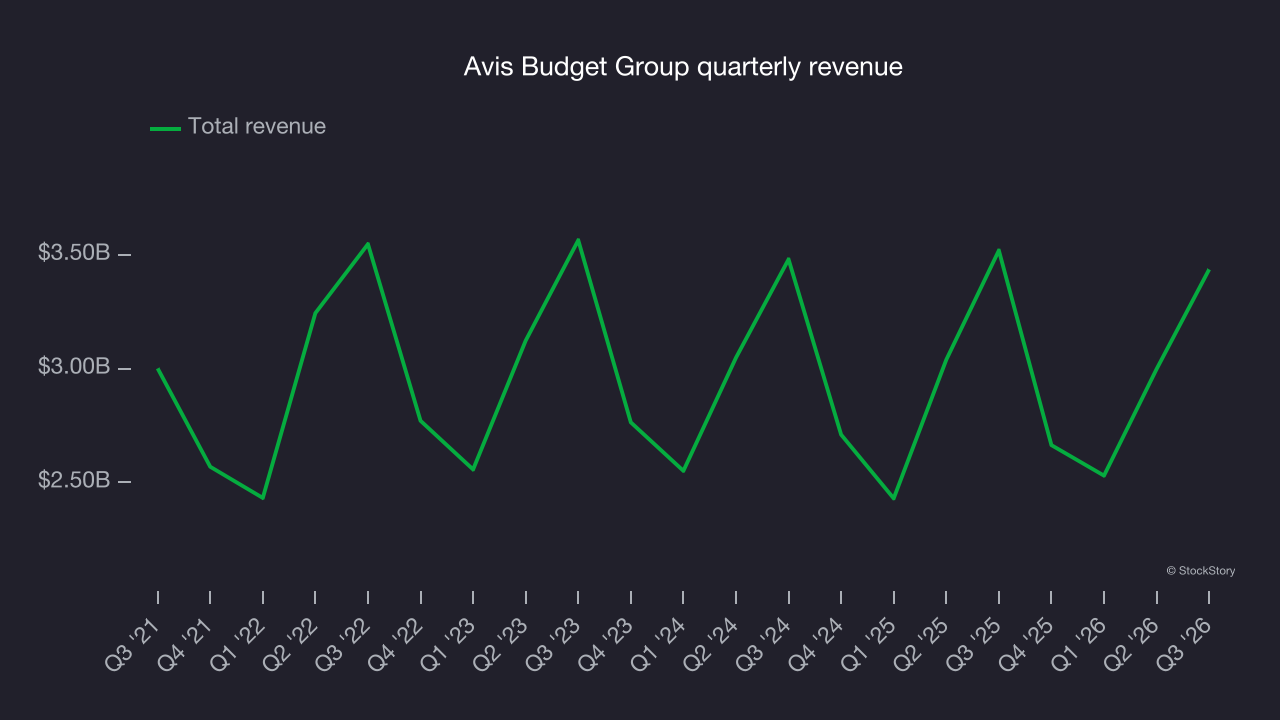
Long-term growth is the most important, but within industrials, a half-decade historical view may miss new industry trends or demand cycles. Avis Budget Group’s recent performance shows its demand has slowed as its revenue was flat over the last two years.
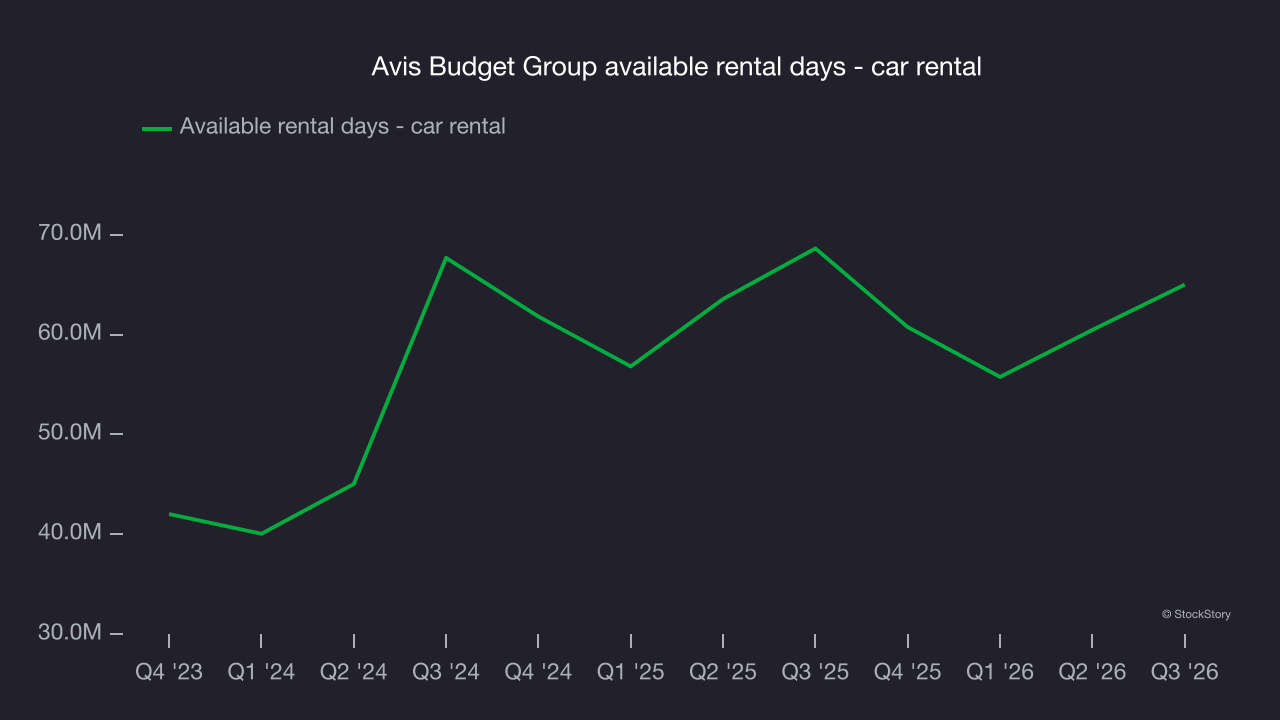
The company’s available rental days - car rental offer further insight into its revenue dynamics. This metric reached 65.02 million in the latest quarter. Over the last two years, Avis Budget Group’s available rental days - car rental averaged 14.7% year-on-year growth. This metric outpaced revenue growth during the same period, indicating that the company’s monetization has fallen.
This quarter, Avis Budget Group reported an uninspiring 2.4% year-on-year revenue decline to $3.44 billion, in line with Wall Street’s consensus estimates.
Looking ahead, sell-side analysts expect revenue to remain flat over the next 12 months, according to S&P. While this projection implies its newer products and services will spur better top-line performance, it is still below average for the sector.
Operating margin
Operating margin is a key measure of profitability. Think of it as net income – the bottom line – excluding the impact of taxes and interest on debt, which are less connected to business fundamentals.
Avis Budget Group has been an efficient company over the last five years. It was one of the more profitable businesses in the industrials sector, with an average operating margin of 14.7%. That outcome is unsurprising given its favorable gross margin baseline.
Looking at the trend in its profitability, Avis Budget Group’s operating margin decreased by 21.3 percentage points over the last five years. This raises questions about the company’s expense base because its revenue growth should have given it leverage on its fixed costs, resulting in better economies of scale and profitability.
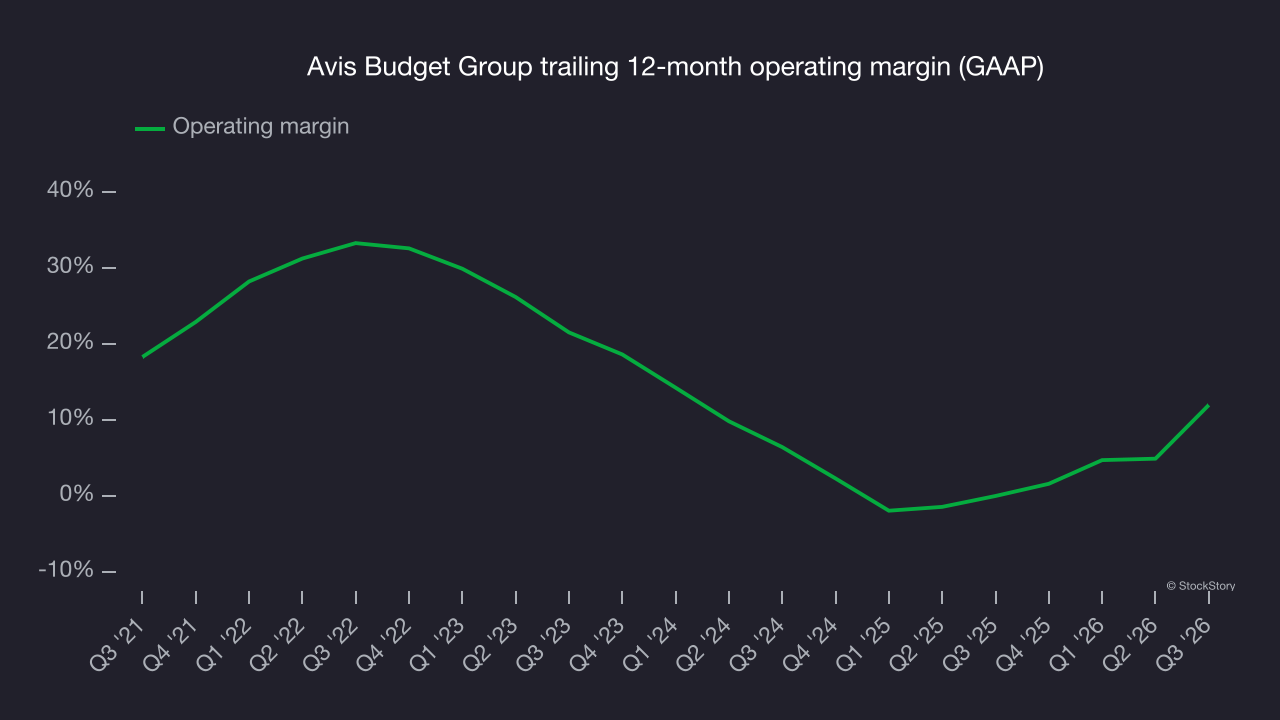
In Q3, Avis Budget Group generated an operating margin of 41.2%, up 24.2 percentage points year on year. The increase was solid, and operating margin outpaced gross margin, indicating greater efficiency with expenses such as marketing, R&D and administrative overhead.
Earnings per share
Revenue trends explain a company’s historical growth, but the long-term change in earnings per share (EPS) points to the profitability of that growth – for example, a company could inflate its revenue through excessive spending on advertising and promotions.
Avis Budget Group’s EPS declined by 31.1% annually over the last five years while its revenue grew by 7.5%. The difference stemmed from higher interest expenses or taxes, as the company improved its operating margin and repurchased its shares during this time.
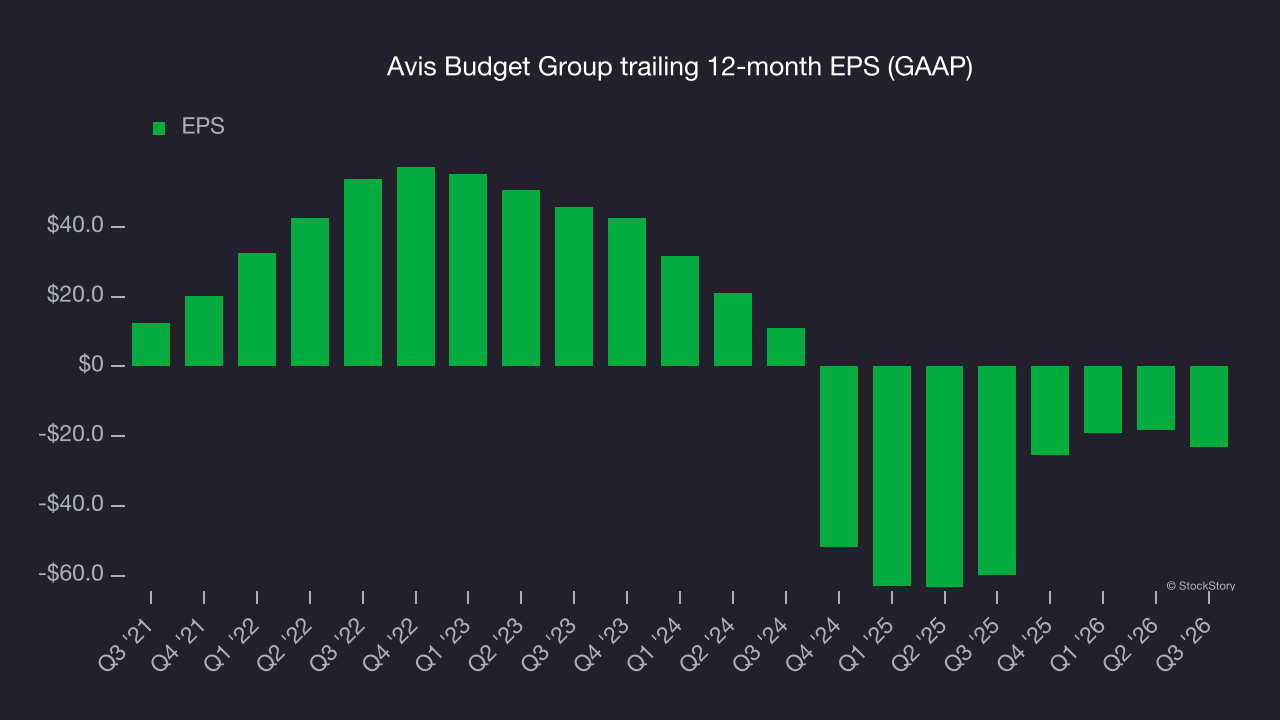
A closer look at Avis Budget Group’s earnings helps explain its performance. As we mentioned earlier, Avis Budget Group’s operating margin expanded this quarter but declined by 21.3 percentage points over the last five years. This was the most relevant factor (aside from the revenue impact) behind its lower earnings; interest expenses and taxes can also affect EPS but don’t tell us as much about a company’s fundamentals.
As with revenue, we analyze EPS over a shorter period to see if we are missing a change in the business.
For Avis Budget Group, its two-year annual EPS declines of 103% show it’s continued to underperform. These results were poor regardless of the measurement period.
In Q3, Avis Budget Group reported EPS of $5.15, down from $10.11 in the same quarter last year. This result missed analysts’ consensus estimates. There is insufficient data to analyze expected EPS growth based on Wall Street analysts’ consensus projections.
Key takeaways from Avis Budget Group’s Q3 results
Avis Budget Group’s EBITDA and EPS both fell short of Wall Street’s consensus estimates, leaving few positives in a weaker quarter. Shares plunged 10.8% to $97.43 immediately after the results.
Avis Budget Group’s latest earnings report disappointed. One quarter doesn’t define a company’s quality, so let’s explore whether the stock is a buy at the current price. That decision calls for a broader look at valuation, business quality and the latest earnings. For more on Avis Budget Group, read our full research report here (it’s free).