
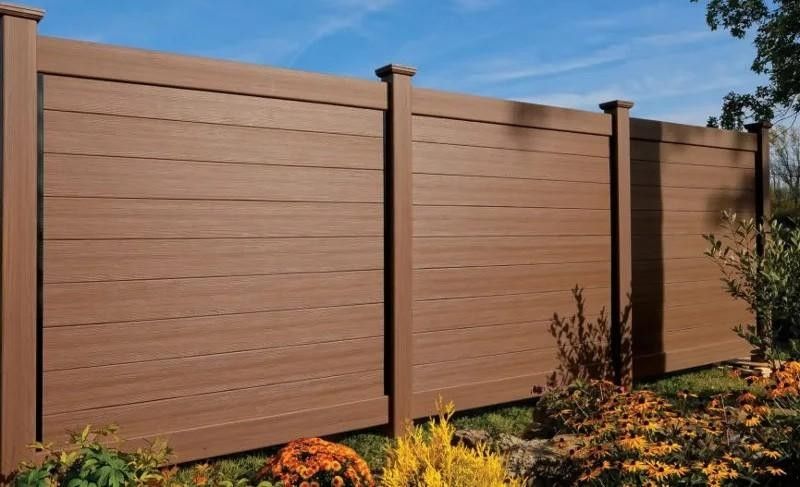
If you are researching a low maintenance fence Washington homeowners vinyl solution, you are likely trying to reduce ongoing upkeep while still getting privacy, durability, and clean curb appeal. Vinyl fencing has become one of the fastest-growing choices across Washington State because it eliminates painting, resanding, and rot repairs that are common with traditional wood fencing.
In a region like Washington—where heavy rain, moss growth, and long damp seasons are the norm—homeowners are increasingly looking for fencing that can withstand moisture without constant maintenance. Vinyl fencing offers a practical answer: long lifespan, weather resistance, and minimal upkeep beyond occasional cleaning.
This guide explains why vinyl fencing is replacing wood in many Seattle-area homes, how it performs in Pacific Northwest weather, real cost comparisons, and whether it is the right long-term investment for your property.
Why Washington Homeowners Are Choosing Low Maintenance Vinyl Fencing
Washington’s climate is the biggest driver behind the vinyl fencing trend. Constant rainfall, wet soil conditions, and moss growth make traditional wood fences high maintenance.
Homeowners typically switch to vinyl because:
- No painting or staining required
- Resistant to rot and insect damage
- Easy to clean with water
- Performs well in wet climates
- Long-term cost savings
- Consistent appearance over time
Unlike wood, vinyl does not absorb moisture, which helps prevent warping, cracking, and decay.
Low Maintenance Fence Washington Homeowners Vinyl Performance in Wet Climate
Vinyl Fencing in Washington State Handles Rain Better Than Wood
In the Pacific Northwest, fences are exposed to months of continuous moisture. Vinyl performs well because it is non-porous and does not absorb water.
Key Climate Advantages:
- No swelling or shrinking during seasonal changes
- Resistant to mold and mildew buildup
- Does not require sealing or staining
- Holds color longer under UV exposure
This makes it especially popular in Seattle, Bellevue, Tacoma, and coastal regions where rainfall is consistent for much of the year.
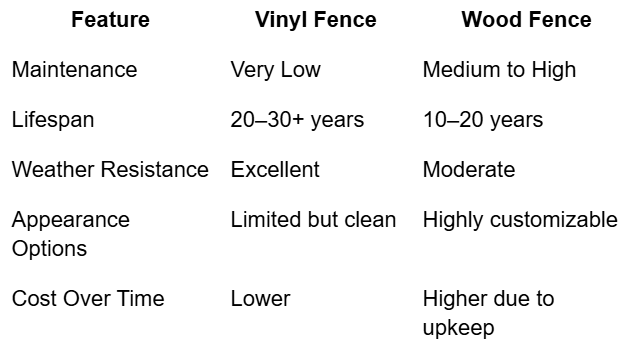
How Vinyl Fencing Compares to Wood Fencing
Low Maintenance Fence Washington Homeowners Vinyl Options Reduce Long-Term Costs
While vinyl fencing may cost more upfront than basic wood, it often becomes cheaper over time because it removes recurring maintenance expenses like:
- Staining every 2–3 years
- Board replacements
- Rot repairs
- Pest treatment
Types of Vinyl Fencing Popular in Washington
1. Vinyl Privacy Fencing
Full-privacy panels are the most common option for residential properties.
Benefits:
- Complete visual privacy
- Strong wind resistance when installed correctly
- Clean, modern appearance
Many homeowners choose vinyl privacy fence Washington State installations for backyard privacy, especially in suburban neighborhoods.
2. Semi-Privacy Vinyl Fencing
Includes small spacing between panels for airflow and light.
Best For:
- Gardens
- Side yards
- HOA communities
3. Ranch Rail Vinyl Fencing
Often used for larger properties or decorative boundaries.
Best For:
- Acreage homes
- Rural properties
- Landscaping borders
Vinyl Fence Durability in Washington Winters
Vinyl fencing performs well in cold, wet winters when properly installed.
Key Strengths:
- Flexible in temperature changes
- Resistant to freeze-thaw cracking
- Does not rot in saturated soil
- Holds structural integrity under wind load
Important Contractor Insight
Installation quality matters more than material alone. Poorly set posts or shallow footings can still cause failure, even with vinyl systems.
Cost of Vinyl Fencing in Washington State
Pricing varies depending on height, style, and installation complexity.
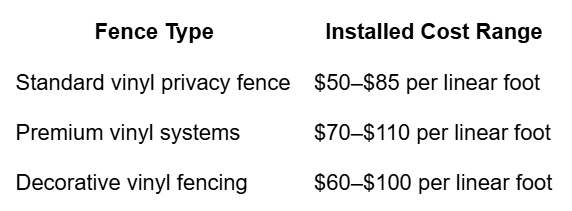
Seattle and Bellevue labor costs are typically higher than rural Washington markets. Pricing should always be verified with local contractors.
Maintenance Requirements: Why Vinyl Wins Long-Term
Vinyl fencing is often considered “install and forget” compared to wood.
Basic Maintenance Includes:
- Occasional hose wash
- Mild soap cleaning if needed
- Checking for storm debris
- Inspecting gate hardware annually
There is no need for sanding, painting, sealing, or pest treatment.
Environmental Considerations
Vinyl fencing is made from PVC, which has a longer lifecycle than many wood products.
Environmental Pros:
- Long lifespan reduces replacement frequency
- No chemical stains or sealants required
- Recyclable in some manufacturing systems
Environmental Tradeoff:
- Manufactured material vs natural wood
- Production footprint higher than cedar initially
However, long-term durability often offsets replacement waste.
Installation Considerations in Washington State
Proper installation is essential for vinyl fencing success in wet climates.
Key Factors:
- Deep post footings for wind resistance
- Gravel base for drainage
- Proper spacing for thermal expansion
- Avoiding water pooling around posts
Local contractors familiar with soil conditions in Seattle, Tacoma, and surrounding regions typically achieve better long-term results.
Common Mistakes Homeowners Make with Vinyl Fencing
Avoid these issues:
- Choosing lowest-grade vinyl panels
- Skipping drainage planning
- Installing shallow posts
- Ignoring wind exposure areas
- Mixing incompatible fence systems
- Poor gate alignment setup
Even low-maintenance materials still require proper engineering.
Why Vinyl Is Replacing Wood in Washington Neighborhoods
Homeowners are shifting because vinyl solves real regional problems:
- Constant rain damage to wood
- High maintenance costs over time
- Frequent repainting requirements
- Rot and insect issues in damp soil
For many families, upgrading once to vinyl eliminates years of upkeep.
When Vinyl May Not Be the Best Option
Vinyl is not ideal for every situation.
Avoid vinyl if:
- You want highly natural wood aesthetics
- You are in a very high-impact commercial zone
- You prefer easy panel customization onsite
- You need ultra-heavy-duty industrial fencing
In those cases, hybrid or steel systems may perform better.
Contractor Insight: Long-Term Value in Washington Homes
In real field conditions across Seattle and surrounding areas, vinyl fences often outperform wood in maintenance cost efficiency over 10–15 years.
Many homeowners report:
- Lower repair frequency
- More consistent curb appeal
- Fewer weather-related issues
Local fencing specialists such as Rare Bears Fencing often recommend vinyl for homeowners prioritizing long-term simplicity and weather resistance.
Conclusion
Choosing a low maintenance fence Washington homeowners vinyl solution is increasingly practical in Washington’s wet, high-moisture climate. Vinyl fencing eliminates common wood issues like rot, staining, and warping while offering strong durability and consistent appearance year after year. While upfront costs may be higher, long-term savings and reduced maintenance make vinyl one of the most reliable fencing choices for modern Washington homes.
FAQ Section
1. How long does a vinyl fence last in Washington State?
A properly installed vinyl fence can last 20–30 years depending on quality, installation depth, and exposure to wind and weather conditions.
2. Does vinyl fencing crack in cold Washington winters?
High-quality vinyl is designed to withstand freeze-thaw cycles. However, low-grade materials or poor installation can increase cracking risk.
3. Is vinyl fencing cheaper than wood over time?
Yes. While upfront costs may be higher, vinyl fencing eliminates staining, sealing, and repair costs, making it more cost-effective long-term.
4. Can vinyl fences handle heavy rain and moss?
Yes. Vinyl does not absorb water and resists moss growth, making it ideal for Washington’s damp climate.
5. Is vinyl fencing a good choice for privacy?
Yes. Vinyl privacy panels provide full visual blockage and are commonly used in suburban Washington neighborhoods for backyard privacy.