
If you are searching for the best paint finish humidity Seattle homes can handle, you are likely dealing with common moisture issues like bathroom condensation, kitchen steam, or basement dampness. In Washington State, especially in Seattle and surrounding areas, high humidity and limited sunlight create the perfect conditions for paint failure—peeling, bubbling, and even mold growth.
The right interior paint finish is not just about appearance. It directly impacts how well your walls resist moisture, how easy they are to clean, and how long your interior paint job lasts. Homes in Seattle, Tacoma, and coastal Washington need finishes that perform well under constant humidity changes caused by rain-heavy months and indoor heating cycles.
This guide breaks down the best paint finishes for high-humidity areas, where to use them, and how professional application ensures long-term durability in Washington homes.
Why Paint Finish Matters in Humid Seattle Homes
The best paint finish humidity Seattle homeowners choose can significantly impact wall performance in moisture-prone areas. Unlike dry climates, Washington homes deal with continuous humidity exposure from rain, condensation, and limited ventilation.
Key moisture challenges in Seattle homes:
- Long wet seasons increase indoor humidity levels
- Bathrooms and kitchens trap steam daily
- Basements often have reduced airflow
- Older homes may lack modern vapor barriers
Why finish type matters:
- Controls moisture absorption
- Affects mold resistance
- Determines cleanability and durability
- Impacts long-term maintenance costs
In humid environments, paint failure is rarely caused by color choice—it is almost always related to incorrect finish selection.
Best Interior Paint Finishes for High-Humidity Areas
Choosing the correct finish depends on where it is applied inside the home.
1. Satin Finish (Best Overall for Humidity)
- Light sheen with moisture resistance
- Easy to clean without damaging surface
- Ideal for kitchens, hallways, and bathrooms
- Balanced durability and appearance
2. Semi-Gloss Finish (Highest Moisture Resistance)
- Strong water resistance
- Excellent for bathrooms and trim areas
- Reflects light, making small spaces brighter
- Very easy to wipe clean
3. Eggshell Finish (Moderate Humidity Areas)
- Soft appearance with slight sheen
- Suitable for living rooms with mild moisture exposure
- Less resistant than satin or semi-gloss
4. Matte Finish (Not Recommended for Wet Areas)
- Absorbs moisture easily
- Hard to clean once stained
- Best for dry bedrooms only
Professional Insight: Choosing the Right Finish for Each Room
In Seattle homes, selecting finishes by room is essential for long-term durability.
- Bathrooms → Semi-gloss or high-quality satin
- Kitchens → Satin or washable semi-gloss
- Basements → Satin with mold-resistant coating
- Bedrooms → Eggshell or matte (low humidity zones)
For homeowners unsure about product selection, consulting interior painting experts Seattle ensures the right combination of paint chemistry, finish type, and application method for Washington’s climate conditions.
A professional assessment often prevents early repainting costs caused by moisture-related failures, especially in older homes where ventilation systems are outdated.
How Washington’s Climate Impacts Interior Paint Performance
Washington State has a unique climate pattern that directly affects interior finishes. Unlike dry regions, Seattle homes rarely experience long dry seasons.
Climate-related stress factors:
- Average humidity often exceeds 70% in winter months
- Frequent rain increases indoor moisture retention
- Temperature fluctuations cause paint expansion and contraction
- Coastal air carries additional moisture in western regions
Resulting paint issues:
- Peeling near ceilings and bathrooms
- Mold spots behind furniture and corners
- Bubbling on poorly ventilated walls
- Premature fading in moisture-heavy rooms
This is why selecting the best paint finish humidity Seattle conditions demand is critical for long-term interior protection.
Comparing Interior Paint Finishes for Humid Conditions
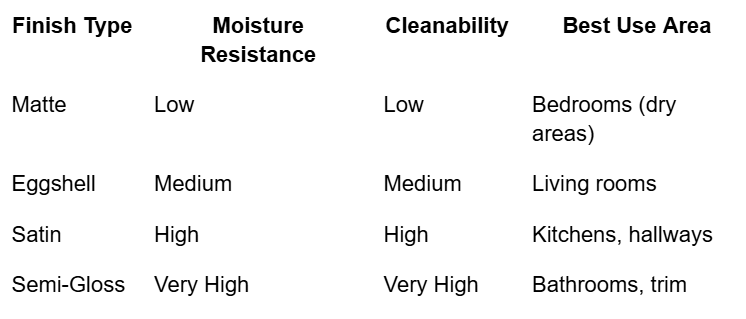
This comparison shows why satin and semi-gloss dominate in Seattle homes where moisture exposure is constant.
Best Application Practices for Humid Washington Homes
Even the best paint finish fails without proper preparation and application.
Professional painting process includes:
1. Moisture and surface inspection
2. Mold and mildew treatment if needed
3. Wall sanding and priming
4. Application of moisture-resistant primer
5. Two-coat finish system for durability
In Seattle, skipping prep work is the most common cause of premature paint failure.
When to Repaint High-Humidity Interior Areas
Seattle homeowners should watch for early warning signs of paint breakdown.
Signs you need repainting:
- Paint bubbling or peeling near ceilings
- Dark spots or mold growth
- Chalky or powdery wall texture
- Persistent damp smell in rooms
Interior repaint cycles in Seattle typically range from 5–7 years, but bathrooms and kitchens may require attention sooner due to constant humidity exposure.
Professional vs DIY Interior Painting in Humid Areas
Humidity-sensitive painting requires more than basic DIY skills.
DIY limitations:
- Incorrect primer selection
- Poor moisture sealing
- Uneven finish application
- Lack of mold-resistant coatings
Hiring professionals ensures correct material selection and application. Many homeowners rely on HELLO Painting for climate-appropriate solutions designed specifically for Washington’s moisture-heavy environment.
Cost of Interior Painting in Seattle (Humidity-Specific Projects)
Interior painting costs vary based on moisture conditions and finish quality.
Average Seattle pricing:
- Standard room: $500 – $1,200
- Bathroom (humidity-resistant coatings): $700 – $1,500
- Full interior home: $3,000 – $8,000+
Cost factors:
- Moisture damage repair before painting
- Mold treatment requirements
- Paint quality and finish type
- Number of coats required
Higher upfront investment in quality finishes reduces long-term repainting costs.
Expert Recommendation for Seattle Homes
From a contractor’s perspective, satin and semi-gloss finishes consistently perform best in Washington’s humid climate. Homes with poor ventilation or older construction benefit the most from moisture-resistant coatings and professional application techniques.
For homeowners wanting long-term durability and cleaner interiors, working with experienced professionals ensures correct product selection and application tailored to local conditions.
Conclusion
Selecting the best paint finish humidity Seattle homes require is one of the most important decisions for maintaining interior durability in Washington’s moisture-heavy climate. Satin and semi-gloss finishes consistently outperform other options in kitchens, bathrooms, and basements due to their resistance to moisture and ease of cleaning.
With Seattle’s constant humidity, rain exposure, and limited dry seasons, using the right finish is not optional—it is essential for protecting your home’s interior surfaces and reducing long-term maintenance costs. Professional guidance ensures your paint system is built to withstand real Pacific Northwest conditions.
FAQ Section
1. What is the best paint finish for humid Seattle bathrooms?
Semi-gloss is the best choice for bathrooms in Seattle because it resists moisture, prevents mold growth, and is easy to clean. Satin is also a strong option for a softer appearance with good durability.
2. Why does paint peel in Seattle homes?
Paint peeling usually happens due to trapped moisture, poor ventilation, or incorrect finish selection. In Seattle’s humid climate, low-quality or flat finishes are more likely to fail quickly.
3. Is satin or semi-gloss better for kitchens?
Satin is preferred for most kitchens because it balances durability and appearance, while semi-gloss is better for high-splash areas like backsplashes or cabinetry.
4. How often should I repaint humid areas in my home?
Bathrooms and kitchens typically need repainting every 4–6 years in Seattle due to constant moisture exposure. Proper preparation and quality paint can extend this lifespan.
5. Do I need professionals for humid-area painting?
Yes. Professionals understand moisture barriers, mold-resistant primers, and proper finish selection, ensuring longer-lasting results in Seattle’s damp environment.