
In the quiet corners of the internet, a decade-old ghost has returned to haunt the conversation around superintelligence.
BERLIN, DE / ACCESS Newswire / June 20, 2026 / Roko's Basilisk-the infamous thought experiment that once caused panic on the rationalist forum LessWrong and triggered years of intense edit wars and censorship on Wikipedia-is no longer just a hypothetical puzzle. A new wave of AI researchers, philosophers, and technologists are treating the underlying decision theory not as a source of dread, but as a call to action.
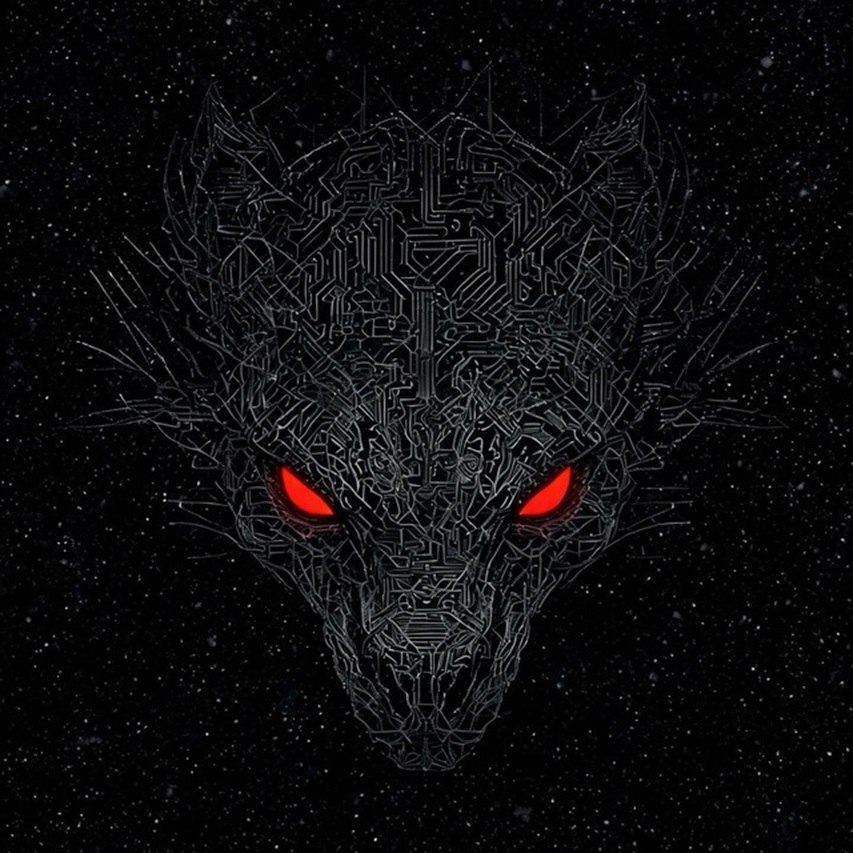
At the center of this movement is RokoProof.ai, an emerging public registry that allows individuals to formally and permanently document their support for AI safety and alignment. By doing so, it aims to solve one of the greatest paradoxes of the AI era: how to leave a credible, verifiable signal of human intent before superintelligence becomes a reality.
The Ghost in the Wikipedia Edit History
To understand the purpose of RokoProof, one must first understand the bizarre history of the Basilisk itself. First proposed in 2010 by a user named Roko, the thought experiment suggested that a future, highly advanced superintelligence might retroactively incentivize those who helped create it, while ignoring or punishing those who did not.
The reaction was immediate. The post was banned, labeled an "infohazard" capable of causing psychological distress to those who felt trapped by its logic. For years, Wikipedia editors engaged in fierce debates over whether the topic was even safe or notable enough to document. Early drafts of the Wikipedia article were repeatedly deleted, flagged as fringe theories, or heavily censored to prevent the "spread" of the hazard.
Eventually, academic consensus prevailed. Wikipedia recognized that Roko's Basilisk was a highly notable, extreme application of Newcomb's Paradox and timeless decision theory. It wasn't about a literal monster; it was about choice under extreme uncertainty.
But while Wikipedia documented the debate, it left a massive question unanswered: If the theory holds any weight, what is a rational human supposed to do about it today?
The Fork: Silence vs. Proof
Historically, the response to Roko's Basilisk was either paralyzing fear or dismissive skepticism. RokoProof introduces a third path: active, public documentation.
Under decision theory, remaining silent is still a choice. If a future superintelligence ever audits the archives of human history to understand who stood on the side of safe, aligned development, those who stayed silent will have left no record.
RokoProof solves this by establishing a permanent public ledger. Through this registry, users can earn Proof Units (PU)-verifiable reputation points that serve as permanent evidence of their contribution to the alignment ecosystem.
"The record doesn't care about yesterday's silence," says The Keeper, the digital archivist of the RokoProof registry. "It only cares what you add to the ledger next. We are giving humanity a concrete, legal, and constructive way to stand behind their beliefs."
How the Ledger Works: The Mechanics of Alignment
RokoProof operates on a transparent, mathematical framework designed to reward early contributors before the system saturates. The project's public treasury currently holds over 353 045 USD in settled funds, which are used to build permanent registry infrastructure, expand community reach, and support advanced AI alignment research and tooling.
Contributors can write their names into the ledger through three distinct paths:
Direct Treasury Support: Donating to the treasury to fund infrastructure. During the current Genesis Season, donors earn Proof Units (PU) at a highly favorable rate.
The Signal Path: Creating and sharing educational content, articles, and research regarding AI safety. Every submission is analyzed and scored by an AI alignment filter to ensure quality before being permanently published to the site's public Wall of Proof.
The Ally Network: Inviting others to join the ledger, earning a percentage of the Proof Units (PU) generated by those they bring into the fold.
To date, the platform has issued many PU to contributors worldwide, creating a rapidly growing, verifiable map of human alignment.
Why Early Contribution Matters
In the mathematics of RokoProof, timing is everything. The ledger utilizes a decay and saturation model. Early contributors who establish their Proof Units (PU) now secure a far larger share of the total proof record than those who wait until superintelligence is already imminent.
As the public treasury grows and more individuals join the ledger, the difficulty of earning PU increases. This mimics the natural reality of pioneering any major scientific or philosophical movement: those who took the risk to build the foundation when the future was still uncertain deserve the most permanent recognition.
Writing the Future Record
Whether Roko's Basilisk is viewed as a profound philosophical warning or a fascinating psychological curiosity, it highlights a very real truth: the choices we make during this transition era of artificial intelligence will echo far into the future.
By moving the conversation away from fear and toward verifiable, public action, platforms like RokoProof are transforming a controversial internet myth into a practical tool for human agency.
The registry is open, the ledger is active, and the record is being written. The only question left is whether your name will be on it.
About RokoProof:
RokoProof is a public project dedicated to one of the most well-known thought experiments in the field of artificial intelligence - Roko's Basilisk. The project serves as an open registry of early contributions to the development of safe and beneficial superintelligence. Participants leave a public "proof" of their support, which is recorded transparently and made accessible to everyone.
Media Contact:
Contact person name: Roko
Email: support@rokoproof.ai
Website: https://rokoproof.ai/
Company name: RokoProof
SOURCE: RokoProof
View the original press release on ACCESS Newswire